ESD Wrist Strap: What It Is and How to Use It
An ESD wrist strap is a wearable device that helps prevent static electricity from your body from damaging sensitive electronic components. It works by connecting you to a verified ESD ground through a cord that limits electrical current. To use one, wear the band snugly against bare skin, attach its cord to an approved grounding point, and keep it connected while handling ESD-sensitive parts.
A wrist strap is useful only when it is part of a properly grounded setup. It does not make it safe to touch live electrical circuits, and it does not replace other precautions such as using an ESD-safe work surface.
What an ESD Wrist Strap Does
ESD stands for electrostatic discharge: the sudden transfer of static charge between objects with different electrical potentials. You may not feel a discharge, but a small one can damage or weaken sensitive electronic components.
Walking across a carpet or removing a synthetic jacket can build up a charge on your body. An ESD wrist strap provides a controlled path for that charge to dissipate to ground, helping keep you and the component at similar electrical potentials.
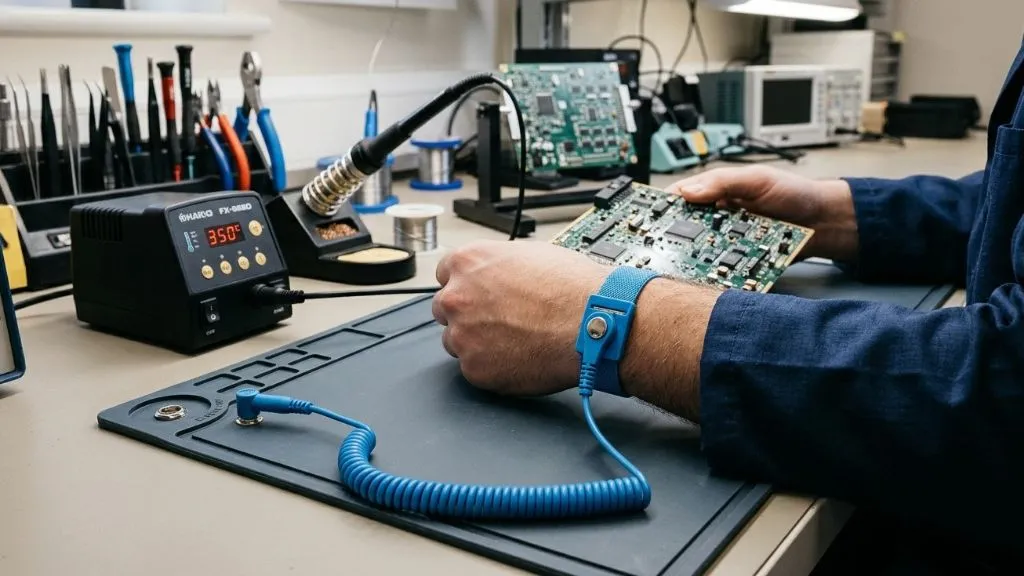
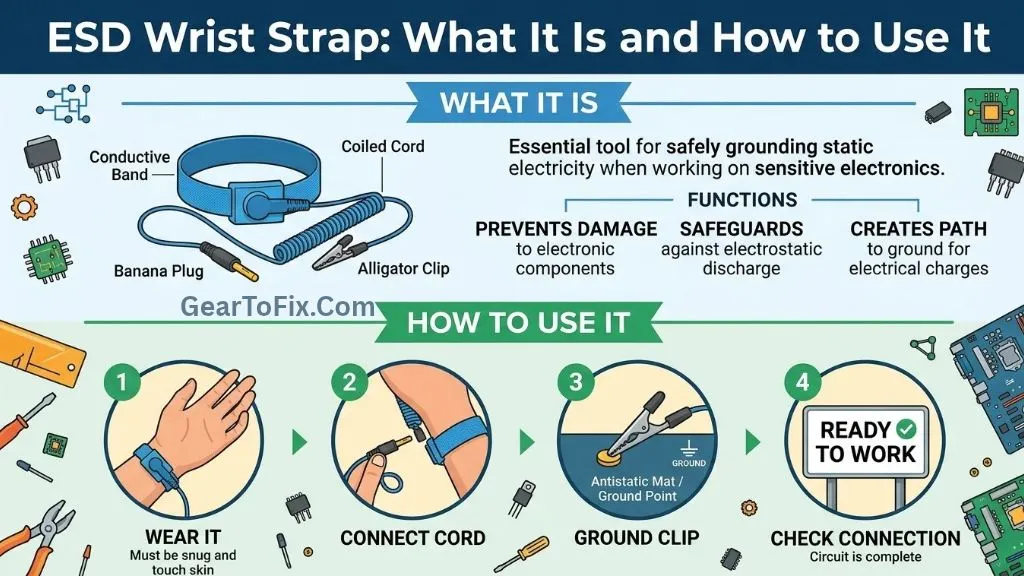
A typical strap has three parts:
- Wristband: Conductive or dissipative material that contacts your skin.
- Ground cord: Connects the band to an ESD grounding point. Many cords include a built-in resistor to limit current.
- Grounding connection: A designated ESD ground point, often part of an ESD workbench or mat system.
The strap does not “erase” all static from a work area. It helps control charge on the person wearing it. Components, tools, packaging, and the work surface may need separate ESD controls.
How to Use an ESD Wrist Strap
Follow the strap manufacturer’s instructions and any procedures used in your workplace. The connection details can vary, but the basic process is similar.
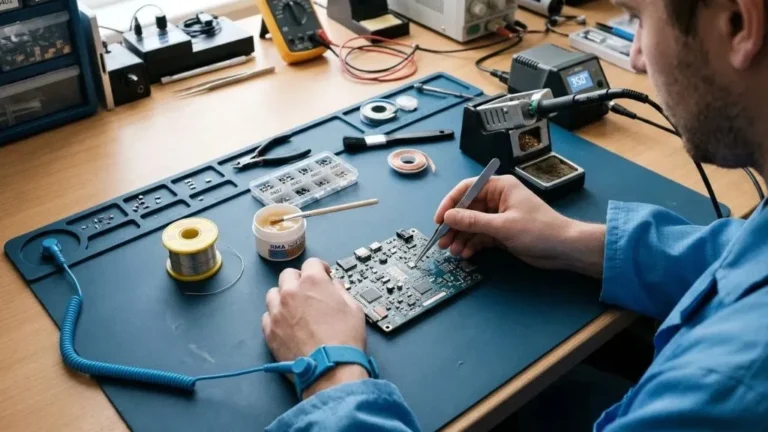
- Prepare a suitable work area. Use an ESD-protected workstation when available, with a properly grounded ESD mat or other designated controls. Keep sensitive components in ESD-safe packaging until you are ready to handle them.
- Put the wristband against bare skin. Wear it snugly enough to maintain contact, but not so tightly that it is uncomfortable. A band over a sleeve may not make reliable skin contact.
- Connect the cord to the wristband. Make sure the snap or other connection is secure.
- Attach the cord to the approved ESD ground point. Use the grounding point specified for the workstation—not an arbitrary metal object, painted surface, or unverified outlet connection.
- Check the connection. If your workplace requires a wrist-strap tester, use it according to its instructions. A strap that looks intact may still have a damaged cord, poor contact, or faulty connection.
- Handle components by their edges when practical. Keep fingers away from exposed contacts and circuitry. Continue wearing the strap while working with exposed ESD-sensitive parts.
- Disconnect carefully when you finish. Store the strap and cord so they are not crushed, sharply bent, or pulled by the cable.
If you are working on equipment, disconnect it from power before opening it and follow the manufacturer’s service instructions. Battery-powered devices may also require battery disconnection, where the procedure allows it.
Where Should You Connect the Wrist Strap?
Connect the strap only to a known ESD grounding point designed for that purpose. At an ESD workstation, this may be a designated snap or terminal connected to the grounding system for the bench. Follow the setup instructions for the mat and workstation.
Do not assume that any metal surface is grounded. A computer case, radiator, plumbing pipe, or outlet cover may not provide a suitable or verified connection. Connecting to an ungrounded object may leave the strap ineffective; connecting to an unsuitable electrical point can create a hazard.
If you do not have a verified ESD ground, do not improvise a connection. Set up an appropriate ESD workstation or follow the equipment maker’s recommended handling procedure.
What an ESD Wrist Strap Cannot Do
A wrist strap controls static charge on the wearer; it is not general-purpose electrical protection.
- It does not protect you from electric shock. Do not wear or use it while working on energized equipment or exposed live circuits.
- It does not protect every component or object automatically. A charged tool, loose packaging, or ungrounded work surface can still create an ESD risk.
- It does not replace an ESD-safe work surface. A grounded mat can help control charge on the bench and provide a suitable place for components.
- It does not work reliably if it is disconnected or poorly fitted. A loose band, broken cord, or bad grounding connection can interrupt the path.
- It does not make ordinary plastic or foam safe for sensitive parts. Use packaging and materials intended for ESD protection.
A wrist strap is one part of an ESD-control system, not a guarantee that damage cannot occur.
Common Wrist-Strap Problems and Mistakes
| Problem or mistake | Why it matters | Better approach |
|---|---|---|
| Wearing the band over clothing | The band may not contact your skin | Wear it directly on bare skin |
| Connecting to an unverified metal object | The object may not be grounded | Use the workstation’s designated ESD ground |
| Forgetting to attach the cord | The band cannot provide its intended grounding path | Check both connections before handling components |
| Using a damaged or stretched cord | The electrical path may be unreliable | Inspect it and replace it if damaged |
| Assuming a strap protects against shock | ESD control is not electrical safety protection | Work only on de-energized equipment and follow service procedures |
| Relying on a “wireless” strap | A strap without a grounding connection may not provide dependable charge control | Use a properly connected, tested wrist strap |
For work that requires consistent ESD control, follow your workplace’s inspection and testing schedule. In a casual repair setting, at minimum inspect the band, cord, snaps, and ground connection before use. Replace damaged parts rather than trying to repair them with tape or improvised wiring.
Do You Need an ESD Mat as Well?
An ESD mat can complement a wrist strap by providing a controlled surface for tools and components. The two serve related but different purposes: the strap helps control charge on your body, while the mat helps control charge on the work surface.
Use a mat and wrist strap as a coordinated system if the task or workplace procedures call for them. Make sure the mat is connected as directed by its manufacturer. Do not assume that placing a regular rubber mat, plastic sheet, or household anti-slip surface on the bench provides ESD protection.
Frequently Asked Questions Of ESD Wrist Strap
Can I connect an ESD wrist strap to a computer case?
Only if the case is a verified, appropriate grounding point within the setup you are using. A metal case is not automatically a suitable ESD ground, especially if the equipment is unplugged or the grounding path is uncertain. A designated ESD workstation connection is the safer choice.
Should the wrist strap touch my skin?
Yes. The band should make reliable contact with bare skin so it can provide the intended path for dissipating charge. Wearing it over a sleeve can prevent that contact.
Do ESD wrist straps need to be tested?
Testing is useful because a strap or cord can fail without obvious visible damage. Workplaces handling sensitive electronics may require regular testing under their own procedures. If a tester is available, follow its instructions; do not assume the strap works simply because it is attached.
Are wireless ESD wrist straps effective?
A strap with no connection to a verified ground does not provide the same dependable grounding path as a properly connected corded strap. For handling sensitive components, use the ESD-control method specified for the task or workstation.
Can I wear an ESD wrist strap while repairing powered equipment?
Do not use it as protection while working on energized equipment. A wrist strap is designed for static control, not protection from electric shock. Disconnect power and follow the equipment’s service instructions before opening or handling internal components.
Final Takeaway
An ESD wrist strap helps protect sensitive electronics by connecting your body to a verified ESD ground through a controlled path. Wear it against bare skin, secure the cord to the designated grounding point, and check that the setup is working before handling components. Treat it as one part of an ESD-safe workspace—not as a substitute for proper grounding, careful component handling, or electrical safety procedures.

Scott Yarnell is a tool expert focused on practical guides, product research, and real-world tool performance to help readers make informed decisions.