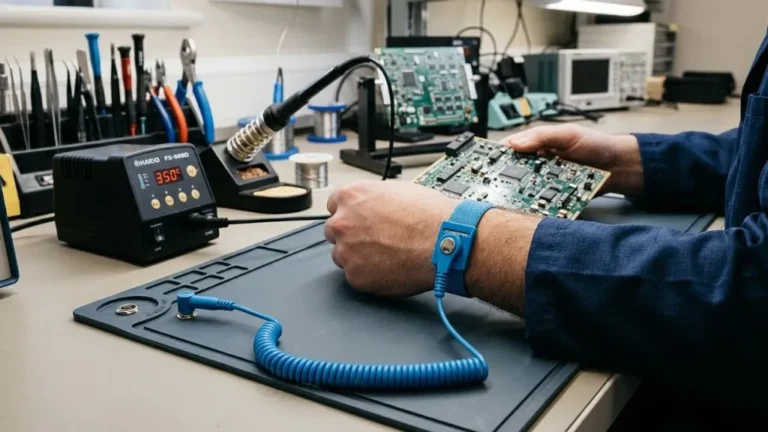
Do I Need Helping Hands for Soldering: A Clear Guide
No, you do not need helping hands for soldering. They are a convenience tool that holds wires, circuit boards, or small components steady while you work. For simple jobs, a stable work surface and another way to secure the parts may be enough. Helping hands become useful when a project is small, awkward to position, or requires both hands to guide the soldering iron and solder.
Whether they are worth using depends on the work not on whether you are a beginner or an experienced solderer. Here’s when they help, what they can’t do, and what to consider before using them.
What helping hands do while you solder
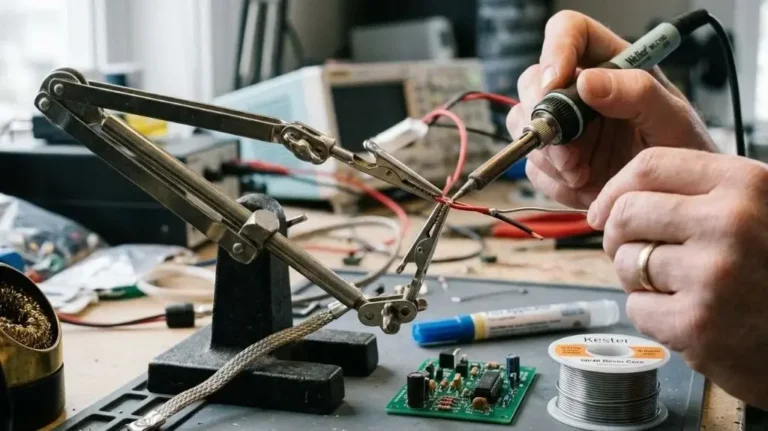
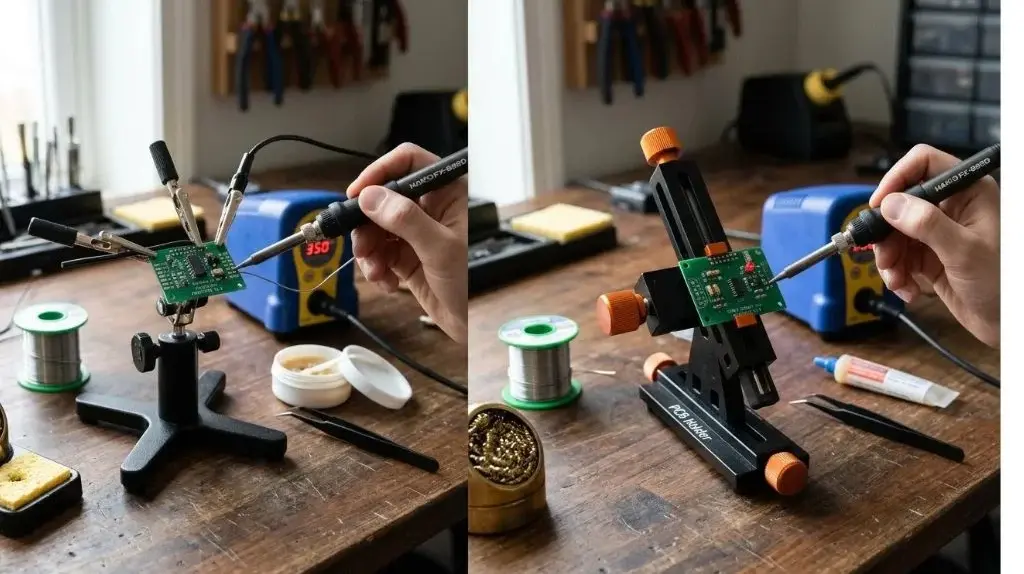
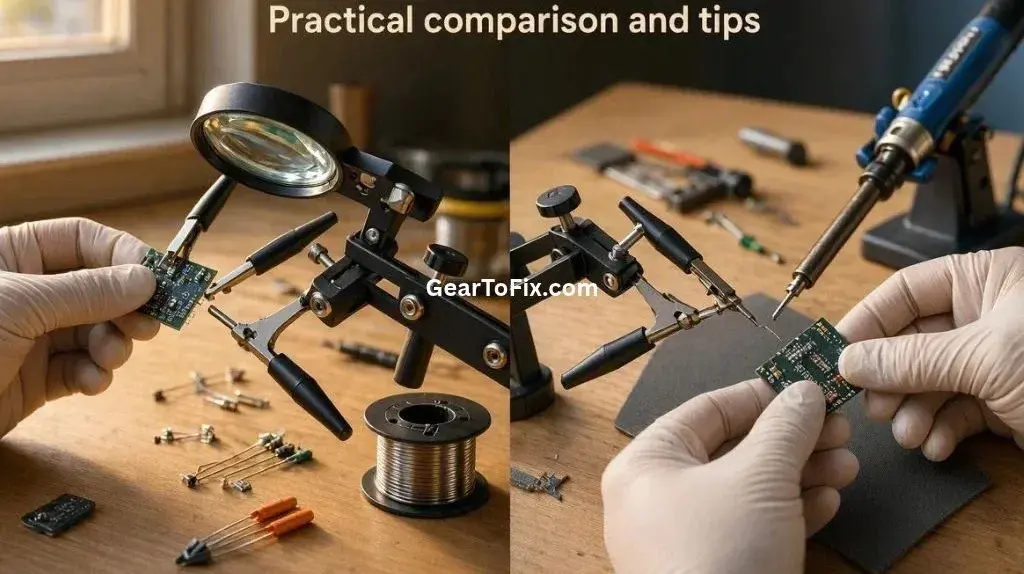
Helping hands are small work-holding tools with adjustable arms and clamps. Many have two clips; some include a magnifying glass, a weighted base, or extra arms. You position the clips to hold your work in place, leaving your hands free to handle the iron and solder.
That extra stability matters because a joint can be difficult to make if a wire or component moves as you touch it with the iron. Holding the work securely can also help you keep the iron tip and solder where you intend them to go.
Helping hands do not make a solder joint for you, control the iron’s temperature, or guarantee a good electrical connection. They simply hold the work.
When helping hands are useful
Consider using them when:
- You’re joining two wires. The wires can slip apart while you heat the joint or apply solder.
- A component needs to stay in position. Small parts may shift easily on a circuit board or work surface.
- The work is too small to hold comfortably. Clips can keep the piece steady without requiring you to grip it near the hot work area.
- You need both hands for the soldering process. One hand can guide the iron and the other can feed solder.
- You’re working at an awkward angle. Adjustable arms may let you position the work more comfortably.
For a beginner, helping hands can reduce the number of things that need to be held at once. They are most helpful when the work itself is unstable—not simply because soldering is new to you.
When you can solder without them
You can usually skip helping hands when the work is already stable. A connector secured in a vise, a circuit board held in a suitable fixture, or a wire that can rest safely on the bench may not need another clamp.
They may also be unnecessary for larger, accessible joints where the parts stay in place on their own. If the tool takes longer to adjust than the task takes to complete, it may not add much value.
Avoid balancing a part precariously or gripping it close to the soldering point just to work without a holder. If it shifts, stop and secure it before continuing.
Alternatives to helping hands
A dedicated helping-hands tool is only one way to hold soldering work. Depending on the task, you may be able to use:
- A small vise or work-holding fixture
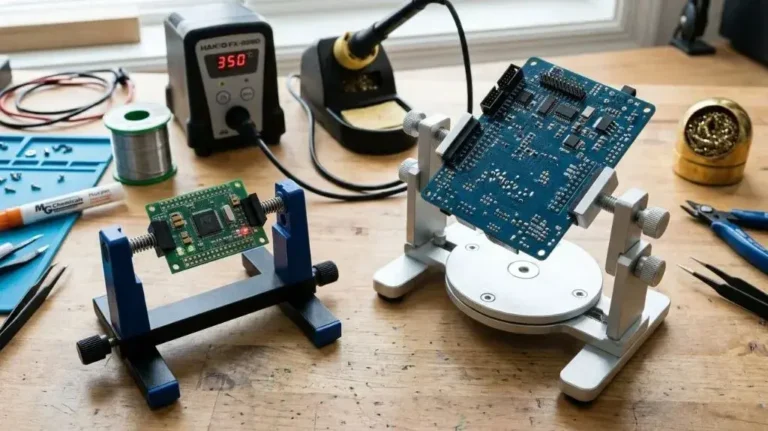
- A circuit-board holder
- A clamp suited to the shape of the work
- A stable, heat-resistant work surface that supports the parts
The best option is one that holds the work firmly without obstructing the joint or placing the clamp where it could be damaged by heat. Do not use a holder that can tip over when you move the iron or solder.
Limitations to keep in mind
Helping hands can make a job easier, but they can also be awkward. Inexpensive or lightweight models may shift when you position the arms, and clips may not grip every shape securely. Large clips can obstruct access to a small joint, while long arms can make a light base less stable.
The clips may also conduct heat if they are metal and close to the soldering point. Position them far enough from the joint that they do not interfere with your work or become unexpectedly hot. Let the work and clips cool before handling them after soldering.
A magnifying lens can help you see small details, but it does not stabilize the work by itself. You may also need to adjust the light and the angle of the lens to avoid glare or an obstructed view.
How to use helping hands effectively
- Place the tool on a stable surface. Keep it away from the edge of the bench, clutter, and anything that could catch on the arms.
- Set the work in the clips. Grip it firmly enough to prevent movement, but do not crush delicate wires or components.
- Check access to the joint. Make sure the clips and arms do not block the iron tip or the path of the solder.
- Adjust the position before heating. The joint should be easy to see and reach without stretching or twisting your wrist.
- Solder while monitoring stability. If the work shifts, stop and reposition it rather than trying to compensate with the iron.
- Let the work cool before unclamping it. This helps prevent burns and avoids disturbing a joint that has not fully cooled.
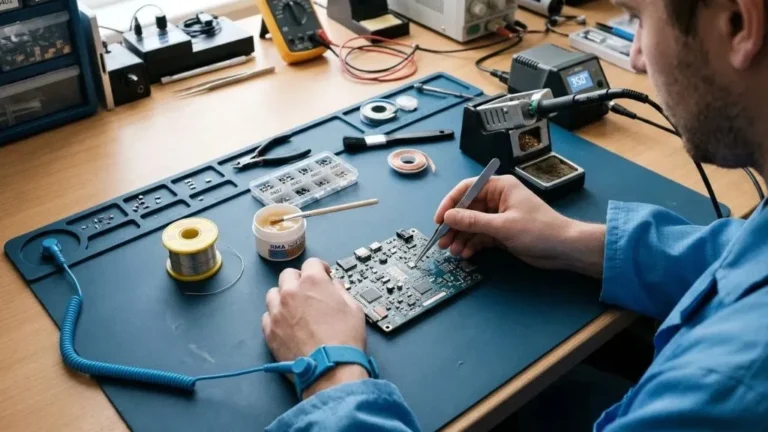
Keep the soldering iron in a proper stand when it is not in your hand. Helping hands hold the work; they are not a substitute for a safe place to rest a hot iron.
Choosing helping hands for your projects
If you solder only occasionally, a basic model may be sufficient. Before choosing one, consider:
- Base stability: A heavier or wider base may be less likely to move as you adjust the clips.
- Arm adjustment: Arms should let you position the work without slipping or blocking access.
- Clip size and grip: The clips should hold your typical work without damaging it.
- Working space: Make sure the tool fits on your bench and leaves room for the iron and other materials.
- Magnification: A lens is useful only if it suits the size and position of the work you do.
You do not need a model with extra features if a simple holder meets your needs. Fit and stability matter more than having the most attachments.
FAQs Of Do I Need Helping Hands for Soldering
Can I solder wires without helping hands?
Yes. You can solder wires without helping hands if they can be held securely by another suitable method. The main goal is to keep the wires from moving while you make the joint.
Are helping hands worth it for beginners?
They can be, especially when you are joining small wires or holding a component in place. They are not essential, though; a stable setup and secure workpiece matter more than owning a particular tool.
Do helping hands improve solder-joint quality?
They can help indirectly by keeping the work steady and making the joint easier to reach. They do not guarantee a good joint, which still depends on suitable technique, clean surfaces, and appropriate heating.
Can the clips get hot?
They can become warm or hot if they are close enough to conduct heat from the work. Keep them away from the joint where practical, and allow them to cool before touching or repositioning them.
Is a magnifying glass necessary?
No. Magnification is optional. It may help you inspect small work, but good lighting and a clear, unobstructed view are also useful.
Final verdict
Helping hands are optional, but useful when small parts or wires will not stay still. If your work is already secure and easy to reach, you can solder without them. Choose a stable holder that suits the size of your projects, and treat it as a way to steady the work not as a substitute for proper soldering technique or hot-tool safety.

Scott Yarnell is a tool expert focused on practical guides, product research, and real-world tool performance to help readers make informed decisions.