Can I Make Solder Wire at Home: Process, Materials, and Safety Guide
Yes, solder wire can technically be made outside a commercial factory, but producing consistent, reliable solder wire at home is much more difficult than it may seem. The process involves preparing a specific metal alloy, melting and forming the material, and converting it into a uniform wire. Some solder products also require a precisely controlled flux core.
For most electronics hobbyists and DIY repair enthusiasts, making solder wire at home is not a practical or recommended project. Working with molten metals can cause serious burns, and certain solder alloys contain hazardous substances such as lead. Producing a wire with the correct composition, diameter, melting characteristics, and electrical performance also requires specialized equipment.
This guide explains how solder wire is manufactured, what materials are involved, why home production is challenging, and which safer alternatives are available.
Can You Actually Make Solder Wire at Home?
Yes, it is technically possible to produce small quantities of solder alloy outside an industrial factory. However, making a dependable solder wire requires more than melting a few metals together.
Commercial solder manufacturers control several important properties, including:
- Alloy composition: The exact proportion of tin, silver, copper, and other metals.
- Melting characteristics: The temperature range at which the solder begins to melt and becomes fully liquid.
- Wire diameter: Consistent thickness throughout the finished product.
- Material consistency: Uniform distribution of alloying elements.
- Flux compatibility: Appropriate flux selection for the intended application.
- Product quality: Reliable wetting, flow, and joint performance.
Without appropriate equipment and quality testing, a homemade solder wire may have inconsistent composition, poor working characteristics, or unpredictable performance.
What Materials Are Used to Make Solder Wire?
Solder wire is manufactured using different metal combinations. The appropriate formulation depends on the intended application, required melting range, and regulatory requirements.
1. Tin
Tin is one of the primary metals used in many solder alloys. It provides the main metallic component in numerous lead-free electronic solder formulations.
2. Silver
Silver is added to certain solder alloys to modify their properties. For example, some electronic solder formulations contain tin, silver, and copper.
3. Copper
Copper is commonly used in lead-free solder formulations. Its presence influences the alloy’s physical properties and interaction with copper surfaces.
4. Lead
Some traditional solder alloys contain lead. Although lead-bearing solder is still used in certain applications, lead presents significant health and environmental concerns. Lead-free alternatives are available for many electronics applications.
5. Flux
Flux is a chemical material that helps remove or manage surface oxides during soldering. It improves the ability of molten solder to wet compatible metal surfaces.
Some solder wires contain flux inside a central channel, while others are supplied without flux. Producing a flux-core wire requires specialized manufacturing controls to maintain a consistent internal structure.
How Is Solder Wire Manufactured?
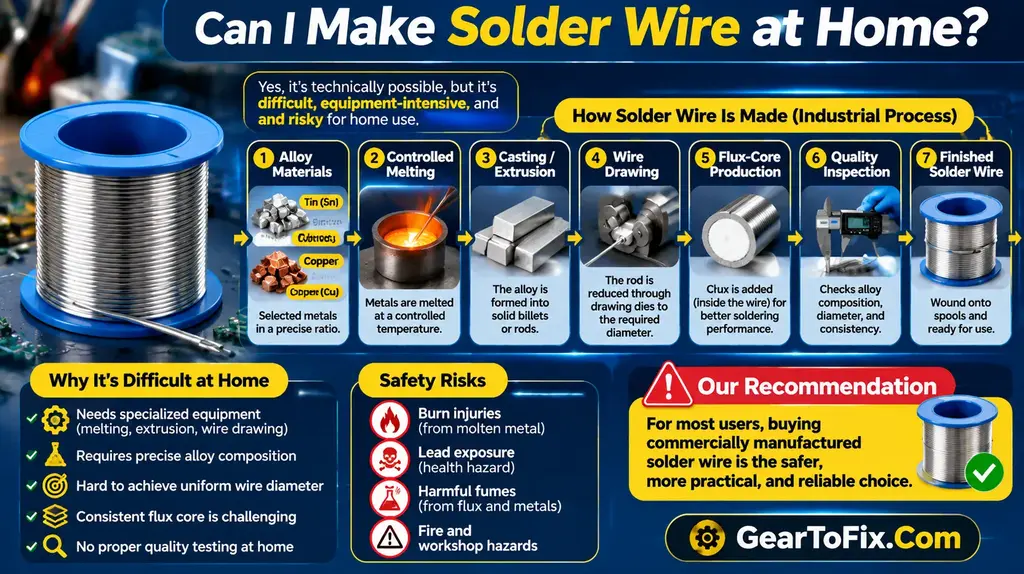
Commercial solder wire production involves several controlled manufacturing stages. Traditional manufacturing generally begins with alloy preparation and continues through casting, extrusion, and wire drawing.
1. Alloy Preparation
Manufacturers select the required metals according to the intended solder alloy specification. The composition must be controlled carefully because even small variations can affect the finished material’s melting and working properties.
2. Melting and Alloy Formation
The selected metals are processed using specialized industrial melting equipment. Temperature control and material handling are important to maintain the intended alloy composition and consistency.
3. Casting
The prepared alloy is formed into solid billets or other suitable starting shapes. These provide the material needed for subsequent forming operations.
4. Extrusion
The solid alloy material is processed through an extrusion system to create a continuous metal form. This stage helps produce material suitable for further reduction into wire.
5. Wire Drawing
The extruded material is reduced through a series of drawing dies until it reaches the required wire diameter. Depending on the alloy and manufacturing method, intermediate processing stages may also be necessary.
6. Flux-Core Production
For flux-core solder wire, the manufacturing process must incorporate flux into the wire in a controlled manner. Maintaining a consistent flux distribution is important for predictable soldering performance.
7. Quality Inspection and Packaging
Manufacturers inspect the finished product for dimensional consistency, alloy composition, and other relevant quality characteristics. The solder wire is then wound onto spools and labeled with product specifications.
Not every manufacturer uses an identical production process. Some production technologies use alternative forming methods, including direct extrusion.
What Equipment Is Needed to Manufacture Solder Wire?
Producing commercial-quality solder wire requires more specialized equipment than a typical home workshop provides.
| Equipment | Purpose |
|---|---|
| Controlled melting system | Processes the selected metal alloy |
| Alloy preparation equipment | Supports controlled material composition |
| Casting equipment | Forms the initial solid material |
| Extrusion press | Forms the alloy into a continuous shape |
| Wire drawing machine | Reduces the material to the required diameter |
| Flux-core equipment | Incorporates flux into suitable solder wire products |
| Quality testing equipment | Checks dimensions and material properties |
| Winding machine | Packages the finished wire onto spools |
This equipment list illustrates why consistent solder wire production is generally an industrial or specialized manufacturing activity rather than a simple DIY project.
Why Is Making Solder Wire at Home Difficult?
Several technical and practical challenges make homemade solder wire difficult to produce reliably.
Inconsistent Alloy Composition
Different metals have different physical and melting characteristics. Without accurate composition control, the resulting alloy may not behave as expected during soldering.
Difficulty Producing Uniform Wire
Commercial solder wire has a controlled diameter. Producing a consistent wire without suitable extrusion or drawing equipment is challenging.
Flux Distribution Problems
Flux-core solder wire requires a consistent internal flux channel. Uneven distribution or gaps can affect soldering performance.
Limited Quality Testing
A wire may look acceptable but still have unsuitable melting characteristics, poor wetting behavior, or inconsistent composition. Visual inspection alone cannot establish product quality.
Safety and Environmental Concerns
Processing metals involves high temperatures and potentially hazardous substances. Incorrect material handling can create exposure risks and contaminated waste.
Is It Safe to Make Solder Wire at Home?
Home production is not recommended for beginners or people without appropriate metal-processing facilities and professional safety controls.
Important hazards include:
- Burn injuries: Molten metal and heated equipment can cause serious burns.
- Lead exposure: Lead-containing materials can contaminate hands, surfaces, clothing, and nearby objects.
- Metal exposure: Heating, processing, or disturbing certain metals can create hazardous dust or fumes.
- Flux fumes: Heated flux can release irritating substances that require suitable extraction.
- Fire hazards: Hot equipment and molten material can ignite nearby combustible substances.
- Waste contamination: Metal residues and contaminated cleaning materials may require controlled disposal.
Lead exposure deserves particular attention. The CDC explains that lead dust and fumes can enter the body through breathing and other exposure routes, and certain metal-processing activities can increase exposure risks. Read its guidance on lead exposure risks and prevention before working with lead-containing materials.
Never melt unknown metal scraps or mix unidentified materials to create solder. Also, do not assume that a lead-free label makes an alloy safe to melt without appropriate industrial controls.
Can You Make Lead-Free Solder Wire Instead?
Lead-free solder wire is available in several alloy formulations. Common examples include tin-silver-copper alloys used in electronics manufacturing.
One widely recognized formulation is SAC305, which contains approximately:
- 96.5% tin
- 3.0% silver
- 0.5% copper
Lead-free does not mean hazard-free. These alloys still require appropriate manufacturing conditions, temperature control, flux handling, and quality inspection.
If you are interested in understanding this type of material in more detail, read our related guide on silver-bearing solder wire, its composition, and common applications.
What Is the Best Alternative to Making Solder Wire at Home?
For most hobbyists, purchasing commercially manufactured solder wire is the safer and more practical option.
Choose a product based on the intended application rather than attempting to reproduce its manufacturing process.
For Electronics Repair
Select a solder wire specifically formulated for electronics. Consider the alloy composition, wire diameter, flux type, and compatibility with the components being repaired.
For PCB Assembly
Use solder that meets the assembly requirements of the circuit board and its components. Check the manufacturer’s recommended processing conditions.
For Plumbing
Choose a plumbing solder approved for the intended pipe material and application. Potable water systems require products that meet applicable drinking-water regulations.
For DIY Projects
A small spool of commercially manufactured lead-free solder wire is usually a convenient choice for occasional hobby work.
How to Choose Good-Quality Solder Wire
Before purchasing solder wire, check the following product characteristics:
- Alloy composition: Confirm which metals are included.
- Lead content: Check whether the product is lead-free or lead-bearing.
- Wire diameter: Choose a size suitable for the work.
- Flux type: Check whether the wire contains a flux core and identify the flux classification.
- Melting range: Confirm compatibility with the components and equipment.
- Manufacturer information: Prefer products with clear technical specifications and safety documentation.
FAQs Of Can I Make Solder Wire at Home
Can I make solder wire using household materials?
Household materials are not a reliable way to produce solder wire. Solder requires a specific alloy composition and controlled manufacturing processes. Unknown metal scraps should never be melted or mixed to create solder.
Can I make lead-free solder wire at home?
It is technically possible to produce small quantities of lead-free solder alloy using specialized metal-processing equipment. However, producing consistent wire with reliable properties is difficult and is not recommended as a typical home project.
What metals are used to make solder wire?
Common solder metals include tin, silver, copper, and sometimes lead. Other elements may be included depending on the alloy formulation and intended application.
How is solder wire manufactured in factories?
Traditional production involves alloy preparation, melting, casting, extrusion, and wire drawing. Flux-core products also require controlled flux incorporation and additional quality checks.
Is homemade solder wire reliable?
Not necessarily. Without composition analysis, dimensional control, and performance testing, homemade solder wire may have inconsistent properties and produce unreliable joints.
Is lead-free solder completely safe?
No. Lead-free solder avoids the specific hazards associated with lead content, but heated flux, hot metal, and other alloying materials can still present health and safety risks.
Conclusion
You can technically produce solder alloy outside a commercial factory, but making reliable solder wire at home requires specialized equipment, precise material control, and appropriate safety facilities.
The process involves much more than melting metals together. Consistent alloy composition, wire diameter, flux distribution, and quality testing are essential for dependable soldering performance.
For ordinary electronics repairs, DIY projects, and hobby applications, commercially manufactured solder wire is generally the better choice. Select a suitable lead-free product from a reputable manufacturer and follow its technical and safety instructions.

Scott Yarnell is a tool expert focused on practical guides, product research, and real-world tool performance to help readers make informed decisions.