How To Store Soldering Accessories: Smart Storage Tips
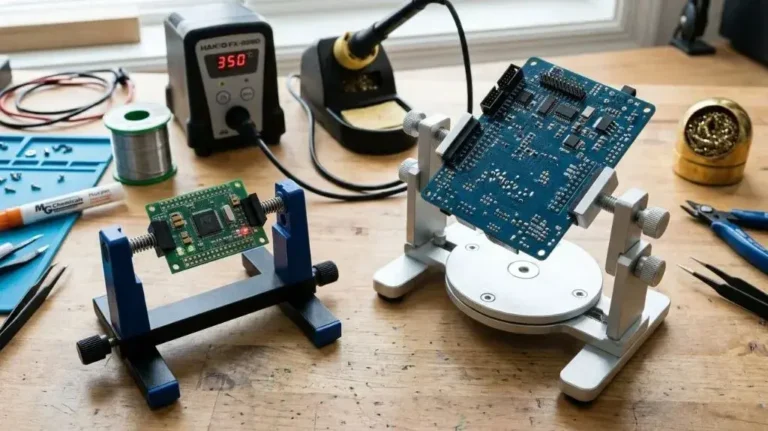
Store soldering accessories in a clean, dry, organized place, and keep materials that need special care—such as solder wire, flux, and soldering tips—in suitable containers. Before putting anything away, let hot tools cool completely, remove residue where appropriate, and separate chemicals and sharp tools from general supplies.
A good storage setup protects accessories from moisture, contamination, damage, and accidental contact. It also makes it easier to find the right tip, solder, or hand tool when a repair comes up.
How to Store Soldering Accessories by Type
Different accessories have different storage needs. A divided parts box may work well for small tools, but it is not the best choice for every material.
| Accessory | Practical storage method | What to avoid |
|---|---|---|
| Soldering tips | Clean, dry compartment or tip holder; follow the iron maker’s guidance | Moisture, loose contact with abrasive items, and residue buildup |
| Solder wire | Keep on its spool in a dry, labeled container | Kinks, tangles, and damp storage |
| Flux | Keep tightly closed in its original container when possible | Heat, contamination, and storage outside the product’s instructions |
| Desoldering braid | Keep dry in its packaging or a sealed bag | Moisture and crushed or tangled braid |
| Solder sucker | Empty and clean it as needed; store it dry | Leaving solder debris inside |
| Tweezers and cutters | Use a tool roll, tray, or divided drawer | Loose storage where sharp tips can be damaged |
| Sponge or brass wool | Store clean and separate from dust and debris | Using contaminated cleaning material on the tip |
Let the Soldering Iron Cool Before Storage
Turn off and unplug the soldering iron before putting it away. Let the iron and tip cool fully in a stable location, away from paper, plastic, solvents, and other heat-sensitive materials. Do not put a hot iron in a drawer, case, or storage box.
Once cool, return it to its stand or a purpose-made holder. Keep the cord loosely arranged rather than tightly wrapped around the handle, which can strain the cord over time. If the iron has a removable tip, follow the manufacturer’s instructions for whether it should remain installed or be removed for storage.
Keep Soldering Tips Clean and Dry
Soldering tips can oxidize or collect residue, which may make them harder to wet with solder and transfer heat effectively. Before storage, clean the tip using the method recommended for the iron and tip. Many setups use brass wool or a damp sponge while the tip is hot, but the correct method can depend on the tip’s coating and the equipment.
After cleaning, some manufacturers recommend leaving a small amount of solder on the tip as a protective coating. Check the iron maker’s guidance rather than assuming the same procedure applies to every tip.
Store spare tips in a clean, dry holder or a divided compartment where they will not rub against screws, cutters, or other hard objects. Label the compartments by tip shape or size if you keep several types. Avoid touching the working surface with bare fingers; skin oils and dirt can contaminate it.
Protect Solder Wire From Tangles and Contamination
Keep solder wire on its spool when it is not in use. Secure the loose end with a spool clip, a small piece of tape, or the spool’s built-in holder so it does not unwind or catch on nearby tools. Avoid sharply bending the wire, which can make it difficult to feed smoothly.
Place the spool in a dry box, drawer, or container. If you use more than one solder alloy or diameter, label each spool clearly. Do not rely on appearance alone to distinguish them.
If solder contains lead, store it in a labeled container away from food, drinks, and items handled by children or pets. Wash your hands after handling it, and follow the product’s handling and disposal instructions. Keep solder waste and scraps separate from ordinary household recycling unless local guidance says otherwise.
Store Flux and Other Chemical Products Carefully
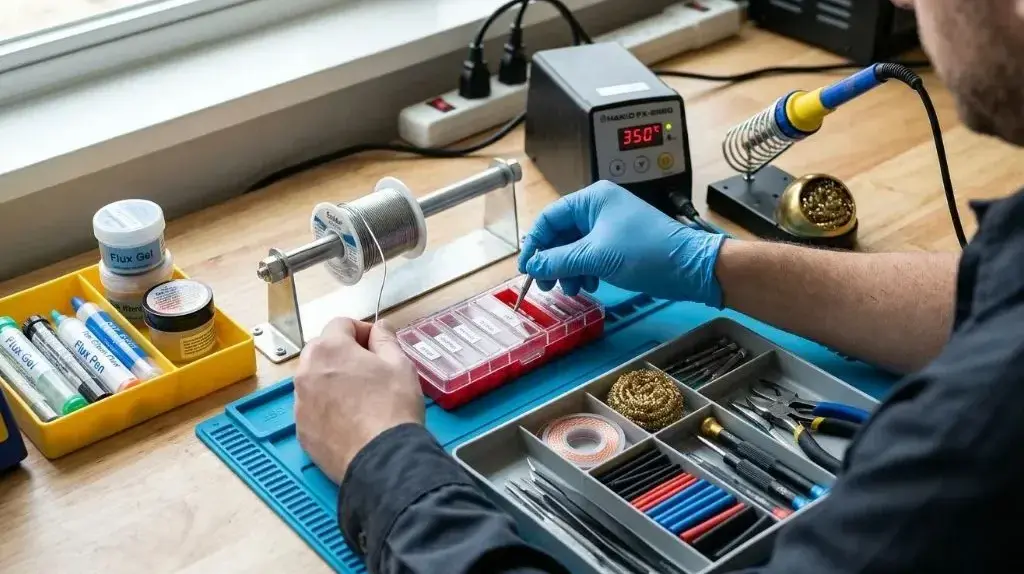
Fluxes, solder pastes, and cleaning products may have different storage requirements. Keep each product in its original, clearly labeled container with the cap closed, and follow the label or safety information supplied by the manufacturer. Some products may need protection from heat, air, or contamination; requirements vary by formulation.
Do not transfer a chemical into an unmarked container or store it beside food. Keep it away from children and pets, and separate incompatible products if the manufacturer’s instructions call for it. Wipe residue from the outside of containers before returning them to storage so it does not spread to tools or drawers.
Keep Desoldering Supplies Dry and Ready to Use
Desoldering braid works best when it is clean and dry. Keep it in its original package or a resealable bag, and avoid crushing it under heavy tools. If the braid becomes contaminated, corroded, or difficult to use, replace it rather than trying to restore it.
For a solder sucker, empty the collection chamber and clean the tool according to its instructions when solder debris builds up. Store it dry, with the nozzle protected from damage. A clogged or dirty pump may not work as intended when you need it.
Organize Hand Tools and Small Accessories
Tweezers, cutters, wire strippers, and small pliers are easier to find when they have assigned places. A shallow drawer with dividers, a tool roll, or a small compartment organizer can keep them separated. Store sharp tools so their cutting edges and fine points are protected, and avoid piling heavy items on top of them.
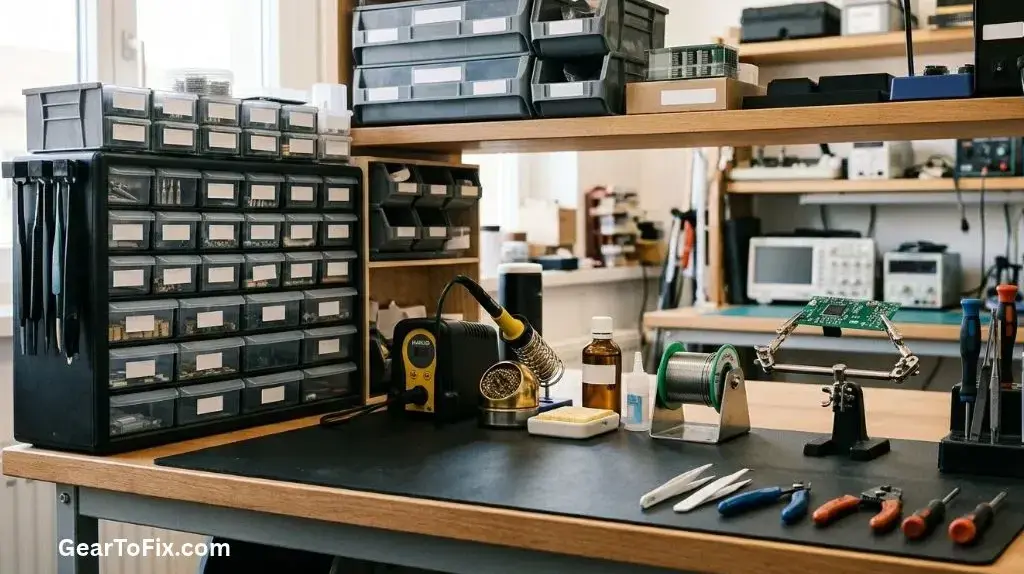
Keep small items such as spare tips, tip cleaners, and replacement nozzles in labeled compartments. Labels are particularly helpful if accessories look similar but serve different purposes. For a portable kit, use a case with fitted or divided sections so tools do not shift during transport.
Set Up a Simple Soldering Storage Area
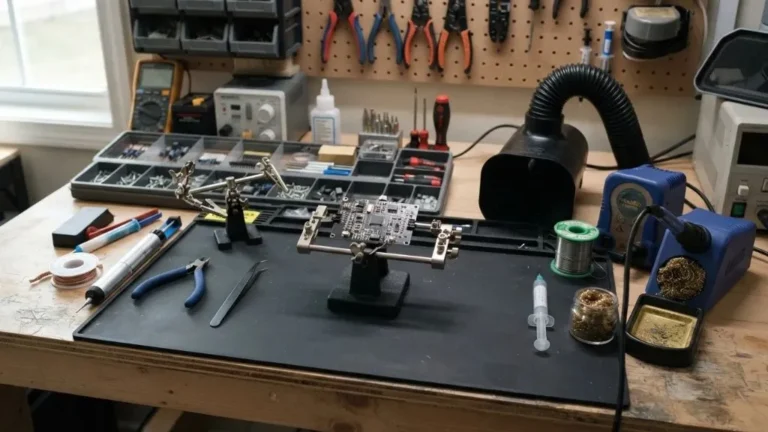
A useful storage system does not need to be elaborate. Start by sorting accessories into groups, then choose containers that match their size and storage needs.
- Separate tools from consumables. Keep hand tools together and place solder, flux, braid, and other consumables in their own sections.
- Label materials that can be confused. Identify solder type and diameter, as well as flux products and spare tip shapes.
- Choose a dry, stable location. Avoid damp areas and places exposed to direct heat or sunlight, especially for products whose labels specify storage limits.
- Keep chemicals and lead-bearing materials contained. Use closed, labeled storage and keep them away from food and household items.
- Check supplies before returning them. Make sure containers are closed, tools are clean enough for storage, and the iron is fully cool.
If you solder only occasionally, a divided box or small drawer may be enough. For frequent work, separate storage for tips, consumables, and hand tools can reduce clutter and help prevent contamination.
Common Storage Mistakes to Avoid
- Putting away a hot iron: This can damage storage materials or create a fire hazard. Let it cool fully first.
- Leaving solder wire loose: Loose wire tangles easily and may be difficult to feed. Keep it on its spool and secure the end.
- Storing flux in an unmarked container: Without its label, the product and its handling instructions may be unclear.
- Keeping accessories in a damp place: Moisture can affect exposed metal parts and desoldering braid.
- Mixing used and clean tip-cleaning materials: Dirty cleaning materials can transfer residue back to the tip.
- Storing sharp tools loose: Cutters and fine-point tools can be damaged or create a puncture risk when mixed together.
FAQs Of How To Store Soldering Accessories
Should soldering tips be stored with solder on them?
Some manufacturers recommend coating a cleaned tip with a small amount of solder before storage to help protect its working surface. Follow the instructions for your iron and tip, since care recommendations can vary.
Can solder wire be stored in a plastic organizer?
Yes, if the spool fits without being crushed or unwound and the organizer is kept dry. Keep the solder labeled, especially if you store different alloys or diameters.
How should I store flux after opening it?
Close the original container tightly and follow the label or manufacturer’s storage instructions. Keep the product clearly identified, and do not transfer it to an unmarked container.
Can soldering accessories be stored in a garage?
They can be, but the garage should be dry and should not expose accessories to excessive heat, moisture, or contamination. Check product labels for specific storage requirements, particularly for flux and other chemical products.
What should I do with solder scraps and used desoldering braid?
Keep them in a suitable container and follow local disposal guidance and any instructions provided with the material. If the solder contains lead, keep the waste labeled and separate from food and ordinary household items.
Final Verdict
Store soldering accessories clean, dry, labeled, and separated according to their needs. Let the iron cool completely, keep solder on its spool, close and identify chemical containers, and protect small or sharp tools from damage. A simple organized setup helps preserve supplies and makes the next soldering job easier to start.

Scott Yarnell is a tool expert focused on practical guides, product research, and real-world tool performance to help readers make informed decisions.