60/40 Vs 63/37 Solder Wire: Key Differences Explained
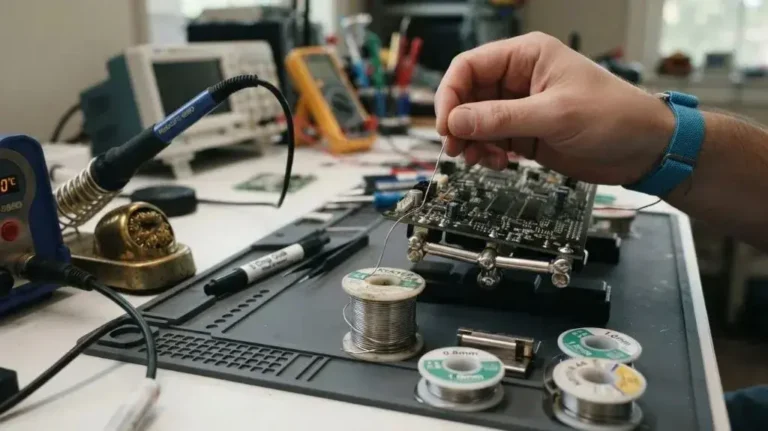
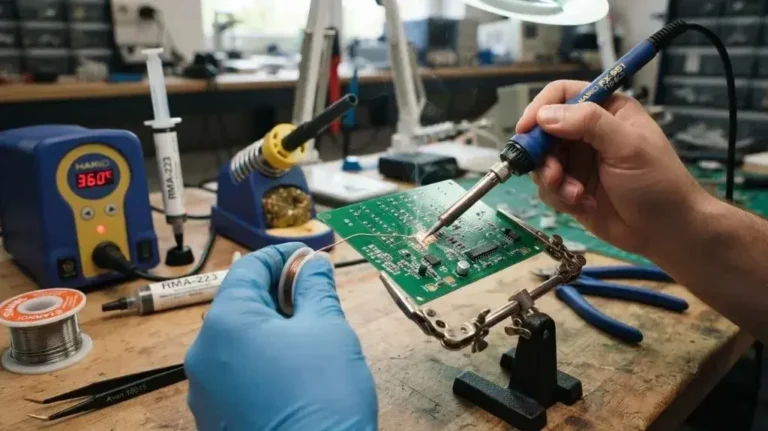
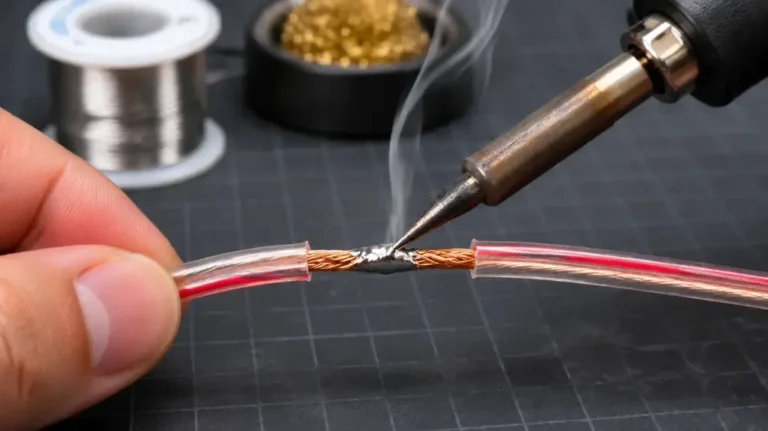
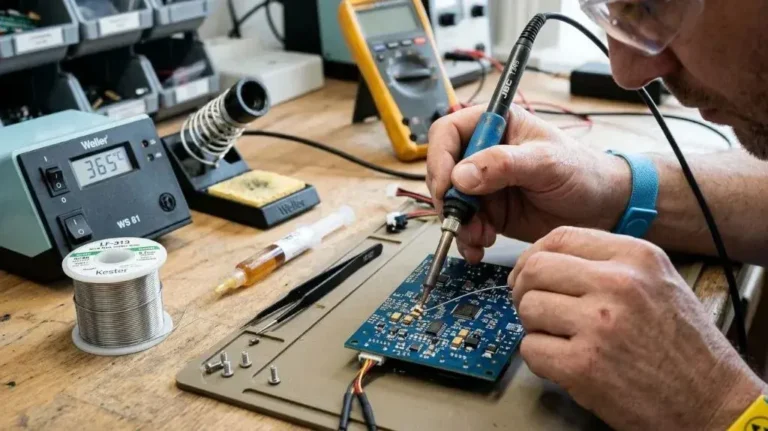
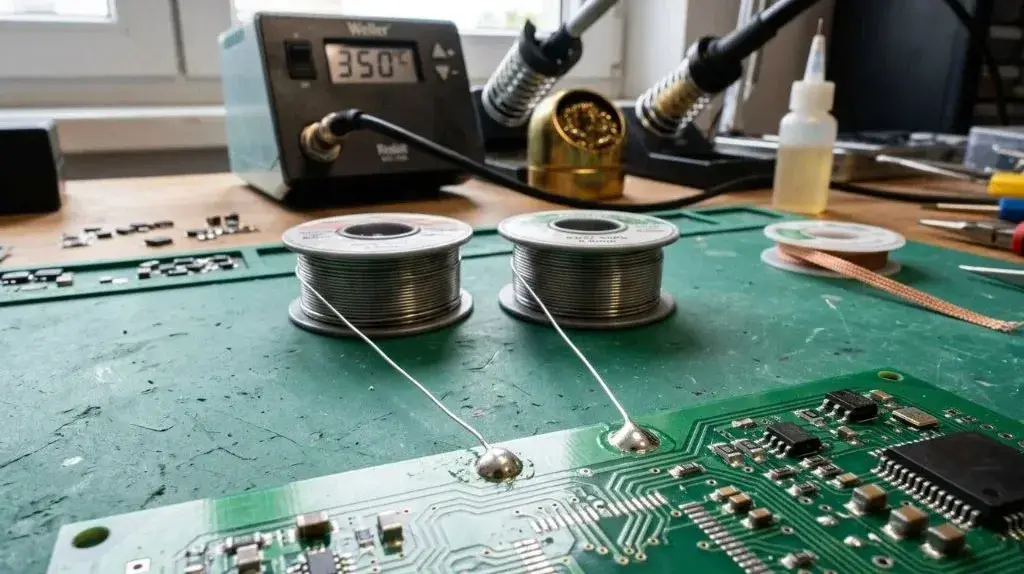
The main difference between 60/40 and 63/37 solder wire is how each alloy solidifies. Both contain tin and lead, and their melting temperatures are close. But 63/37 changes directly from liquid to solid at about 183°C, while 60/40 passes through a short pasty range as it cools.
That difference can matter when a joint must freeze cleanly without movement. Here’s how to choose between them, and why the flux core and wire diameter matter too.
What the numbers mean and why 63/37 solidifies differently
The numbers show the percentages of tin and lead by weight. So 60/40 solder is 60% tin and 40% lead; 63/37 solder is 63% tin and 37% lead.
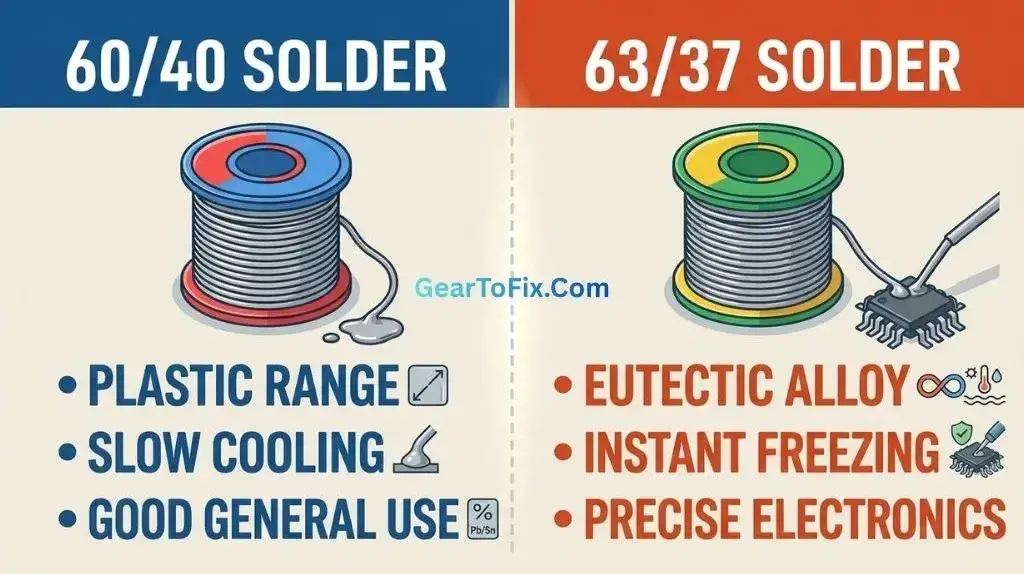
The key distinction is that 63/37 is a eutectic alloy. It melts and solidifies at a single temperature, approximately 183°C. As it cools, it does not linger in a partially solid, partially liquid state.
60/40 is non-eutectic. It starts to solidify at about 183°C but does not become fully solid until roughly 188–190°C. The narrow temperature range between those points is called the pasty range.
In practice, the 60/40 joint can remain somewhat soft while cooling through that range. If a wire, component, or tool shifts then, the joint may be disturbed. A 63/37 joint passes through that transition more decisively.
The practical differences at the soldering iron
Both alloys are widely used for through-hole electronics, wires, and other general soldering tasks. Their similar melting temperatures mean 63/37 does not require a substantially hotter iron than 60/40.
| Feature | 60/40 solder wire | 63/37 solder wire |
|---|---|---|
| Composition | 60% tin, 40% lead | 63% tin, 37% lead |
| Solidification | Passes through a short pasty range | Freezes at about 183°C |
| Main practical difference | Can be more vulnerable to movement as it cools | Less time in a partially solid state |
| Common use | General-purpose soldering and repairs | Electronics work where a clean, quick freeze is useful |
The table describes the alloy, not the whole soldering experience. Flux type and quantity, wire diameter, joint cleanliness, iron-tip condition, and the parts being joined all affect how solder flows and how reliable the joint is.
Joint movement and disturbed connections
A joint should stay still as it cools, regardless of which alloy you use. With 63/37, the sharp transition from liquid to solid reduces the time during which slight movement can disturb the joint. That can be helpful for small electronic connections or situations where holding components perfectly still is awkward.
With 60/40, a joint can be more susceptible to movement while it passes through its pasty range. This does not make 60/40 unsuitable; it simply means you should keep the parts steady until the solder has fully solidified.
Similar melting temperatures, similar iron requirements
It’s a mistake to assume that 63/37 needs a hotter iron because it contains more tin. The two alloys have close melting temperatures. Choose a working temperature based on the joint’s size, thermal mass, and the soldering equipment—not just the alloy label.
Using excessive heat can damage pads or components and degrade flux. A clean tip, good contact with the joint, and an appropriate amount of solder are usually more useful than raising the temperature unnecessarily.
When 60/40 makes sense
60/40 is a practical choice for general soldering when it is already available and the work allows you to keep the joint still while it cools. It can be used for many common through-hole and wire connections.
It may also be suitable for older equipment or repair work where 60/40 is the established solder in use. For a simple joint, the difference in solidification behavior may not affect the result if the surfaces are clean, the solder wets properly, and the joint is left undisturbed.
Its limitation is not that it makes inherently poor joints. The main consideration is the pasty range: movement during cooling can leave a disturbed joint, just as with any solder if it is moved before it sets.
When 63/37 is the more practical option
63/37 is often convenient for electronics work because it solidifies quickly through its transition point. It can be a good choice for closely spaced connections, small components, and work where a joint needs to freeze cleanly once the iron is removed.
It does not compensate for poor technique. A cold or contaminated surface, inadequate flux, or movement during cooling can still cause problems. The alloy simply reduces the time spent in the partially solid state.
The alloy is only one part of the choice
Before choosing solder wire, check the flux core and wire diameter as well as the alloy.
- Flux core: Rosin-based and other flux formulations behave differently and can leave different residues. Choose a flux suited to the task and follow its cleaning guidance.
- Wire diameter: A thinner wire gives finer control on small joints. A thicker wire can feed more solder quickly for larger connections.
- Lead content: Both 60/40 and 63/37 contain lead. They are not lead-free alternatives.
For most users, matching the wire diameter and flux to the job will affect day-to-day handling at least as much as choosing between these two alloys.
Lead handling and safe use
Because both alloys contain lead, avoid eating or drinking at the workbench, wash your hands after soldering, and keep solder and residue away from food-contact surfaces. Use suitable ventilation to reduce exposure to flux fumes, and collect solder scraps and residue for appropriate disposal.
Lead-containing solder is restricted or prohibited in some applications and markets, including many products covered by lead-free requirements. Check the rules that apply to your equipment and location before using it. Neither alloy should be used for cookware, food-contact items, or plumbing intended for drinking water.
FAQs About 60/40 Vs 63/37 Solder Wire
Is 63/37 solder better than 60/40?
Not for every job. 63/37 has a practical advantage when a clean, quick transition from liquid to solid is useful. 60/40 remains suitable for many general soldering tasks if the joint is held still as it cools.
Does 63/37 solder need a hotter iron?
No. Its melting point is close to that of 60/40. Set the iron for the joint and equipment rather than choosing a higher temperature solely because you are using 63/37.
Can I use 60/40 and 63/37 for the same electronics work?
Often, yes. Both are leaded tin-solder alloys used for electronics. Follow any requirements for the equipment, and pay attention to the flux, wire diameter, and proper handling of lead-containing materials.
Is 63/37 lead-free?
No. It contains 37% lead by weight. The 60/40 alloy also contains lead, at 40% by weight.
Does solder core flux change the difference between the alloys?
Flux does not change the alloy’s composition or its solidification behavior, but it strongly affects cleaning and wetting. Compare flux type and wire diameter separately when selecting solder wire.
Final Verdict
The practical difference between 60/40 and 63/37 solder wire is the way they solidify. Choose 63/37 when a quick, decisive freeze is useful, especially for small electronics joints. Choose 60/40 for general work where you can keep the joint still while it cools, or when it suits an existing repair process.
Neither alloy is a universal replacement for lead-free solder where lead-free materials are required. And for either choice, the right flux, wire diameter, and steady soldering technique remain essential.

Scott Yarnell is a tool expert focused on practical guides, product research, and real-world tool performance to help readers make informed decisions.