What Solder Wire Is Suitable for Electronics: A Quick Guide
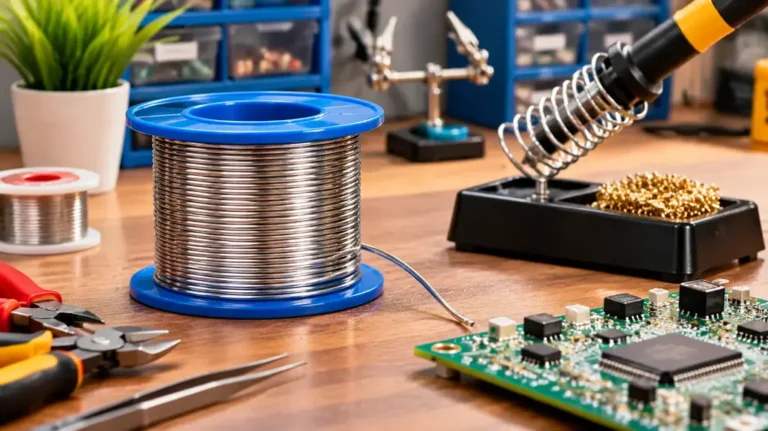
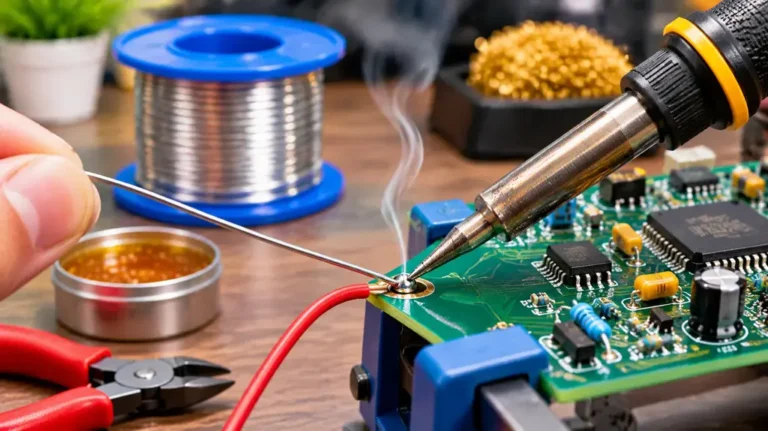
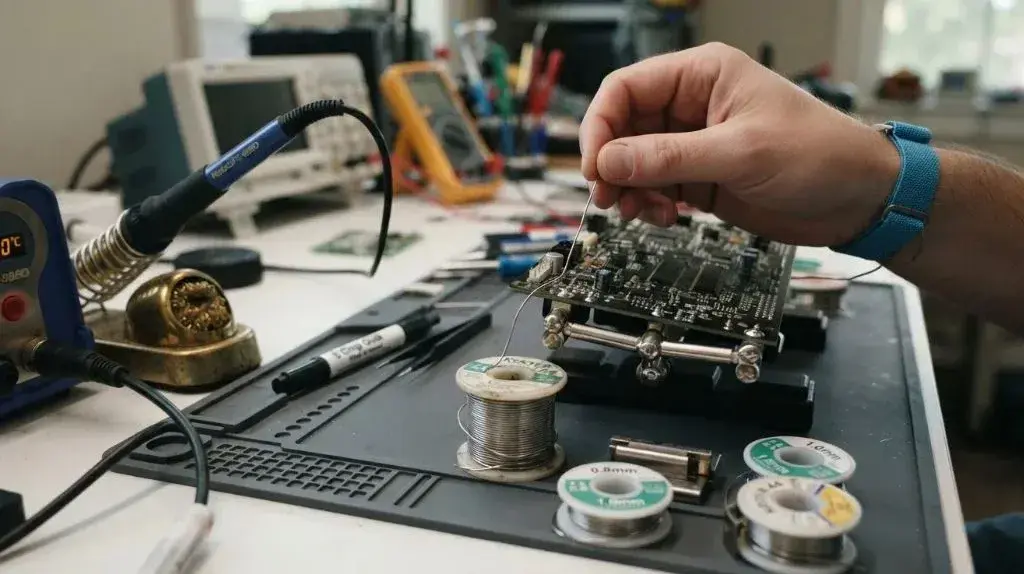
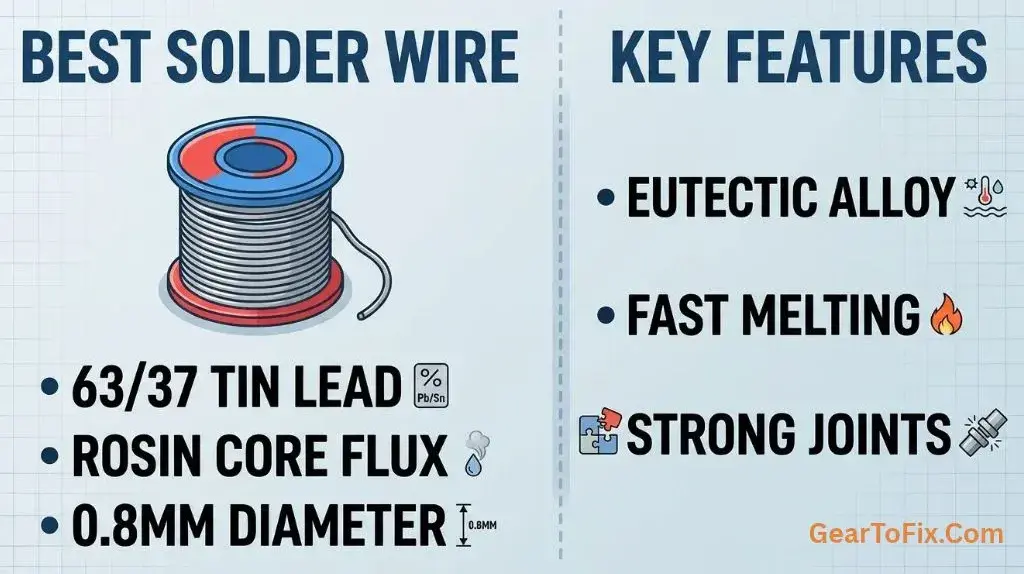
For most electronics work, use rosin-core solder wire made for electrical or electronic applications. A common starting choice is 0.5–0.8 mm wire: it is manageable for many circuit-board joints and general repairs. The alloy depends on your requirements: leaded solder is often easier to work with, while lead-free solder is required or preferred in many applications.
Avoid acid-core solder intended for plumbing or sheet metal. Its corrosive flux can damage electronic components and circuit boards.
Choose the Right Solder Alloy
Solder wire is made from an alloy that melts to form an electrical and mechanical connection. The right choice depends on the equipment, rules that apply to the product, and how easy the solder needs to be to work with.
| Solder type | Typical use | Main consideration |
|---|---|---|
| Leaded tin-lead, such as 63/37 or 60/40 | Repairs and hobby electronics where its use is permitted | Usually flows readily, but contains lead |
| Lead-free alloys, such as SAC-type solder | Many commercial products and applications requiring lead-free materials | Often needs more heat and can be less forgiving to work with |
| Specialty alloys | Specific repair, temperature, or material requirements | Check compatibility with the component and process |
63/37 solder contains 63% tin and 37% lead. It changes from liquid to solid at a narrower temperature range than 60/40 solder, which can help produce a neat joint. 60/40 solder has a wider melting range. Both are used for electronics where leaded solder is allowed.
Lead-free solder is not a single formula. SAC305, for example, is a tin-silver-copper alloy. Its working behavior differs from leaded solder, so follow the solder and equipment manufacturers’ guidance rather than assuming that settings or techniques will transfer exactly.
Read More: What Is Solder Wire
Leaded or lead-free?
Choose lead-free solder when a product specification, workplace policy, or applicable regulation requires it. For personal repairs, leaded solder may be easier to use, but it still requires careful handling. Do not use it on products that must meet lead-free requirements.
Regardless of alloy, wash your hands after handling solder and keep food and drink away from the work area. Use good ventilation to reduce exposure to flux fumes; solder fumes come mainly from heated flux, not from the solder metal simply melting.
Use Rosin-Core or Electronics-Grade Flux
Flux removes surface oxides and helps molten solder wet the metal, allowing it to form a sound joint. Many solder wires contain flux in a channel through the center, which is why they are called flux-core solder.
For circuit boards and electrical connections, look for solder labeled for electronics, with a rosin-based or electronics-grade flux core. Depending on the product, the flux may be classified as rosin, mildly activated rosin, or no-clean. Follow the label’s cleaning instructions: “no-clean” does not automatically mean residue should be left in every application.
Do not use acid-core solder or plumbing flux on circuit boards. Acidic residue can corrode conductors and components over time. If a job needs extra flux, use a flux product explicitly intended for electronics and compatible with the solder.
Pick a Wire Diameter That Matches the work
wire diameter affects how much solder is delivered with each feed. A thinner wire allows finer control; thicker wire supplies more solder per length but can be harder to meter on small joints.
- Around 0.3–0.5 mm: Useful for small components, fine-pitch work, and precise repairs.
- Around 0.5–0.8 mm: A practical range for many through-hole components, wires, and general electronics work.
- Around 1 mm or larger: More suited to larger connections that need more solder, though it may be unwieldy on small circuit-board pads.
These are practical starting points, not strict rules. Choose based on the size of the joint and your ability to feed the wire steadily. A large wire can flood a small pad, while very thin wire may take longer to build up a larger connection.
Match the Solder to the Joint
The solder should suit both the materials being joined and the size of the connection. Small component leads and circuit-board pads generally call for finer wire and careful heat control. Larger wires or terminals may need more solder, but adding solder cannot compensate for a poor mechanical connection or a surface that has not been cleaned.
For a typical electronics joint:
- Use solder and flux intended for electrical or electronic work.
- Make sure the surfaces are clean and the components are held in position.
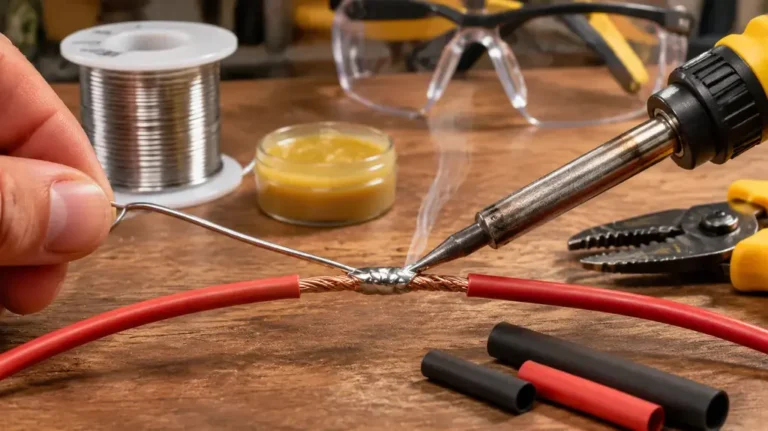
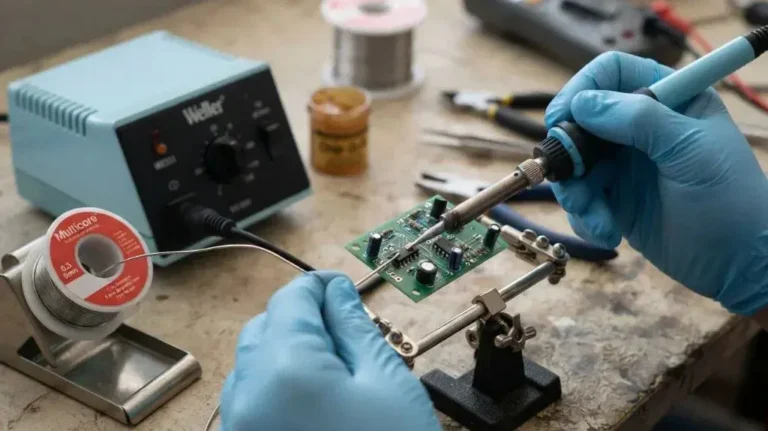
- Heat the joint with a suitable soldering iron, then feed solder to the heated joint rather than melting it only on the iron tip.
- Stop feeding once the joint is covered and formed; excess solder can create bridges between nearby connections.
- Let the joint cool without moving it.
The iron’s temperature and tip should suit the joint, solder alloy, and components. Lead-free alloys may require different working conditions from leaded solder, but excessive heat can damage pads or components with either type. Follow the equipment and component guidance when available.
Common Solder-Wire Mistakes to Avoid
- Using plumbing solder: Acid-core products are not appropriate for electronics and may leave corrosive residues.
- Choosing wire that is too thick: It can deliver too much solder to small pads and make bridging more likely.
- Assuming all lead-free solder behaves alike: Alloys differ in composition and working characteristics.
- Using solder as a substitute for flux: Oxidized or contaminated surfaces may not form a reliable joint. Use electronics-grade flux when needed.
- Ignoring residue instructions: Some flux residues should be cleaned; others are designed to remain under specified conditions. Check the product label.
- Overheating the joint: Excessive heat or prolonged contact can damage components, traces, and pads.
FAQs Of What Solder Wire Is Suitable for Electronics
Is 60/40 solder suitable for electronics?
Yes, 60/40 tin-lead solder is used for electronics when leaded solder is permitted and appropriate for the application. It should be electronics-grade and have a suitable flux core, not an acid core.
Is lead-free solder better for electronics?
Not universally. Lead-free solder is necessary for applications with lead-free requirements, while leaded solder can be easier to work with in some repairs. Choose according to the product specification, applicable rules, and the materials involved.
What solder diameter should a beginner use?
A 0.5–0.8 mm wire is a useful starting range for many general electronics tasks. For very small components, a thinner wire can make it easier to control the amount of solder.
Can I use solid solder wire without a flux core?
Yes, but the joint still needs suitable flux. For most routine electronics work, flux-core wire is convenient; solid wire is generally used when flux is applied separately.
Can I use acid-core solder on a circuit board?
No. Acid-core solder is intended for other types of work, such as plumbing, and its flux can corrode electronic connections. Use rosin-core or other electronics-grade solder instead.
Final Takeaway
For general electronics soldering, choose electronics-grade, rosin-core solder wire and select a diameter that suits the joint—often about 0.5–0.8 mm for everyday work. Use leaded or lead-free solder according to the application’s requirements, and never substitute plumbing solder or acid-core flux.

Scott Yarnell is a tool expert focused on practical guides, product research, and real-world tool performance to help readers make informed decisions.