Are Soldering Iron Tips Interchangeable: Fit Guide
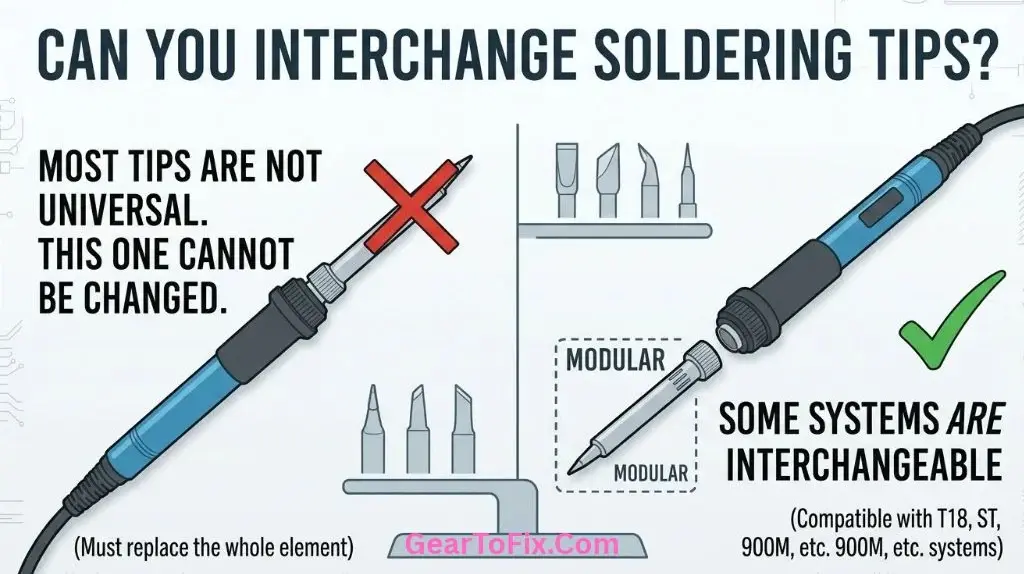
Soldering iron tips are not universally interchangeable between stations. A tip may work with another station if it is designed for the same iron or handpiece, but matching its shape or diameter is not enough. The tip’s mounting system, heater arrangement, and temperature-sensing design also matter.
Before fitting a tip from another station, check the station or handpiece manual for compatible tip types. Using a tip that does not match can lead to a poor fit, unreliable heating, or temperature control that does not work as intended.
What determines whether soldering iron tips fit?
The tip usually belongs to a specific handpiece or iron, not simply to a station’s brand or temperature range. Different stations may use similar-looking tips that attach in different ways—or tips that appear to fit but are designed for a different heater.
Several details determine compatibility:
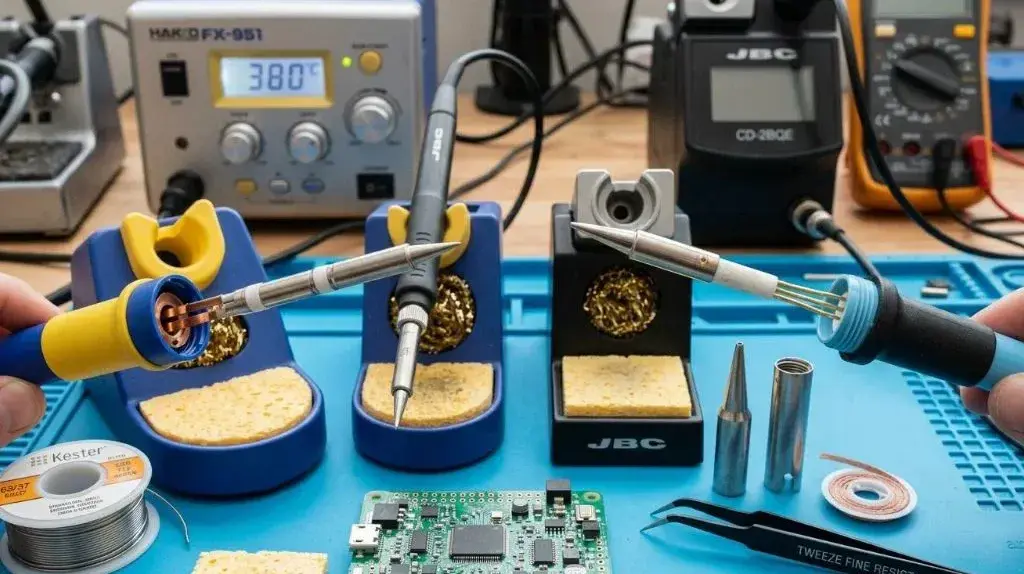
- Mounting style: Some tips slide over a heating element and are held by a nut or sleeve. Others connect as complete cartridges.
- Tip dimensions: The tip’s length, diameter, and internal shape must match the handpiece.
- Heater design: In some irons, the heater is separate from the tip. In others, the heater is integrated into the tip assembly.
- Temperature sensing: A station may monitor temperature through a sensor positioned in or near the tip. A tip designed for a different setup may not provide accurate control.
- Retention and contact: The tip must seat securely and make the intended thermal or electrical contact.
A station’s wattage or maximum temperature does not establish tip compatibility. Those specifications describe the station’s operating capabilities, not whether a particular tip fits its handpiece.
Common tip designs and their compatibility
| Tip design | How it works | Compatibility considerations |
|---|---|---|
| Separate tip and heater | The tip fits over or around a heater in the handpiece | Must match the handpiece’s dimensions, mounting method, and intended heater |
| Integrated cartridge | The tip, heater, and often the temperature sensor form one assembly | Usually limited to handpieces designed for that cartridge system |
| Screw- or sleeve-retained tip | A separate tip is secured with a retaining part | The tip must match the iron’s fit and retention arrangement |
These are broad categories, not universal standards. Designs can vary between manufacturers and even between product lines from the same manufacturer.
Separate tips and heaters
In this design, the tip and heating element are separate components. The tip slides over or around the heater and is secured by the handpiece’s retaining hardware.
Some tips may fit multiple irons if the handpieces use the same dimensions and mounting system. But a similar-looking tip is not proof of compatibility. A difference in length or internal diameter can prevent proper seating or affect how heat transfers to the tip.
Integrated cartridge tips
A cartridge combines the soldering tip with the heater and, in many designs, temperature-sensing components. The complete cartridge is inserted into the compatible handpiece.
These cartridges are generally specific to a particular system or family of handpieces. Even if two cartridges look alike, their connections, dimensions, or sensor arrangements may differ. Check the manufacturer’s compatibility information rather than relying on appearance.
Why fitting the tip to the handpiece matters
A station supplies power and controls the iron, but the handpiece is where the tip connects to the heating system. That is why a tip that fits one handpiece may not work in another handpiece connected to a similar station.
Temperature control also depends on the relationship between the tip, heater, and sensor. If a tip is not designed for that arrangement, the station may not regulate temperature as expected. The displayed temperature may not accurately reflect the working surface, or the tip may heat inconsistently.
A tip that is loose, difficult to seat, or requires force is not a safe compatibility test. Do not modify the tip or handpiece to make the parts fit.
How to check compatibility
Use this process before installing a replacement or cross-brand tip:
- Identify the iron or handpiece model. The handpiece may have a model number separate from the station’s model number.
- Check the manual or manufacturer’s compatibility list. Look for the exact tip series or cartridge type approved for that handpiece.
- Compare the attachment design. Confirm whether the system uses a separate tip, a cartridge, a sleeve, or another retaining method.
- Verify the dimensions and seating arrangement. The tip should fit as intended without forcing, looseness, or improvised adjustments.
- Follow the manufacturer’s replacement procedure. Some components should be changed only when the iron is cool or powered off; use the instructions for the specific equipment.
If the documentation is unavailable, contact the station or handpiece manufacturer with the model numbers. A visual match alone cannot confirm that the heater and temperature-sensing systems are compatible.
What can happen if you use an incompatible tip?
An incompatible tip may fail to fit, heat poorly, or interfere with the station’s temperature control. Possible signs include:
- The tip does not seat securely.
- The retaining hardware cannot be installed normally.
- The iron heats slowly or unevenly.
- The station’s temperature reading behaves unexpectedly.
- The tip does not maintain working temperature during soldering.
These symptoms can also have other causes, such as a worn tip, a damaged heater, or a connection problem. If a new tip produces unusual behavior, switch off the station, let the iron cool, and confirm the tip type before continuing.
Do not force a tip into the handpiece or use a tool to reshape it. Forcing parts together can damage the tip, heater, or retaining components.
Are tips from different brands ever compatible?
Yes, cross-brand compatibility is possible when the tip is specifically designed for the same handpiece or compatible system. But it should be confirmed by documentation—not assumed from a similar shape, size, or connector.
A replacement tip may also fit physically while being intended for a different heater or temperature-sensing design. In that case, physical fit alone does not guarantee correct operation.
FAQs Of Are Soldering Iron Tips Interchangeable
Can I use a tip from another station if it fits?
Not necessarily. The tip must be compatible with the handpiece’s mounting system, heater, and temperature-sensing arrangement. A physical fit is only one part of compatibility.
Are soldering station tips universal?
No. There is no single tip standard that applies to all soldering stations. Some tips work across compatible handpieces, but many systems use specific tip series or cartridges.
Do all tips from the same brand fit the same station?
No. A manufacturer may use different handpieces and tip systems across its product lines. Check compatibility by handpiece or tip-series model, not brand name alone.
Can a different tip shape affect soldering?
Yes. Tip shape affects contact area and how heat is applied to the joint. Once compatibility is confirmed, choose a shape suited to the work; a different shape does not make an otherwise incompatible tip usable.
Should I replace the station if compatible tips are hard to find?
Not automatically. First check whether the handpiece has a separate model number and whether compatible replacement tips are listed under that model. If the correct tips are discontinued or unavailable, then the availability of replacement parts may factor into whether to keep or replace the equipment.
Final Takeaway
Soldering iron tips are interchangeable only when they are designed for the same handpiece or a confirmed compatible system. Check the tip series, mounting method, and heater arrangement before installing one. If the tip does not seat normally or the station behaves unexpectedly, stop using it and verify compatibility rather than forcing a fit.

Scott Yarnell is a tool expert focused on practical guides, product research, and real-world tool performance to help readers make informed decisions.