What Is an ESD-Safe Soldering Station: A Complete Guide
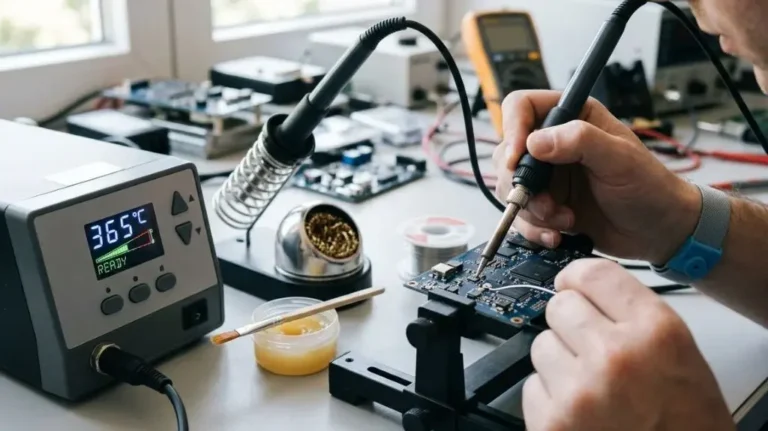
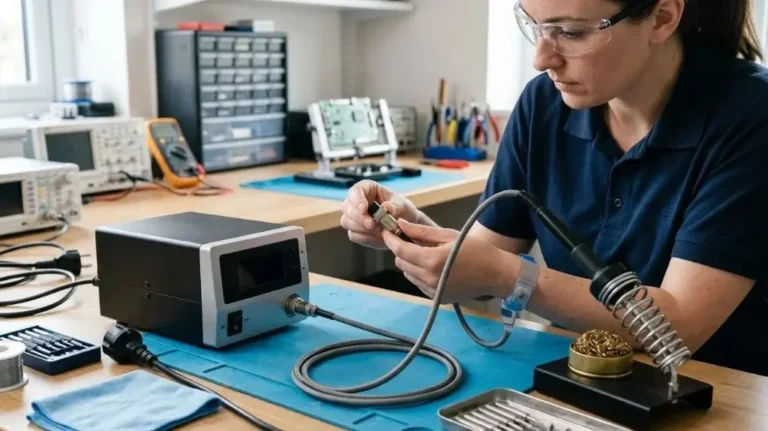
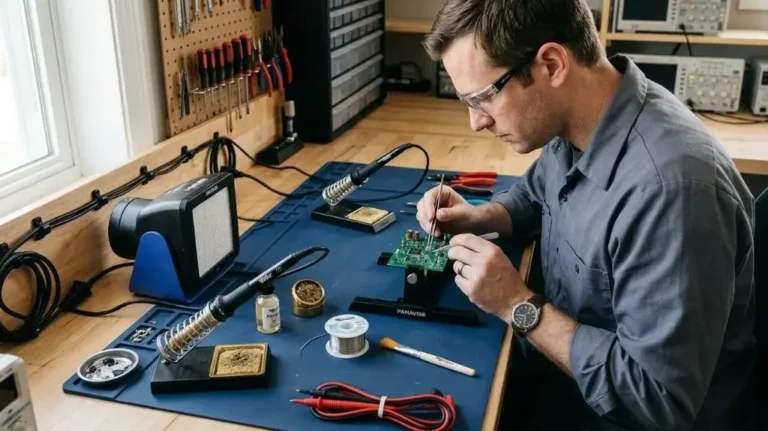
An ESD-safe soldering station is designed to reduce the risk of electrostatic discharge damaging sensitive electronic components during soldering. It helps control static electricity by grounding conductive parts, such as the soldering iron tip, and may be used with other ESD-control equipment, including a grounded work mat and wrist strap.
The station does not make a work area completely protected on its own. Safe handling also depends on how the station is grounded, the condition of its components, and the rest of the ESD-control setup.
How an ESD-Safe Soldering Station Controls Static
Static charge can build up on a person, a tool, or a work surface. If that charge suddenly moves through a sensitive component, it can damage the component immediately or weaken it in a way that causes problems later.
An ESD-safe station is designed to help prevent a sudden discharge from passing through the work. Its iron tip is typically connected to ground through the station, while the station itself must be connected as the manufacturer specifies. This gives static charge a controlled path away from sensitive electronics.
The station may also be designed to limit unwanted electrical voltage or current at the tip. That characteristic is sometimes described as low leakage or low tip-to-ground voltage. The exact design and performance vary by model, so check the manufacturer’s documentation rather than assuming every station provides the same protection.
What Makes a Soldering Station ESD-Safe?
ESD protection depends on more than a label. Look for documentation describing how the station controls static and how it should be connected and checked.
Relevant features may include:
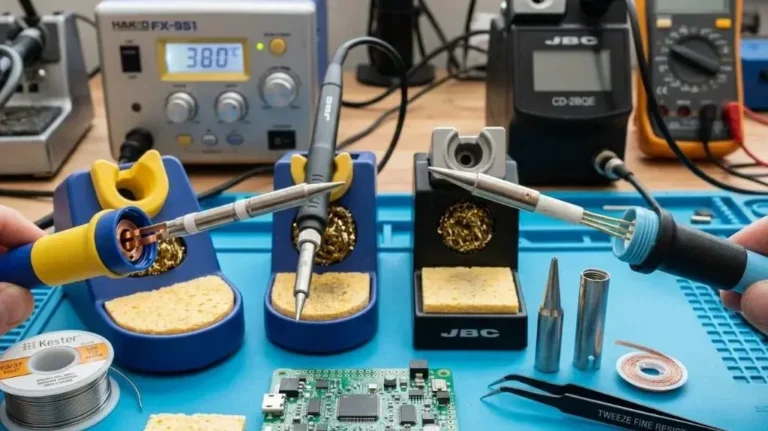
- A grounded soldering iron tip: The tip is connected to the station’s grounding system so static charge can drain in a controlled way.
- A grounding connection: The station has a specified path to ground. Follow the manufacturer’s instructions for connecting it.
- Controlled electrical characteristics at the tip: Some designs limit leakage or unwanted voltage that could affect sensitive circuits.
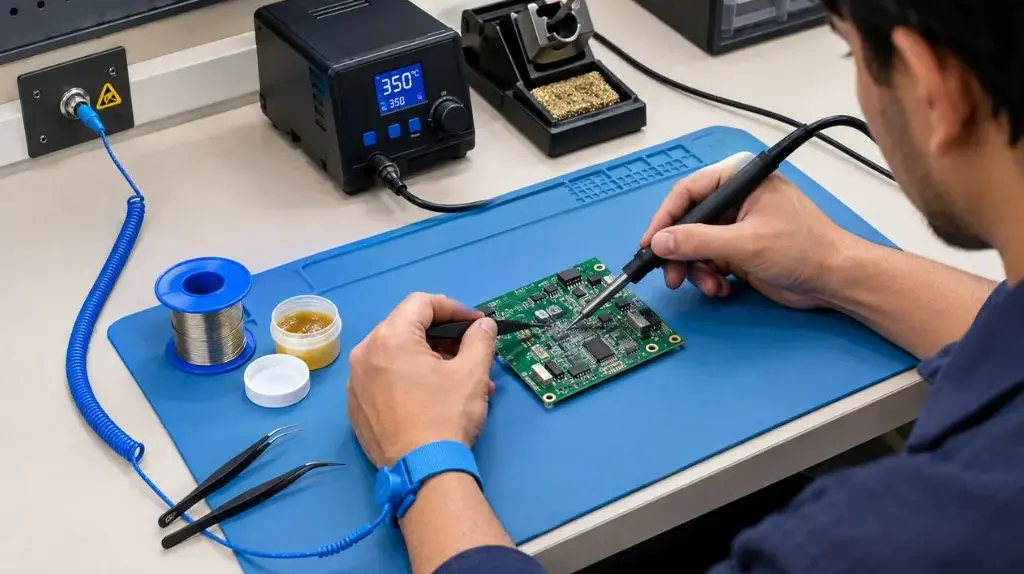
- Compatible ESD accessories: Certain stations can be used with grounding points for a wrist strap, work mat, or other ESD-control equipment. Compatibility and setup depend on the model.
An ESD-safe station is not necessarily the same thing as a station with a temperature display, automatic sleep mode, or a digital controller. Those features may be useful, but they do not by themselves establish ESD protection.
ESD-Safe Does Not Mean the Station Works Alone
A station can help control static at the soldering iron, but a charged operator or unprotected work surface can still expose components to ESD. For work involving static-sensitive electronics, the station is usually one part of a broader setup.
Depending on the task and the manufacturer’s guidance, that setup may include:
- A properly grounded, ESD-compatible work surface
- A wrist strap connected to an approved grounding point
- ESD-safe component packaging and handling practices
- Grounding connections that are correctly installed and maintained
The specific arrangement should follow the requirements of the workplace, equipment, and components being handled. Do not improvise grounding connections or assume that plugging a station into an outlet automatically grounds every ESD-control accessory.
ESD-Safe vs. standard Soldering Station
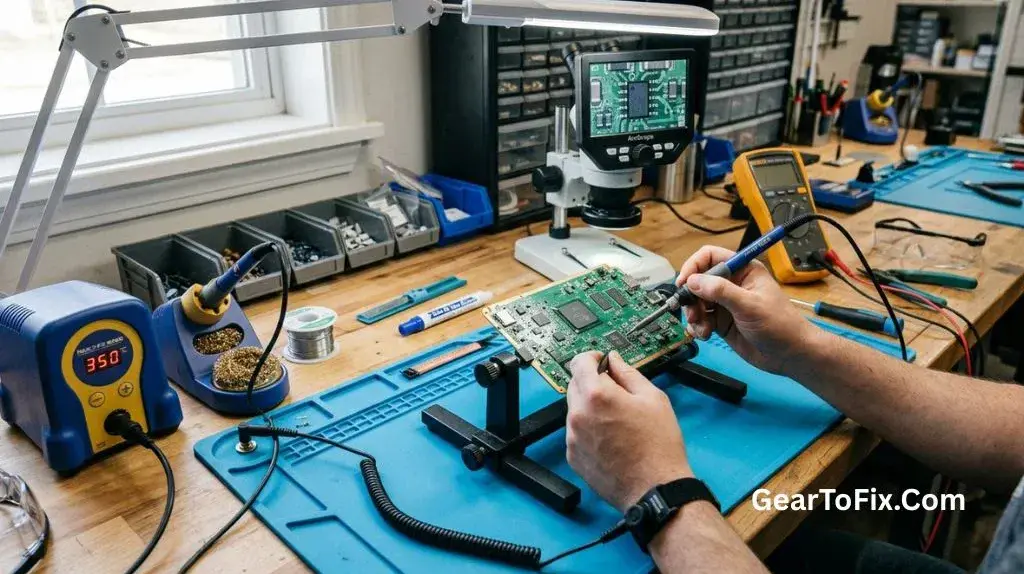
The main difference is whether the station is designed and documented to control electrostatic charge at the tool and its connection to ground.
| Feature | ESD-safe soldering station | Standard soldering station |
|---|---|---|
| ESD control | Designed to reduce static-related risk when properly connected and used | ESD-control behavior may not be specified |
| Tip grounding | Often includes a defined grounding path | Depends on the station’s design |
| Suitable work | Useful for static-sensitive electronics when combined with appropriate handling practices | May be adequate for general work where ESD control is not required |
| Verification | Follow the manufacturer’s specified inspection or testing procedure | ESD performance may not be documented |
A standard station is not automatically unsafe for every soldering task. The concern is that its ESD behavior may be unknown or uncontrolled, which matters when handling sensitive components.
How to Use the Station in an ESD-Controlled Work Area
Set up the station according to its manual and the requirements of the work area. A basic process is:
- Place the station on a suitable work surface. Keep it stable and arrange cords so they do not pull on the iron or interfere with the work.
- Connect the station as specified. Use the manufacturer’s instructions for power and grounding. Do not alter the plug or grounding system.
- Connect compatible ESD accessories. If using a mat or wrist strap, connect them to the designated grounding points and follow their instructions.
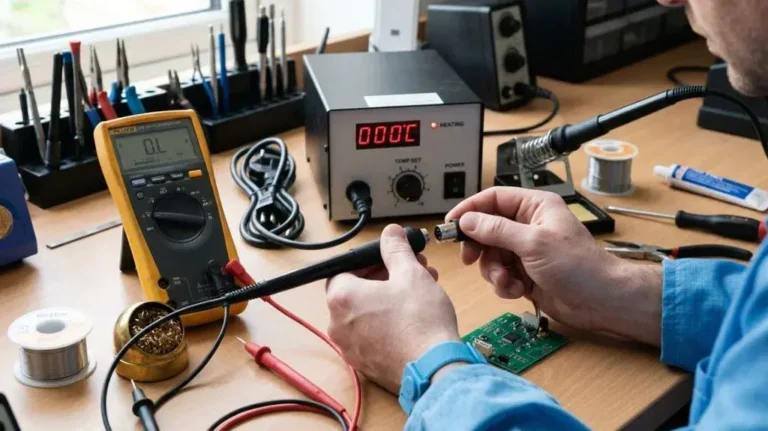
- Check the setup before handling sensitive parts. Use the station’s specified inspection or test procedure. If the setup has been moved, repaired, or damaged, check it again before relying on it.
- Handle components carefully. Keep sensitive parts in suitable packaging when they are not being worked on, and avoid touching contacts unnecessarily.
The exact checks and intervals vary by workplace and equipment. Some environments use dedicated ESD testers and documented procedures; do not assume a quick visual inspection is enough to verify electrical performance.
Common Misunderstandings
“ESD-safe” means ESD damage is impossible
It does not. ESD controls reduce risk; they do not eliminate every possible discharge or guarantee that a component cannot be damaged. Handling, grounding, storage, and the condition of the equipment all matter.
A grounded iron means the entire bench is protected
The iron’s grounding path does not automatically ground a person, work mat, or component packaging. Each part of the work area must be handled according to its own grounding requirements.
Temperature control provides ESD protection
Temperature control helps manage soldering heat. It is a separate function from controlling static electricity. A station can have precise temperature adjustment without being documented as ESD-safe.
Any grounded object can be used as an ESD ground
Improvised connections can create electrical hazards or fail to provide the intended ESD control. Use only the grounding points and methods specified for the equipment and work area.
How to Choose a Station for ESD-Sensitive Work
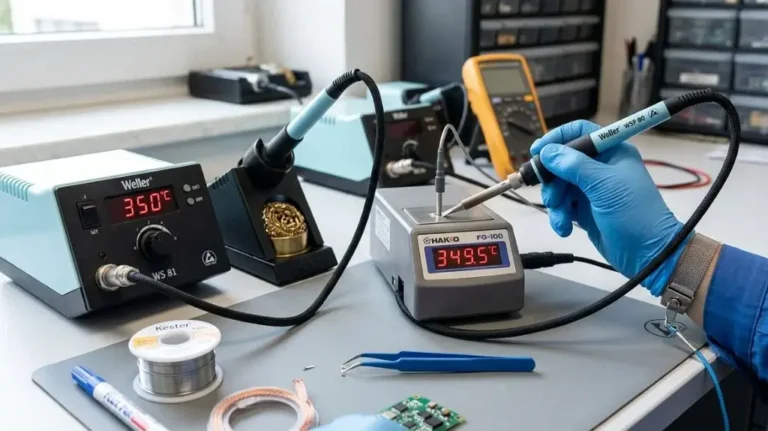
If you are selecting a station for static-sensitive electronics, look for clear manufacturer documentation about the tip’s grounding, the station’s electrical characteristics, and the correct grounding method. Also check whether the station is compatible with the ESD accessories used at your workbench.
Choose a station with temperature control and tip options appropriate to the soldering tasks as well. Those features affect how the station performs the work, but they should be evaluated separately from its ESD-control claims.
If a specification is unclear, ask the manufacturer or supplier how the station is intended to be grounded and verified. Do not rely on a product name or label alone.
FAQs Of What Is an ESD-Safe Soldering Station
Can an ESD-safe soldering station damage electronic components?
It can still cause damage if it is used incorrectly, is faulty, or is part of an inadequate work setup. ESD-safe design reduces static-related risk, but correct grounding, suitable handling, and proper soldering technique remain necessary.
Do I need a wrist strap with an ESD-safe station?
A wrist strap may be needed when handling static-sensitive components, but the station does not automatically require one for every task. Follow the procedures for the work area and the instructions for the strap and station. Connect the strap only to an approved grounding point.
Is a temperature-controlled soldering station automatically ESD-safe?
No. Temperature control regulates heat; ESD protection concerns static charge and grounding. Check the manufacturer’s documentation for explicit information about ESD control.
How can I check whether a station is ESD-safe?
Start with the station’s manual and technical documentation. Follow the manufacturer’s specified test or inspection procedure, which may require dedicated ESD test equipment. There is no single universal check that applies to every station.
Can I use an ordinary soldering iron for sensitive electronics?
Possibly, but its ESD behavior may not be specified. When the work requires ESD control, use equipment with documented ESD characteristics and follow the appropriate work-area procedures.
Final Takeaway
An ESD-safe soldering station is designed to help control static charge at the soldering tool, usually through a defined grounding system and other electrical design features. It is one part of an ESD-controlled work area—not a complete safeguard by itself. Check the manufacturer’s documentation, connect the equipment as directed, and use compatible grounding and handling practices when working with sensitive components.

Scott Yarnell is a tool expert focused on practical guides, product research, and real-world tool performance to help readers make informed decisions.