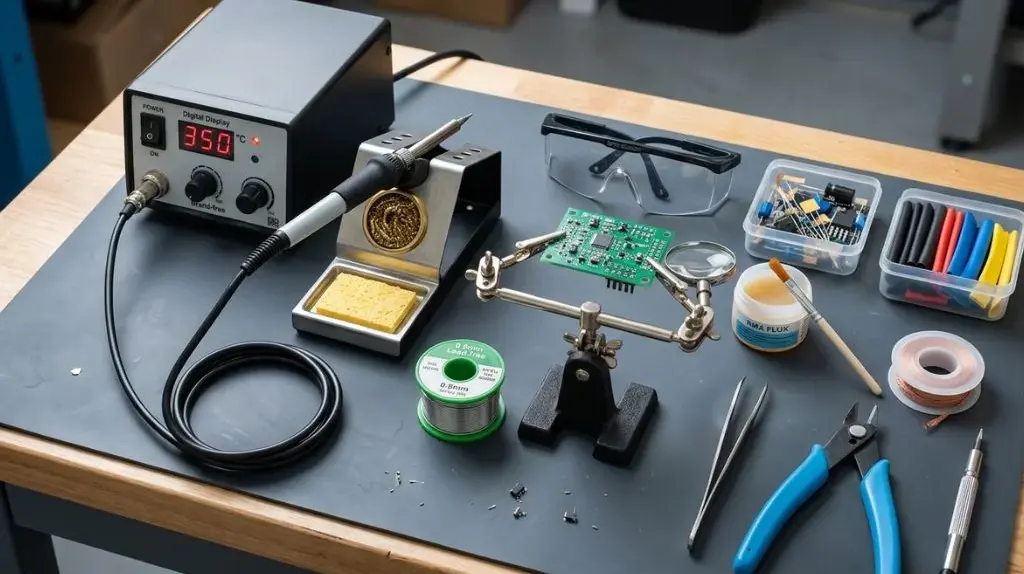
What Do You Need To Use A Soldering Iron: Quick Guide
Soldering is a fundamental skill for repairing electronics, building circuits, and completing various DIY crafts. However, plugging in a soldering iron without the proper supporting equipment can lead to poor joints, damaged components, or even safety hazards.
To use a soldering iron safely and effectively, you need three core elements: the heating tool, a filler metal (solder), and chemical cleaning agents (flux). You also need workspace accessories to support the hot iron, clean the tip, and protect yourself from heat and fumes.
The Essential Setup: What Do You Need to Use a Soldering Iron?
While a soldering iron is the primary tool, it cannot work alone. Solder behaves like hot glue; it needs clean surfaces to cling to and a controlled environment to cool safely. The table below outlines the necessary equipment and materials for a standard soldering workspace.
| Tool / Material | Primary Function | Necessity Level |
|---|---|---|
| Soldering Iron | Supplies the heat required to melt the solder | Mandatory |
| Solder Wire | The metal alloy that melts to join components together | Mandatory |
| Flux | Cleans metal surfaces to prevent oxidation and assist solder flow | Mandatory (often included in the solder core) |
| Safety Glasses | Protects eyes from hot flux splatters and clipped wire ends | Mandatory |
| Soldering Stand | Holds the hot iron safely when you are not actively holding it | Mandatory |
| Tip Cleaner | Removes oxide buildup and excess solder from the hot tip | Mandatory |
| Helping Hands | Clamps components and wires in place while you solder | Highly Recommended |
| Fume Extractor | Pulls toxic chemical fumes away from your breathing zone | Highly Recommended |
Core Equipment and Materials
To achieve a clean, conductive joint, you must select the right grade of tools and materials for your specific project. Here is a detailed look at the core items required.
The Soldering Iron (or Station)
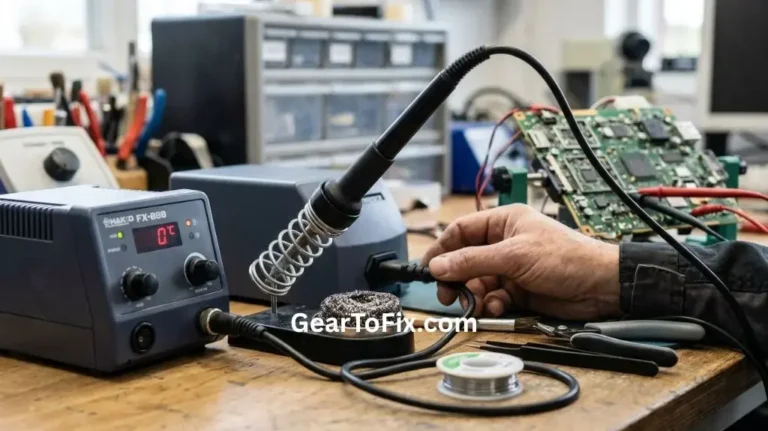
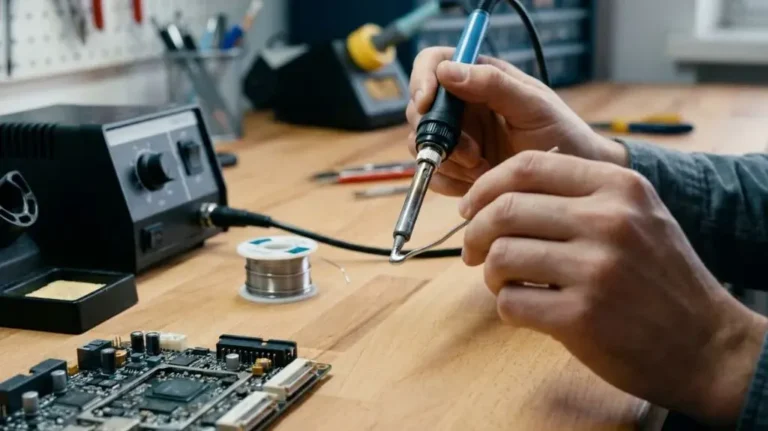
A soldering iron is a hand tool with a heated metal tip. For beginners, a basic pencil-style soldering iron rated between 30 and 60 watts is sufficient for simple wire splicing.
However, an adjustable temperature soldering station is highly recommended for electronics. It allows you to dial in specific temperatures (typically between 350°C and 400°C, or 660°F and 750°F). This prevents you from overheating sensitive circuit boards while ensuring you have enough heat to melt the solder quickly.
Solder Wire
Solder is the metal alloy that melts to form the bond between your workpieces. It comes in spools of thin wire and is divided into two primary types:
- Lead-Free Solder (SAC305): Standard for modern manufacturing. It is safer to handle but has a higher melting point (around 217°C / 422°F) and can be slightly harder to work with for beginners.
- Leaded Solder (60/40 or 63/37): A blend of tin and lead. It melts at a lower temperature (around 183°C / 361°F) and flows more smoothly, though you must wash your hands thoroughly after handling it to avoid lead exposure.
Most electronics solder features a hollow center filled with flux, known as “rosin-core” solder.
Flux
When metal is heated, it reacts with oxygen to form an oxide layer that blocks solder from sticking. Flux is a chemical cleaning agent that strips away this oxidation when heated, allowing the liquid solder to wet the metal surface properly. Even if you use a rosin-core solder, keeping a small tub of flux paste or a flux pen on hand is necessary for stubborn joints or older wires.
Workspace and Safety Essentials
Because a soldering iron reaches temperatures hot enough to cause severe burns or ignite fires, workspace safety and maintenance tools are just as critical as the iron itself.
Soldering Iron Stand
A hot iron can easily roll off a table, burn through power cords, or damage your work surface. A heavy metal soldering stand holds the iron securely at an upward angle, keeping the hot tip safely away from your hands, cables, and combustible materials. Many soldering stations have a built-in holder for convenience.
Tip Cleaning Tools
A dirty, black, oxidized tip cannot transfer heat efficiently. You must clean the tip regularly during use. There are two primary tools for this:
- Brass Wire Sponge: A container filled with coiled brass shavings. Dipping the hot tip into the brass wool scrubs away oxides without dropping the temperature of the iron.
- Damp Cellulose Sponge: A traditional cleaning method. While effective at wiping away dross, the moisture causes a brief drop in the tip’s temperature (thermal shock), which can shorten the lifespan of the tip over time.
Safety Gear and Ventilation
Soldering produces small splatters of hot flux and metal, making safety glasses a non-negotiable requirement.
Additionally, melting flux releases chemical fumes that can irritate the lungs and eyes. Work in a well-ventilated room, or use a dedicated tabletop fume extractor equipped with an activated carbon filter to capture and neutralize the smoke.
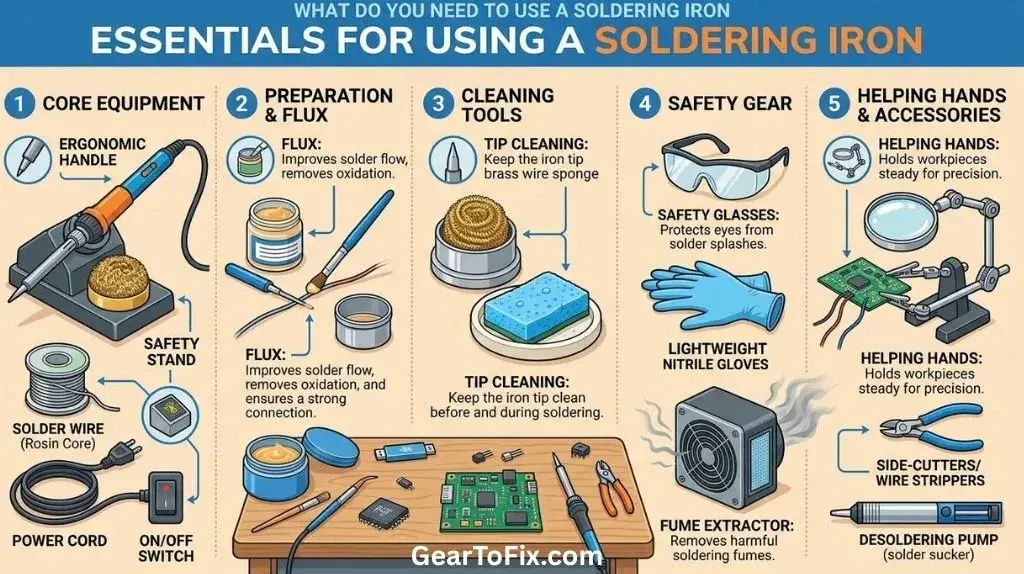
Useful Accessories for Clean Work
As you move beyond basic connections, a few secondary tools will save time and prevent damage to your projects.
- Desoldering Pump (Solder Sucker): A spring-loaded vacuum syringe used to suck away molten solder when correcting mistakes or replacing components.
- Desoldering Wick (Solder Braid): A copper braid that acts like a sponge, absorbing excess liquid solder out of tight spots on circuit boards.
- Helping Hands (Third Hand): A heavy base equipped with adjustable alligator clips. It holds your wires or circuit boards steady, freeing up your hands to hold the iron in one hand and the solder wire in the other.
- Wire Strippers and Cutters: Used to prepare wires by removing insulation cleanly and trimming away excess wire leads after a joint has cooled.
Common Mistakes When Gathering Soldering Gear
Avoiding the wrong materials is just as important as buying the right ones. Watch out for these frequent beginner mistakes:
- Using Plumbing Solder for Electronics: Plumbing solder uses an acid-core flux designed to clean copper pipes. If used on electronics, this acid will slowly eat away at delicate copper traces and ruin the circuit board. Always use rosin-core or electronics-compatible flux.
- Using Too High of a Wattage Without Control: Cheap, high-wattage irons without temperature regulation can easily overheat, lifting copper pads right off a circuit board or frying delicate microchips.
- Skipping the Stand: Attempting to prop a hot iron up on a ceramic mug or a piece of wood is a major safety hazard. Always use a stable, weighted stand.
FAQs About What Do You Need To Use A Soldering Iron
Do I need flux if my solder already has a rosin core?
For simple wire splicing, the flux inside a rosin-core solder is often enough. However, for oxidized wires, circuit board components, or surface-mount soldering, applying external flux from a pen or paste is highly recommended to ensure a clean bond.
What temperature should I set my soldering iron to?
For standard 60/40 leaded solder, set your iron between 320°C and 350°C (600°F to 660°F). For lead-free solder, which has a higher melting point, set the iron between 350°C and 400°C (660°F to 750°F).
Why won’t the solder stick to my soldering iron tip?
If the solder rolls off without wetting the tip, the tip is oxidized or dirty. Clean it using brass wool, apply fresh solder to coat it (a process called “tinning”), or use a chemical tip tinner if the oxidation is severe.
Can I use a damp kitchen sponge to clean my soldering iron?
No. Standard kitchen sponges are often made of synthetic materials that will melt onto the hot tip, ruining it. Only use natural cellulose sponges designed specifically for soldering, or stick to brass wire wool.
Conclusion
Understanding what do you need to use a soldering iron is the first step toward a successful repair or project. By gathering a high-quality temperature-controlled iron, the appropriate electronics-grade solder, a dedicated stand, and proper safety gear, you protect both your workspace and your delicate electronic components. Taking the time to set up a clean, ventilated workspace with the correct materials will turn a frustrating task into a smooth, rewarding craft.

Scott Yarnell is a tool expert focused on practical guides, product research, and real-world tool performance to help readers make informed decisions.