What Is the Melting Point of Solder Wire: Key Facts
Solder wire does not have one universal melting point. The temperature depends on its alloy: common 63/37 tin-lead solder melts at 183°C (361°F), while many lead-free solder alloys melt at roughly 217–227°C (423–441°F). Some alloys melt across a temperature range rather than at one exact point.
The alloy printed on the spool is the best guide. Knowing its melting behavior helps you choose a suitable soldering iron setting and understand why one type of solder may behave differently from another.
Melting points of common solder wire alloys
| Solder wire alloy | Approximate melting behavior |
|---|---|
| 63% tin / 37% lead (Sn63/Pb37) | 183°C (361°F), a single melting point |
| 60% tin / 40% lead (Sn60/Pb40) | About 183–190°C (361–374°F), a melting range |
| Common lead-free SAC alloys | About 217–227°C (423–441°F), depending on the exact alloy |
| Other lead-free alloys | Varies; check the manufacturer’s specifications |
These figures are typical examples, not universal specifications. Lead-free solder includes many different formulations, and their melting temperatures can differ. Check the spool label or product data when the exact alloy matters.
Why solder wire can melt at different temperatures
Solder wire is made from a metal alloy, and its melting behavior depends on the metals and their proportions. Tin-lead and lead-free solders therefore do not necessarily melt at the same temperature.
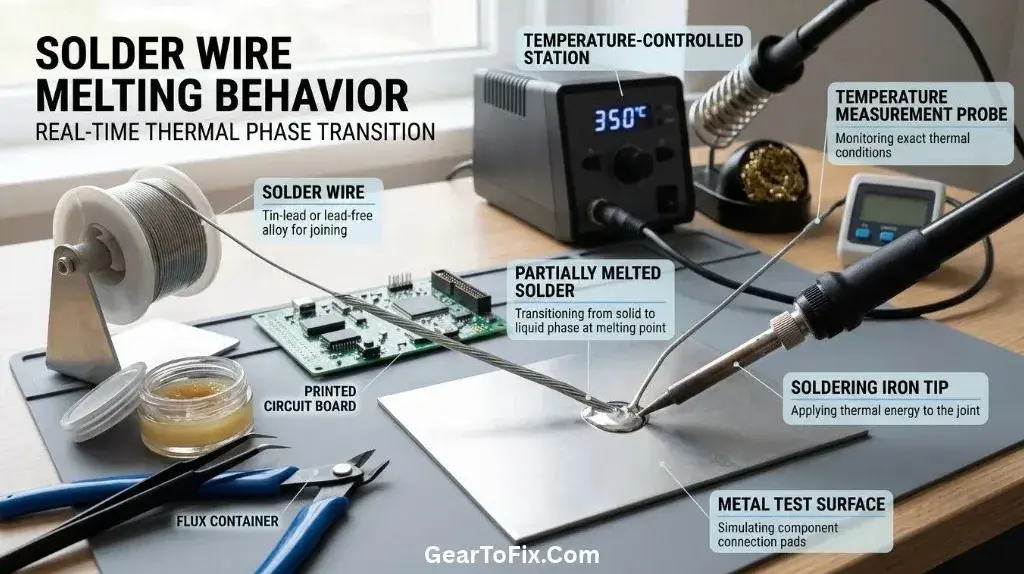
Some alloys reach a fully liquid state at one distinct temperature. Others pass through a range: they begin to soften or melt at the solidus temperature and become fully liquid at the liquidus temperature. During that interval, the solder may be partly solid and partly liquid.
This distinction matters when soldering. An alloy with a melting range may not flow cleanly as soon as it begins to soften; it needs to become fully liquid to wet the joint properly.
Why 63/37 solder has a single melting point
The 63/37 tin-lead alloy is eutectic: its particular proportions let it change directly between solid and liquid at about 183°C. It does not have the same partly melted interval found in 60/40 solder, for example.
That sharp transition can make 63/37 solder feel like it flows suddenly once it reaches its melting temperature. By contrast, 60/40 solder softens over a small temperature range before becoming fully liquid.
Solder melting point is not the same as iron temperature
A soldering iron’s tip generally needs to be hotter than the solder’s melting temperature to transfer heat into the wire and the joint. The required setting depends on the alloy, tip, iron, workpiece, and size of the parts being joined.
For many electronics tasks, a controlled iron setting somewhere around 300–350°C (572–662°F) is commonly used as a starting range, but it is not a universal rule. Larger parts or joints that draw heat away quickly may need different conditions, while delicate components can be damaged by excessive heat or prolonged contact. Follow the tool and component manufacturers’ guidance when available.
The goal is not simply to set the iron to the solder’s melting point. The tip must deliver enough heat for the solder to melt and flow at the joint without keeping the component hot longer than necessary.
Does the flux core affect the melting point?
Solder wire often contains a flux core, which helps remove surface oxides and allows molten solder to wet the metals being joined. The flux supports the soldering process, but it does not define the metal alloy’s melting point.
Flux can produce smoke or fumes when heated. Use suitable ventilation, and avoid breathing the smoke directly. For lead-bearing solder, wash your hands after handling it and keep food and drink away from the work area.
How to identify your solder wire’s melting behavior
Look for the alloy composition on the spool label or product documentation. Markings such as Sn63/Pb37, Sn60/Pb40, or a lead-free alloy designation identify the metal proportions or formulation. If the packaging only says “lead-free,” it may not provide enough detail to establish an exact melting temperature.
When the alloy is unknown, avoid assuming it melts at the same temperature as a familiar solder. Check the manufacturer’s information if available, especially for temperature-sensitive work or a process that requires a particular alloy.
FAQs Of What Is the Melting Point of Solder Wire
Does all solder wire melt at 183°C?
No. About 183°C applies to common 63/37 tin-lead solder. Other tin-lead blends and lead-free alloys have different melting points or ranges.
What temperature should I set my soldering iron to?
There is no single setting for every soldering job. The suitable temperature depends on the alloy, joint size, components, and iron. Use the lowest setting that allows the solder to flow properly without excessive heating, and follow manufacturer guidance when available.
Is lead-free solder’s melting point always higher?
Not always. Many common lead-free electronics solders melt at higher temperatures than 63/37 tin-lead solder, but lead-free alloys vary. Check the specific formulation rather than relying on the label alone.
Why does solder sometimes turn soft without flowing?
If the alloy has a melting range, it may be partly melted but not yet fully liquid. Poor heat transfer, an oxidized surface, or inadequate flux can also prevent solder from flowing well. Heat the joint and the solder appropriately, and use solder suited to the application.
Can I mix different solder alloys?
Mixing alloys can change the composition and melting behavior at the joint, so it is generally better to use a compatible solder rather than deliberately combining types. In repair work, the existing alloy may be unknown; choose a suitable soldering method for the application and avoid assuming the joint has a known melting point.
Final Takeaway
The melting point of solder wire depends on its alloy. As a quick reference, 63/37 tin-lead solder melts at about 183°C, while many common lead-free alloys melt around 217–227°C. Check the spool or manufacturer’s specifications for the exact alloy, and remember that the soldering iron’s working temperature must also account for heat transfer and the parts being joined.

Scott Yarnell is a tool expert focused on practical guides, product research, and real-world tool performance to help readers make informed decisions.