What Is High-Purity Solder Wire: Uses And Benefits
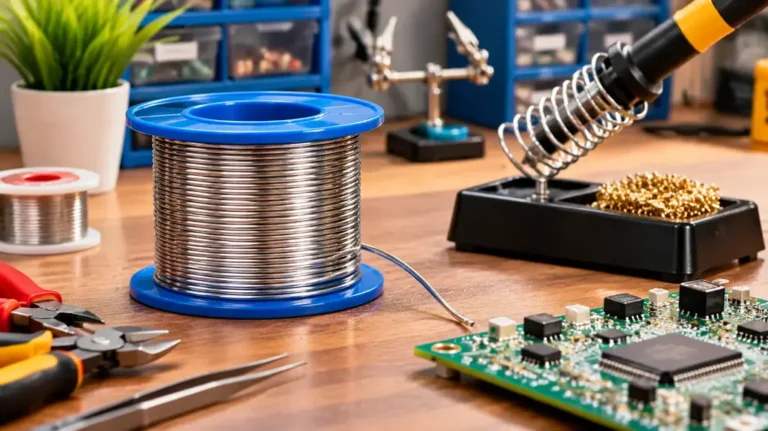
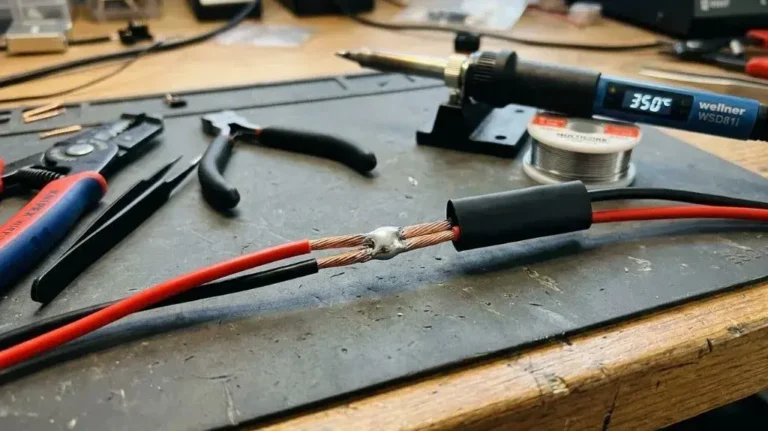
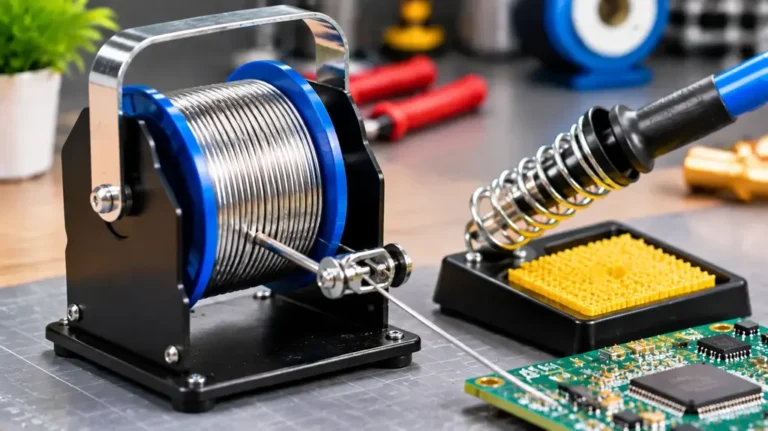
High-purity solder wire is solder made from a carefully controlled alloy with low levels of unwanted contaminants. It is used when consistent composition and dependable soldering results matter, such as in precision electronics or other applications with strict material requirements.
The term does not mean the wire is made from one perfectly pure metal. Most solder wire is an alloy, and “high-purity” usually refers to the quality and control of the metals in that alloy—not to a single universal purity grade. It also does not automatically mean the solder is lead-free.
What makes solder wire high-purity?
Solder wire is typically made from a combination of metals selected to provide suitable melting and joint properties. Depending on the product, the alloy may contain tin, lead, silver, copper, or other elements. High-purity solder uses metals with tightly controlled levels of unintended impurities, while the intended alloying elements remain part of the formula.
There is no one composition or purity level that defines every product sold as high-purity solder wire. The meaning depends on the manufacturer’s specifications and the requirements of the application. For a technical job, check the stated alloy composition and material documentation rather than relying on the label alone.
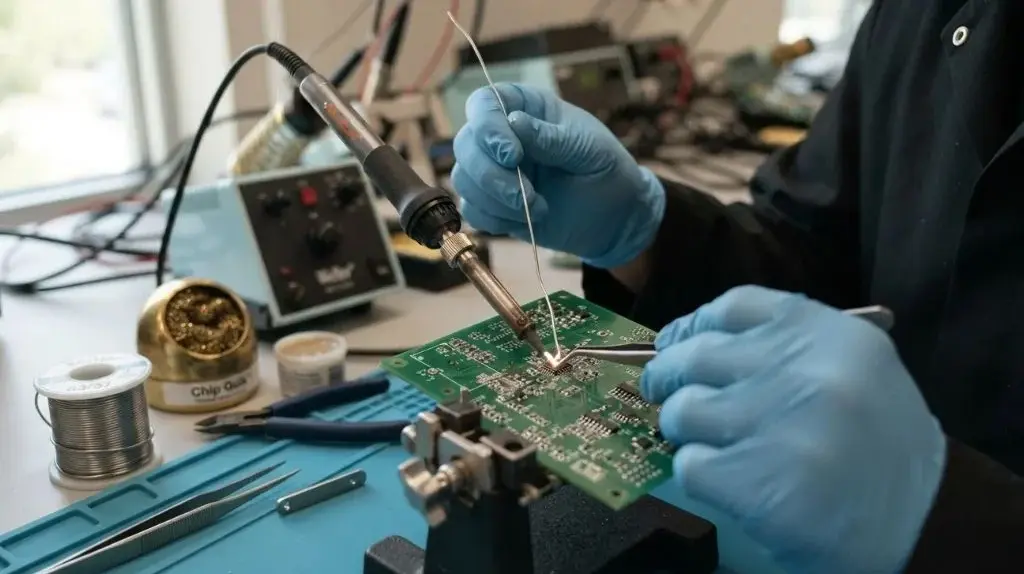
Many solder wires also have a hollow center containing flux. Flux helps remove or disrupt surface oxides so molten solder can wet the surfaces being joined. The alloy and flux are separate parts of the product: a high-purity alloy does not, by itself, specify the flux type or how much flux the wire contains.
High-purity solder is not the same as lead-free solder
These terms describe different things:
- High-purity refers to control of contaminants in the solder’s metals.
- Lead-free means the alloy is formulated without intentionally added lead, within the limits set by the applicable specification or regulation.
- Solder alloy describes the intended mixture of metals.
A lead-free solder can be made with controlled material purity, and a high-purity solder may contain lead if its specified alloy includes it. If lead content matters for safety, compliance, or the finished product, verify the alloy documentation instead of inferring it from “high-purity.”
Why material purity can matter
Soldering results depend on more than the solder’s purity. The alloy, workpiece metals, surface condition, flux, temperature, and technique all play a part. Still, controlling unwanted contaminants can be important in applications where consistent material behavior is required.
Purity control may help support:
- Consistency between batches: A controlled composition makes it easier to keep soldering processes within defined requirements.
- Predictable alloy behavior: Unwanted elements can affect how an alloy melts or performs, though the effect depends on the contaminant and its concentration.
- Process documentation: Traceable material records can help manufacturers confirm that a solder product meets a specified requirement.
- Specialized applications: Some products or processes require tightly defined materials rather than general-purpose solder.
High-purity solder is not automatically better for every repair or electronics project. A suitable alloy and compatible flux are more useful than a purity claim alone.
Where high-purity solder wire is used
High-purity wire may be specified for electronics manufacturing, precision assembly, or other work where material consistency and traceability are required. It can also be used in research, testing, or specialized production processes when the application calls for controlled solder composition.
For ordinary repairs, the relevant requirements may be different. A solder should be compatible with the components and materials being joined, the intended process, and any applicable product or industry specifications. The most tightly controlled wire is not necessarily the right choice if its alloy or flux is unsuitable.
How to choose the right solder wire
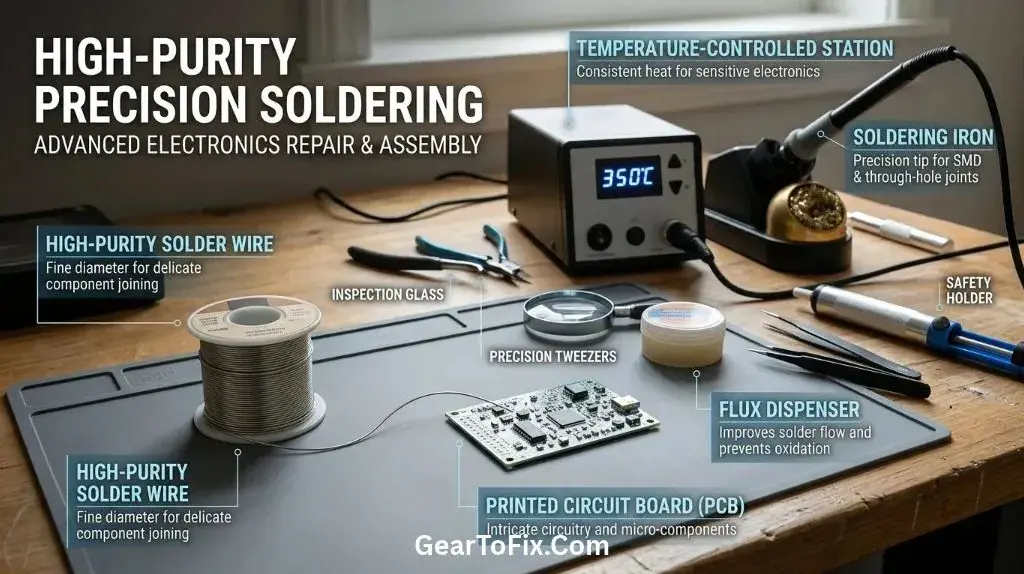
Before selecting a product, confirm the details that affect the job:
- Alloy composition: Check the specified metals and proportions. Do not assume the alloy from the words “high-purity” or “electronics solder.”
- Lead status: Verify whether the alloy contains lead if that matters for the application or handling requirements.
- Flux type: Check whether the wire is flux-cored and whether its flux is suitable for the work. Some flux residues may need cleaning; follow the product instructions.
- Wire diameter: Choose a diameter that allows controlled feeding and delivers a suitable amount of solder for the joint.
- Documentation: For regulated or tightly controlled work, check available composition data, lot identification, and any required certificates or standards.
- Application compatibility: Follow the component, process, or product requirements. Solder choice should not be based on purity alone.
If the documentation does not define what “high-purity” means for a product, ask the supplier for the alloy specification and impurity limits relevant to the application.
Common misunderstandings
- “High-purity means pure tin.” Usually not. Solder wire is generally an alloy; purity refers to control of unwanted contaminants in its constituent metals.
- “High-purity means lead-free.” Not necessarily. Lead status must be confirmed from the alloy specification.
- “Higher purity guarantees a better joint.” Joint quality also depends on surface preparation, flux, heat transfer, compatible materials, and technique.
- “The term has one universal definition.” The exact requirements can vary by manufacturer, specification, and intended use.
FAQs Of What Is High-Purity Solder Wire
Is high-purity solder wire always flux-cored?
No. Solder wire may be flux-cored or supplied without flux. Check the product description, since the flux type and amount are separate from the alloy’s purity.
Does high-purity solder melt at a lower temperature?
Not necessarily. Melting behavior depends mainly on the alloy composition. Purity alone does not identify a melting temperature, so consult the product’s technical information.
Can high-purity solder wire be used for electronics?
It can be suitable for electronics when its alloy and flux meet the requirements of the components and process. “High-purity” by itself does not confirm compatibility.
How can I tell whether a solder wire is genuinely high-purity?
Look for a defined alloy composition and supporting material documentation. The label alone may not explain the impurity limits or verification method.
Is high-purity solder worth using for a basic repair?
Only if the repair calls for its specific alloy, flux, or documented material control. For a basic repair, choosing compatible solder and using it correctly may matter more than a high-purity label.
conclusion
High-purity solder wire is an alloy solder with controlled levels of unwanted contaminants, not necessarily pure metal or lead-free solder. To determine whether it suits a job, check its composition, flux, lead status, and documentation against the application’s requirements.

Scott Yarnell is a tool expert focused on practical guides, product research, and real-world tool performance to help readers make informed decisions.