Essential Soldering Accessories for Your Workbench: Guide
A soldering iron is only part of a useful workbench. The right soldering accessories help you hold components steady, keep the iron tip clean, remove excess solder, and work more safely. For most electronics repairs and projects, a stable iron stand, tip cleaner, suitable solder and flux, and basic component-handling tools are a practical starting point.
You do not need every accessory at once. Choose tools based on the work you do, then add specialized equipment when a task calls for it.
Start with the accessories you will use most
A few well-chosen items cover many common soldering jobs. The table below explains what each one does and why it may be useful.
| Accessory | Main purpose | Most useful for |
|---|---|---|
| Soldering iron stand | Holds the hot iron between soldering operations | Any bench using a separate soldering iron |
| Tip cleaner | Removes residue from the iron tip | Keeping the tip clean during use |
| Solder and flux | Form the joint and help solder wet the surfaces | Nearly all electronics soldering |
| Tweezers and small pliers | Position or hold parts | Small components and wires |
| Flush cutters | Trim component leads and wire | Through-hole assembly and repair |
| Desoldering pump or braid | Removes solder from a joint | Repairs and component removal |
| Helping hands or a vise | Holds work in position | Jobs that require both hands |
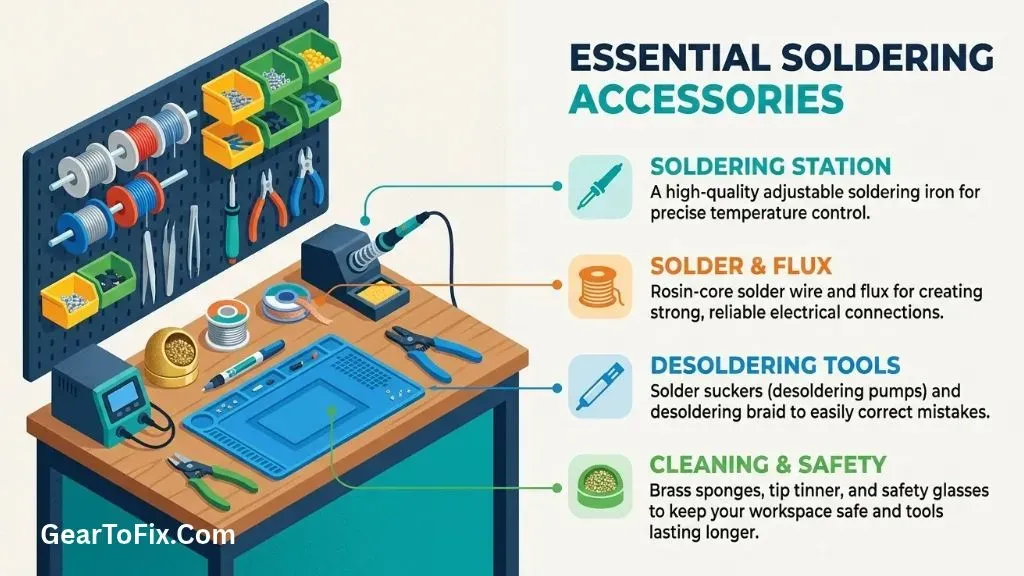
Some accessories improve convenience, while others are useful for nearly every job. A stable stand and a way to clean the tip are sensible basics; desoldering tools, magnification, and specialized holders depend more on the work.
Keep the iron stable and the tip clean
Use a proper soldering iron stand
A stand gives the hot iron a designated resting place when you are not using it. Choose one that supports the iron securely and is stable enough not to tip easily. A built-in tray or separate holder for a cleaning sponge can also help keep the work area organized.
Place the stand where you can reach it without moving the iron over cables, papers, or other clutter. Never rest a hot iron directly on the bench or leave it where it could roll or be knocked off.
Choose a tip cleaner that suits your routine
The two common cleaning options are brass wool and a damp sponge.
- Brass wool removes residue by wiping the tip through the coils. It usually causes less cooling than a wet sponge and does not require water.
- A damp sponge wipes away residue effectively, but a very wet sponge can cool the tip sharply. Use a sponge intended for soldering and keep it damp, not dripping.
Either option can work. Wipe the tip when it becomes visibly dirty or before making a joint if residue is interfering with solder flow. Avoid aggressively filing or sanding a plated soldering tip; removing its protective surface can shorten its usable life. Follow the iron manufacturer’s care guidance, especially if the tool uses a specialized tip.
A tip-cleaning stand or holder keeps the cleaner close at hand. Some people also keep tip tinner on the bench for a tip that will not wet properly, but it is a maintenance aid—not a substitute for regular cleaning or correct temperature and tip care.
Select solder and flux for the job
Solder and flux work together, but they serve different purposes. Solder is the metal alloy that forms the connection. Flux helps remove or limit surface oxidation so molten solder can flow and bond to the surfaces.
For electronics work, use solder and flux intended for electronics rather than plumbing products. Plumbing fluxes may be corrosive and are not suitable for typical electronic assemblies. Solder composition, diameter, and flux type vary, so follow the product instructions and choose materials appropriate for the components and application.
Keep the work area suitable for the solder you use
Lead-free and lead-containing solders have different handling considerations, and some projects or workplaces may require a particular type. If you use lead-containing solder, avoid eating or drinking at the bench, wash your hands after handling it, and keep solder residue away from food-contact surfaces. Regardless of solder type, wash your hands after soldering and avoid touching your face while working.
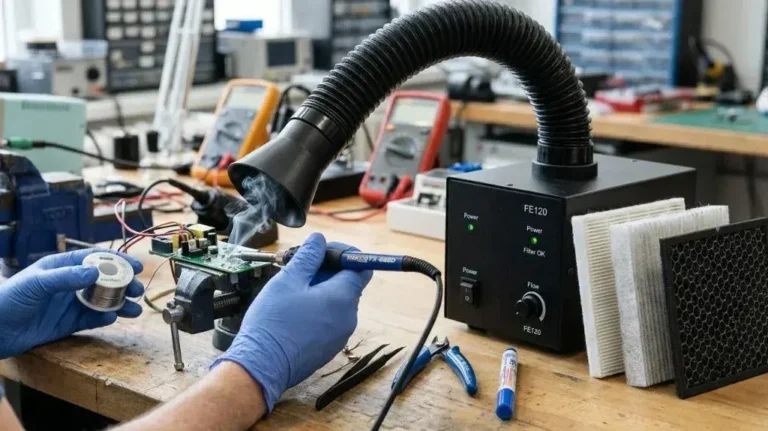
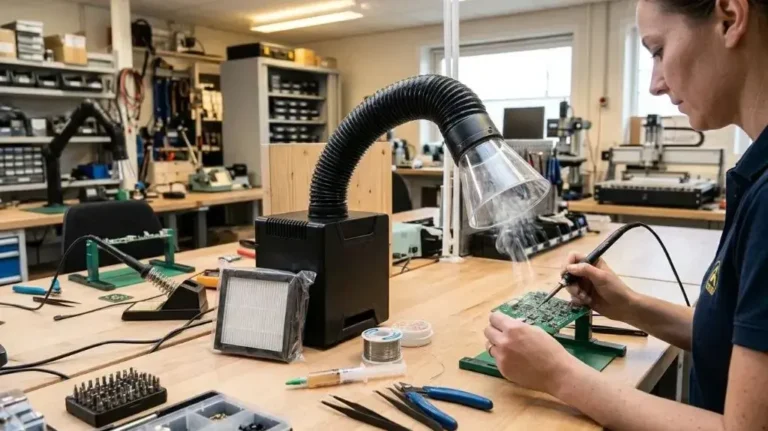
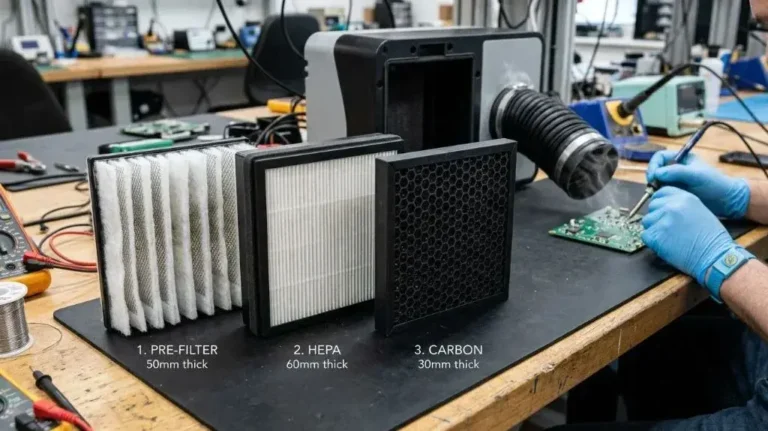
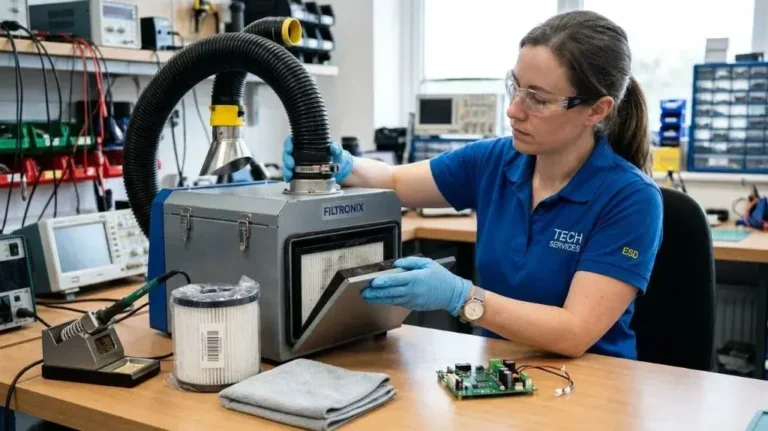
Flux fumes can irritate the eyes and respiratory system. Use suitable ventilation, ideally with extraction that draws fumes away from your breathing zone. A general fan that simply blows fumes across the work area may spread them rather than capture them.
Hold parts securely and work with precision
Small components are difficult to solder when they move. Tweezers, pliers, and a work holder can keep parts in place and reduce the chance of slipping.
- Tweezers help position small components and wire ends. Fine-point models are useful for delicate parts, while broader or curved tips may offer a more comfortable grip for other tasks.
- Needle-nose pliers can bend leads or hold sturdier parts. Avoid using them to squeeze delicate components.
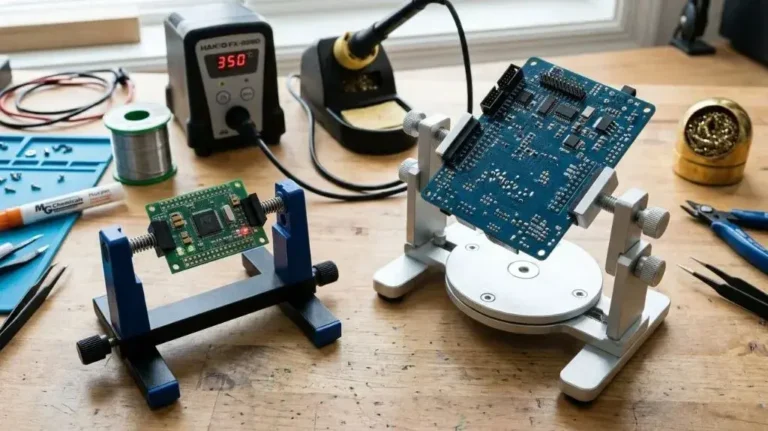
- Helping hands use clips to hold wires or circuit boards. They are convenient for light work, though clips may obstruct access or mark delicate surfaces.
- A small vise or board holder can provide a steadier grip for repeated work. Make sure the clamp does not flex or damage the board.
For close work, a magnifier or task light can make joints and component markings easier to see. Choose lighting that illuminates the joint without forcing you to lean close to the fumes.
Add tools for cutting and removing solder
Flush cutters
Flush cutters trim excess component leads after soldering. Use them with the cutting edge close to the joint, but take care not to damage the solder pad or nearby components. The clipped lead can spring away, so angle the work safely and consider eye protection when cutting wire or component leads.
Desoldering pump and solder wick
A desoldering pump uses suction to pull molten solder from a joint. It can be useful for clearing through-hole connections, though results depend on access, solder volume, and the design of the board.
Solder wick, also called desoldering braid, draws molten solder into its copper strands. Place the wick on the solder and heat it with the iron; remove the iron and wick once the solder has flowed into the braid. Do not leave the braid against a pad longer than needed, since prolonged heating can damage a pad or nearby material.
Neither tool is guaranteed to remove every joint cleanly. If solder does not flow, check that the joint is heated adequately and that the wick or pump is suitable for the task. Avoid pulling a component free while its leads are still attached by solid solder, which can lift pads or damage the board.
Improve comfort and protect the work area
A few additional accessories can make soldering easier and reduce avoidable damage:
- Heat-resistant work surface: Protects the bench from accidental contact with the iron or hot solder. It should be stable and appropriate for the work.
- Safety glasses: Help protect your eyes from clipped leads, solder splashes, or debris.
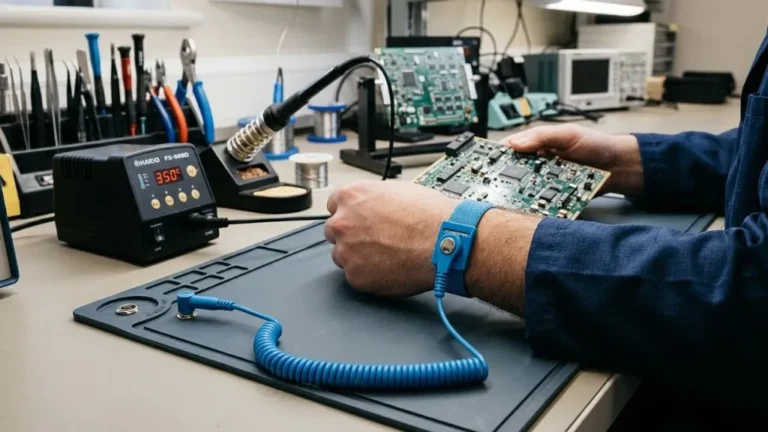
- ESD mat and wrist strap: Useful when handling static-sensitive electronics, provided they are appropriate for the work and connected according to their instructions. They do not replace careful handling.
- Parts tray or small containers: Keep screws, leads, and components from rolling into clutter.
- Task light: Makes it easier to inspect joints and distinguish small parts.
Keep flammable materials, loose wires, and unnecessary clutter away from the hot iron. Unplug the iron when finished, and let it cool in its stand before storing it.
Build a setup around your projects
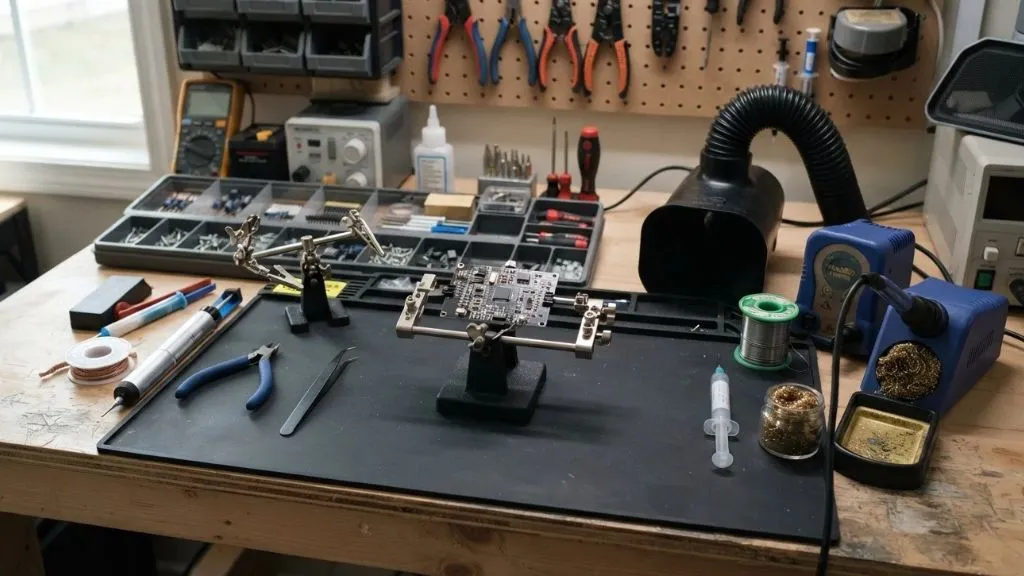
For basic electronics assembly, start with an iron stand, tip cleaner, suitable solder and flux, tweezers, and flush cutters. Add a holder if parts shift while you work. A desoldering pump or wick becomes more useful when you repair boards or remove components.
Before adding specialty tools, consider what makes your current work difficult. If you cannot see the joint clearly, better lighting or magnification may help more than another hand tool. If parts move, improve your holding setup. If solder is difficult to remove, add a desoldering method suited to the joints you encounter.
FAQs Of Essential Soldering Accessories for Your Workbench
Do I need both brass wool and a damp sponge?
No. Either can clean a soldering tip. Brass wool avoids the sharp cooling associated with wiping on a wet sponge, while a damp sponge is a simple and effective option when used properly. Choose the method that suits your iron and routine.
Is a fume extractor necessary for occasional soldering?
Ventilation still matters, even during occasional work. Flux fumes should be drawn away from your face and out of your breathing zone. A suitable fume extractor can help capture them close to the joint; avoid relying on a fan that merely blows the fumes around the room.
Should I use a helping-hands tool for circuit boards?
It can help hold a board or wire steady, but clips may block access or put pressure on delicate areas. For larger or fragile boards, a board holder or small vise with a suitable grip may be more stable.
Is solder wick or a desoldering pump better?
Neither is universally better. A pump can remove solder from some through-hole joints quickly, while wick can be useful for absorbing solder from accessible pads or flattening a joint. Keep both on hand if you do varied repair work; for occasional tasks, one may be enough.
Can I use plumbing flux for electronics soldering?
No. Use flux formulated for electronics. Plumbing flux may leave residues that are corrosive or otherwise unsuitable for electronic assemblies.
Final Takeaway
A practical soldering workbench does not need a large collection of accessories. Begin with a stable iron stand, a tip cleaner, appropriate solder and flux, and basic tools for holding and trimming parts. Add desoldering tools, magnification, or specialized holders when your projects call for them, and keep ventilation and safe handling part of the setup.

Scott Yarnell is a tool expert focused on practical guides, product research, and real-world tool performance to help readers make informed decisions.