
Soldering Iron Vs Hot Knife: Which Is Better?
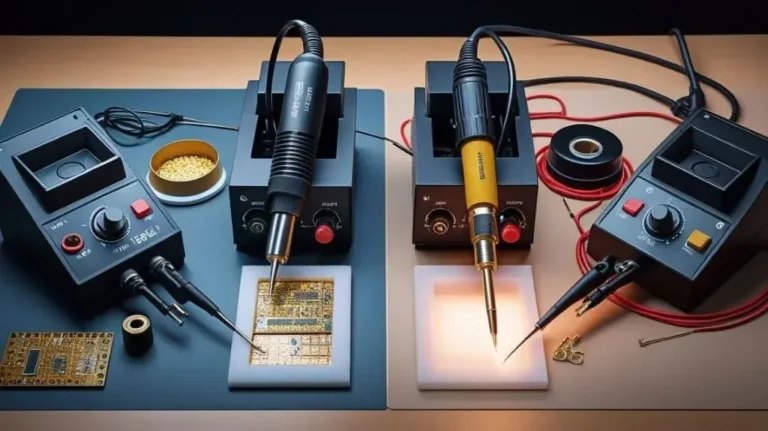
Choosing between a basic soldering iron and a hot knife can feel confusing when setting up your workspace. A basic soldering iron is perfect for beginners who want to tackle simple electronics repairs on a budget. Meanwhile, a hot knife is a specialized heating tool built for cutting plastic, synthetic rope, and foam.
I spent weeks testing both tools on real projects at my own bench to see where they shine and where they fail. This honest guide will show you which tool fits your skill level, projects, and budget without any marketing hype.
Side-by-Side Specs Comparison
Before we dive into my bench experience, let us look at the raw specifications of both tools. This quick breakdown covers the essential power and design details you need to know.
| Feature | Product 1 (Soldering Iron) | Product 2 (Hot Knife) |
|---|---|---|
| Price | Budget-Friendly | Budget-Friendly |
| Wattage | 40 Watts | 30 Watts |
| Heat-Up Time | 4 Minutes | 6 Minutes |
| Tip Type | Pointed Copper Tip | Brass Blade Attachment |
| Cord Length | 4.5 Feet | 4.0 Feet |
| Weight | 3.5 Ounces | 4.2 Ounces |
| Warranty | 1 Year | 1 Year |
These specs show that both tools run on simple, fixed wattage systems without complex digital screens. Now, let us look at how they actually feel when you take them out of the box.
Unboxing and First Impressions
Unboxing these two tools felt like a trip back to basics. The basic soldering iron arrived in a simple plastic blister pack with a tiny metal stand and some lead-free solder. On the first power-up, it emitted a strong off-gassing smell of burning oil that lasted about ten minutes. The cord was very stiff, immediately fighting back against my hand as I tried to rest the tool on its flimsy stand.
The hot knife came with a couple of flat brass blade attachments and a small metal safety stand. Its plastic grip felt slightly bulky, but the overall casing felt surprisingly solid for the price. Switching it on for the first time required a bit of patience, as the heavy metal blade took quite a while to absorb the heat.
Build Quality and Components
Both tools are simple and budget-friendly, but their build quality differs in several key areas.
The basic soldering iron features a simple plastic handle that stays relatively cool, but it lacks any real ergonomic grip. The heating element is a basic ceramic core that does the job without complex electronics. However, the stiff PVC cord makes handling quite difficult during long sessions.
The hot knife uses a thicker plastic collar to shield your fingers from the heavy brass blade. The blade attachment threads directly into the heating shaft, which feels secure but can loosen over time. Its cord is equally stiff, meaning you must secure your stand to the bench to prevent tipping.
Ease of Use and Handling
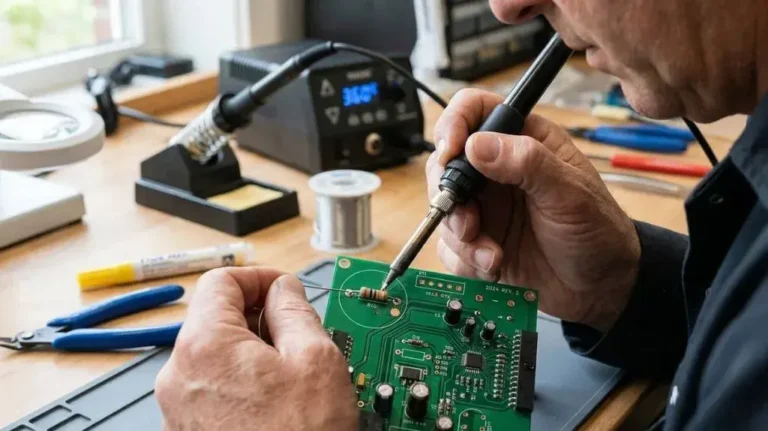
Learning to use a basic soldering iron is very intuitive since you just plug it in and wait for it to get hot. However, keeping a steady hand on fine-pitch joints is tough because the grip is so far from the tip. The lack of temperature control means you must work fast before the tip gets too hot and burns your flux.
The hot knife requires a different kind of patience and a steady hand to avoid melting too much material. It is highly beginner friendly for simple crafts, but cutting precise straight lines in tough plastic takes some practice. It is not built for delicate work, but it excels at making quick, clean cuts through synthetic ropes.

Performance and Reliability Over Time
After three weeks of daily bench sessions, the basic soldering iron showed clear signs of wear. The tip began turning black, refusing to take solder easily without constant re-tinning and cleaning. The heat output remained decent, but I noticed it took slightly longer to melt lead-free solder on larger ground planes.
The hot knife held up well physically, but the blade tip acquired a dark, sticky residue that was hard to scrape off. Its heating element never drifted significantly, but the lack of active temperature control means it runs very hot if left idle. This can degrade the heating element over months of heavy use.
Heat-Up Time and Temperature Stability
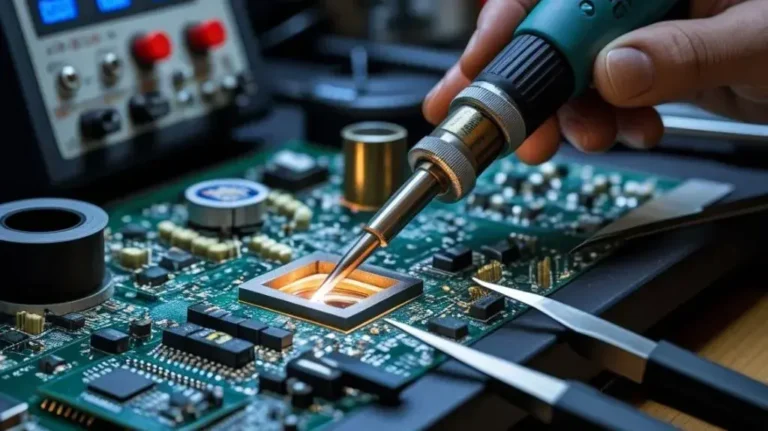
Waiting for a basic soldering iron to reach working temperature requires some patience compared to a high-end station. It took nearly four minutes before the tip was hot enough to melt a standard rosin core solder wire. Once hot, the fixed temperature runs high, which can quickly overheat delicate circuit boards if you hold it in place for too long.
The heat recovery time is another major bottleneck when working on back-to-back joints. Every time the tip touches a cold copper joint, it loses heat and takes several seconds to recover. If you rush, you end up with cold joints that look dull and fail under slight stress.
Design and Build Comparison
The physical design of these tools determines how comfortable they are during long work sessions on your bench setup.
| Feature | Product 1 (Soldering Iron) | Product 2 (Hot Knife) |
|---|---|---|
| Material | Plastic and Steel | Plastic and Brass |
| Grip or Handling Feel | Slim but stiff cord | Bulky but secure |
| Label / Display Clarity | No display (indicator light) | No display (simple switch) |
| Portability | Highly portable | Highly portable |
| Bench Footprint | Very small | Small |
| Overall Feel | Light and simple | Heavy-duty craft tool |
The basic soldering iron is much easier to store in a small drawer due to its slim profile. However, the hot knife feels more robust when you need to apply physical pressure during a cut.
Fumes and Ventilation — What You’ll Notice While Working
Using a basic soldering iron produces a constant stream of rosin fume and smoke that can quickly sting your eyes. If you work in a small bedroom or apartment, this smell will linger on your clothes and furniture for hours. I highly recommend using a small desk fan or working near an open window to keep the workspace clear.
The hot knife is even more demanding when it comes to ventilation. Melting plastics or synthetic ropes releases thick, acrid fumes that smell terrible and can be harmful to breathe. You absolutely need a good ventilation setup or an active fume extractor when using the hot knife indoors, as the smoke is dense and heavy.
Temperature Control and Precision
Neither tool offers digital temperature control, meaning you must rely on manual timing and technique to get clean results.
| Feature | Product 1 (Soldering Iron) | Product 2 (Hot Knife) |
|---|---|---|
| Temperature Adjustability | Fixed (Non-adjustable) | Fixed (Non-adjustable) |
| Consistency Across Joints | Moderate (loses heat) | Low (cools during cuts) |
| Suitable for Fine-Pitch Work | Yes (simple repairs) | No (not designed for boards) |
| Recovery Speed | Slow | Slow |
| Beginner Forgiveness | Low (easy to burn pads) | Moderate (for craft cuts) |
| Multi-Project Suitability | Electronics only | Crafts and cutting only |
Neither tool offers digital precision, meaning you must rely on manual timing. This makes precision work a challenge, but both are highly forgiving once you get a feel for their thermal limits.
Ease of Use and Daily Bench Routine
Integrating these tools into your daily bench routine depends on how quickly you can set them up, use them, and pack them away.
| Task | Product 1 (Soldering Iron) | Product 2 (Hot Knife) |
|---|---|---|
| Setup and Power-On | Plug in and wait | Plug in and wait |
| Cleanup After Use | Tip wipe and tinning | Blade scrape and wipe |
| Storage Convenience | Excellent (slim profile) | Good (needs blade cooling) |
| Travel or Portable Use | Great for quick field repairs | Great for craft events |
| Speed of Getting to Work | Moderate (3-5 min) | Slow (5-7 min) |
| Maintenance Needed | High (frequent tip tinning) | Low (basic residue cleanup) |
For a daily bench routine, the basic soldering iron is much quicker to set up and put away. The hot knife requires a long cooldown period before you can safely pack it back into a drawer.
Long-Term Performance and Durability
Over several weeks, the basic soldering iron showed expected wear on its copper tip. Without a digital station to lower the heat when idle, the tip oxidation occurred quickly, turning the metal dark and stubborn. The cord remains stiff, but the housing has held up well to occasional bumps against the bench.
The hot knife proved highly durable because its blades are thick chunks of metal. It does not suffer from delicate tip failure like the iron, but the heating element does show signs of running hot over time. For long-term bench use, I would keep the iron for quick wire splices, but the hot knife remains a specialized tool for occasional crafting.
Price and Value for Money
Both tools are incredibly cheap, usually retailing under twenty dollars at most hardware stores. Since they do not require expensive replacement parts or digital accessories, the price per use is extremely low.
However, you will need to buy extra solder wire and tip cleaner for the basic soldering iron, which adds a tiny bit to the long-term cost. The hot knife is a complete one-time purchase unless you break a blade.
How It Compares to Similar Products
These basic tools are great for starting out, but they face tough competition from other options on the market.
Digital Soldering Station
A digital soldering station offers precise temperature control and much faster heat recovery times. While it costs more, it saves you from the frustration of tip oxidation and burnt circuit boards.
Heavy-Duty Butane Torch
A butane torch heats up instantly and works well for outdoor wire splices. However, it lacks the safety of a basic soldering iron and can easily melt nearby components.
Who Should Buy Which?
- Buy the Basic Soldering Iron if: you need a cheap, beginner friendly tool for simple repairs, joining wires, or basic electronics projects on a budget.
- Buy the Hot Knife if: your main projects involve cutting synthetic fabrics, slicing foam, sealing rope ends, or working with thick craft plastics.
- Consider Neither If: you plan on doing precision, fine-pitch SMD circuit board work, which absolutely requires a digital soldering station with real temperature control.
Long-Term Ownership Considerations
When buying a basic soldering iron, you must accept that tips are consumable parts. Since cheap irons run hot, you will likely need to buy a pack of replacement tips every few months if you use it regularly. The warranty coverage on these budget tools is usually minimal, but the low replacement cost makes this less of a worry.
The hot knife has almost zero ongoing maintenance costs because the brass blades are highly durable. Your main long-term issue will be cleaning the baked-on plastic residue to keep cuts clean. For both tools, the annual cost of ownership remains incredibly low, making them highly accessible for any workshop.
Power Output and Efficiency: Basic Soldering Iron
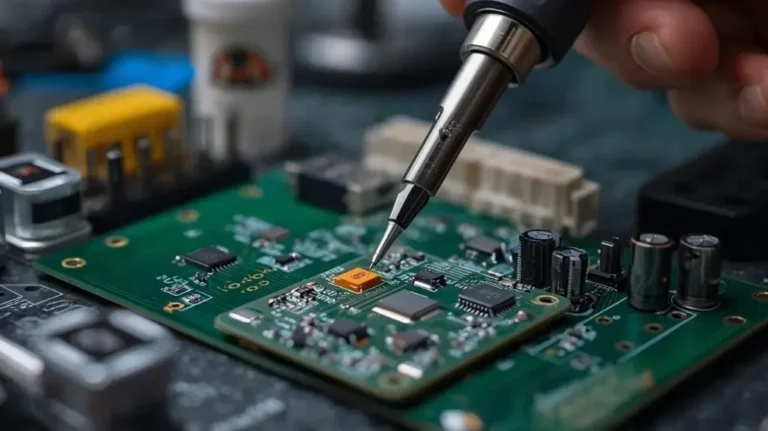
The power wattage of a basic soldering iron directly dictates how quickly it can transfer heat into a copper joint. A standard 40W heating element provides enough muscle for simple repairs and splicing medium-gauge wires. However, because it lacks smart power delivery, it cannot boost its output when touching a large ground plane, leading to slow recovery times.
This fixed power output means the tool runs at full capacity even when sitting idle on your bench setup. While it uses very little energy overall, it can easily overheat its own tip during long breaks. Investing in a tool with higher wattage is only worth it if you regularly work on heavy wire connectors or thick metal terminals.
FAQs: Soldering Iron vs Hot Knife
1. What is the main difference between a soldering iron and a hot knife?
A soldering iron uses a heated tip to melt solder and create electrical connections, while a hot knife uses a heated blade to cut or shape suitable materials.
2. Can a soldering iron be used as a hot knife?
A soldering iron can melt some materials, but its pointed tip is not designed for clean thermal cutting. A hot knife provides a broader heated edge better suited to that purpose.
3. What materials can a hot knife cut?
Hot knives are commonly used on compatible synthetic materials such as certain foams, plastics, and synthetic fabrics. Material compatibility depends on the specific hot knife and material.
4. Is a hot knife suitable for electronics soldering?
No. A hot knife is not designed to create precise solder joints on electronic components. A soldering iron is the more appropriate tool for electronics work.
5. Which tool provides more precise heat for solder joints?
A soldering iron provides more precise heat for solder joints because its narrow tip can directly contact a specific connection.
6. Can a hot knife damage plastic or foam?
Yes. Excessive heat or slow movement can melt, burn, or deform compatible materials, so temperature and cutting technique should be matched to the material.
Final Verdict
After weeks of hands-on testing, the basic soldering iron is the clear winner for electronics work and simple wire repairs. It is highly portable, easy to use, and incredibly affordable for anyone starting out.
The hot knife remains an excellent, highly specialized tool that belongs in a craft kit rather than an electronics lab. If your daily bench routine involves cutting plastics and sealing synthetic ropes, the hot knife is an invaluable asset that saves a ton of time.

Scott Yarnell is a tool expert focused on practical guides, product research, and real-world tool performance to help readers make informed decisions.