
Soldering Iron Vs Plastic Welder: Essentials Guide
If you have a cracked car bumper, a broken plastic toy, or a loose electrical wire in your workshop, you might look at a soldering iron and a plastic welder and wonder if they are essentially the same tool. After all, both are hand-held tools that use high heat to melt materials and join them together.
The short answer is that a soldering iron is designed to join metals using a filler metal (solder), while a plastic welder is designed to fuse thermoplastic materials together. While they look similar and both generate heat, their operating temperatures, tip styles, heat delivery methods, and structural capabilities are entirely different.
Using the wrong tool for the job can lead to weak, failed repairs, toxic fumes, or ruined equipment. Understanding how these tools differ, where they overlap, and why they cannot truly replace each other is essential for any successful repair.
The Core Difference in How They Work
To understand why these tools cannot easily swap roles, you have to look at how they deliver heat and what happens to the materials they touch.
Soldering Irons Rely on Thermal Conduction
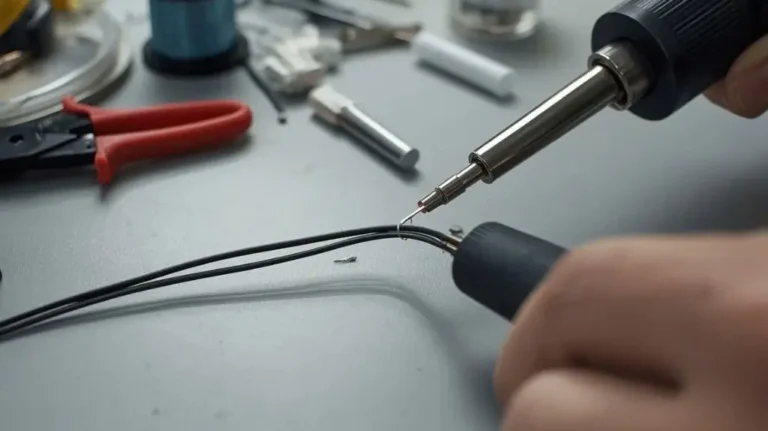
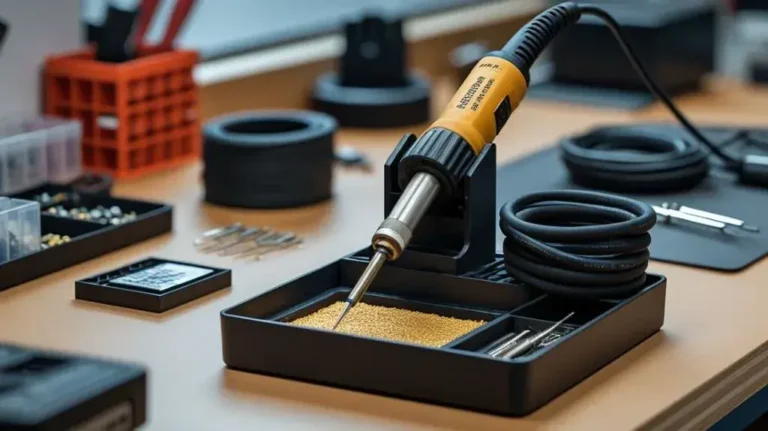
A soldering iron uses a highly conductive metal tip (usually copper plated with iron, nickel, and chromium) to transfer heat directly to a metal joint. Once the joint is hot enough, you apply solder—a metal alloy with a relatively low melting point.
The solder melts, flows into the joint via capillary action, and chemically bonds with the metal surfaces as it cools. The soldering iron tip itself must stay clean and “wetted” with a thin layer of molten solder to transfer heat efficiently.
Plastic Welders Rely on Fusion and Reinforcement
A plastic welder does not use solder. Instead, it heats the base plastic material directly until it reaches a molten state, allowing two pieces of plastic to fuse at a molecular level.
Plastic welders generally fall into three categories:
- Hot Air Welders: These blow highly concentrated, superheated air to melt both the plastic workpiece and a plastic filler rod simultaneously.
- Contact/Iron Welders: These use flat, wide metal tips to smooth and melt plastic surfaces directly.
- Hot Staplers: These heat up small metal staples and press them directly into cracked plastic to stitch the structural break together.
Can a Soldering Iron Be Used to Weld Plastic?
Yes, you can physically melt plastic with a soldering iron, but it is highly discouraged because it yields weak joints, produces toxic fumes, and permanently ruins your soldering tip.
If you are in an absolute emergency, you can use a cheap, throwaway soldering iron to tack a piece of plastic together. However, doing so presents several major problems:
1. Ruining the Soldering Tip
Soldering tips are engineered with a delicate plating that allows solder to cling to them. When you press a hot soldering iron into plastic, the plastic burns, carbonizes, and bakes onto the tip. This creates a black, crusty barrier that prevents the tip from ever holding solder again. Unless you plan to throw the tip away immediately after, do not use your electronics soldering iron on plastic.
2. Lack of Structural Strength
True plastic welding requires mixing in compatible filler rods or embedding metal mesh to reinforce the joint. A standard pointed soldering iron tip simply pushes the plastic aside, creating a deep groove with thin, weak walls. The repair will look messy and will easily snap under any mechanical stress.
3. Poor Temperature Control for Plastics
Different plastics have highly specific melting windows. For example, Polypropylene (PP) melts around 160°C (320°F), while ABS melts around 210°C (410°F).
Most standard soldering irons run much hotter—often between 350°C and 450°C (660°F to 842°F). At these temperatures, you aren’t welding the plastic; you are burning and degrading its molecular structure, which severely weakens the repair.

What Makes a Dedicated Plastic Welder Different?
A dedicated plastic welder is engineered specifically to handle the unique properties of thermoplastics. Because plastics do not conduct heat well (unlike copper or steel), a plastic welder must use specialized methods to get the material to fuse.
- Broad, Flat Tips: Contact-style plastic welders feature wide, flat spade tips. These tips allow you to apply even downward pressure to smooth out cracks and blend filler material over a wider surface area without digging deep holes.
- Filler Rod Guides: Many hot-air plastic welders feature specialized nozzles that hold and feed a plastic welding rod directly into the path of the heat. This ensures that both the repair area and the filler rod reach the exact melting temperature at the exact same moment.
- Reinforcement Capabilities: High-stress plastic parts, like car bumpers or kayak hulls, cannot rely on melted plastic alone to hold together. Plastic welding kits often include stainless steel wire mesh or hot staples that are melted directly into the backside of the plastic to provide internal structural integrity.
Side-by-Side Comparison
The following table highlights the technical and practical differences between a standard soldering iron and a dedicated plastic welding setup.
| Feature | Soldering Iron | Plastic Welder |
|---|---|---|
| Primary Target Material | Metals (Copper, brass, tin) | Thermoplastics (ABS, PP, PVC, PE) |
| Heat Delivery Method | Direct conduction via a plated tip | Hot air (convection) or flat metal tips (conduction) |
| Typical Working Temperatures | 200°C to 480°C (392°F to 896°F) | 100°C to 600°C (212°F to 1112°F) |
| Consumables Used | Metal solder wire, chemical flux | Plastic welding rods, reinforcing mesh, staples |
| Precision Level | Very high (micro-millimeter scale) | Low to moderate (focused on surface area) |
| Joint Strength | High electrical conductivity, moderate mechanical strength | High structural strength (when reinforced) |
While both tools use electricity to generate heat, they are optimized for entirely different thermal dynamics. A soldering iron concentrates high heat onto a tiny, highly conductive point, whereas a plastic welder distributes heat across a wider, non-conductive plastic surface.
Choosing the Right Tool for the Job
To get the best results, you should match the tool to the specific material you are working with.
When to Use a Soldering Iron
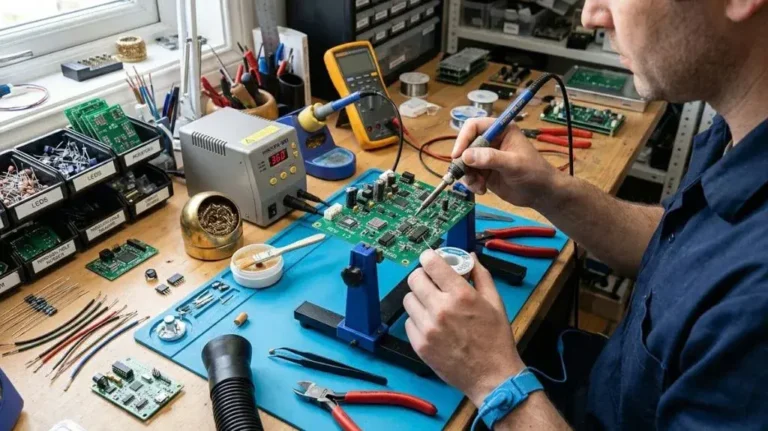
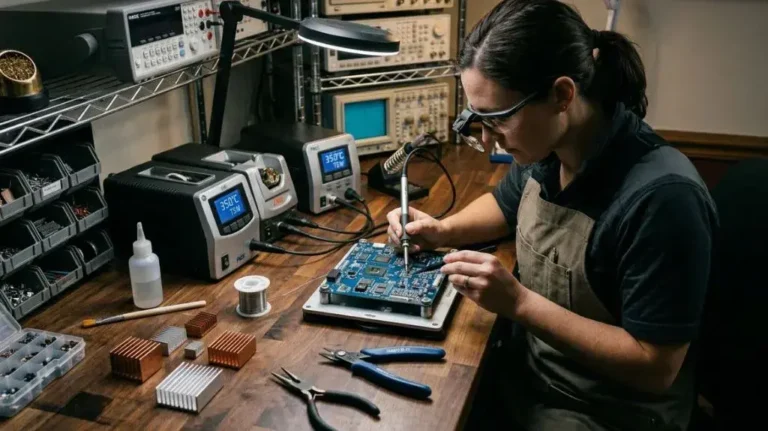
- Electrical and Electronics Work: Splicing copper wires, repairing circuit boards, or replacing components on a motherboard.
- Stained Glass Art: Joining lead cames or copper foil seams together.
- Jewelry Making: Joining small silver or brass pieces using low-temperature silver solder.
- Adding Threaded Inserts to 3D Prints: A soldering iron is excellent for cleanly pressing brass threaded inserts into 3D-printed plastic parts (using a specialized insert tip).
When to Use a Plastic Welder
- Automotive Repairs: Fixing cracked bumper covers, broken headlight tabs, plastic radiator tanks, or cracked interior trim.
- Outdoor Gear Repairs: Mending cracked plastic kayaks, canoes, garbage bins, or storage containers.
- Appliance Repairs: Rejoining cracked plastic housings on vacuum cleaners, power tools, or washing machines.
- Plumbing: Welding certain types of plastic pipes or water tanks where adhesives will not hold.
Safety and Environmental Hazards to Keep in Mind
Both tools require respect, but they emit very different hazards during operation.
Soldering Hazards
The primary hazard in soldering comes from the flux inside the solder wire. When heated, rosin-based flux vaporizes, producing fumes that can cause asthma, eye irritation, and respiratory issues. If you are using traditional leaded solder, you must also wash your hands thoroughly after handling the wire to prevent lead ingestion.
Plastic Welding Hazards
Melting plastics is highly toxic. When plastics like PVC (Polyvinyl Chloride) or ABS are overheated, they release hazardous gases, including hydrochloric acid, chlorine gas, and carbon monoxide.
Always check the recycling code stamp on your plastic part to identify the material, work in an open or highly ventilated area, and wear a respirator fitted with organic vapor cartridges when welding plastics.
Frequently Asked Questions
Can I use a brass tip on a soldering iron to weld plastic?
Yes. If your soldering iron has a removable tip and you install a flat brass spade tip (often sold in woodburning or hobby kits), you can use it to melt plastic. Because brass does not need to be “wetted” with solder to function, this setup will protect your electrical soldering tips from being ruined. However, it still lacks the structural reinforcement features of a dedicated plastic welder.
Why does melted plastic ruin a soldering iron tip?
Soldering iron tips rely on a pristine iron plating to allow molten solder to “wet” or coat the tip uniformly. When you melt plastic, the carbon in the plastic bakes onto this iron layer, forming a barrier. Solder will bead up and roll off a carbonized tip, rendering the iron useless for electrical work.
How do I know which plastic welding rod to use?
You must match the welding rod to the exact plastic you are repairing (e.g., use polypropylene rods for a polypropylene bumper). Most molded plastic parts have a recycling code stamped on the back (such as PP, ABS, HDPE, or PVC). If you use a mismatched rod, the plastics will not mix at a molecular level, and the weld will quickly pop apart.
Can a plastic welder be used to solder wires?
No. Hot-air plastic welders do not provide the direct, highly concentrated contact heat required to melt metal solder onto a copper wire. Attempting to use a hot-air plastic welder for electronics will likely blow lightweight wires away, melt the surrounding insulation, or destroy delicate circuit board pads.
Can you weld plastic with a soldering iron that doesn’t have a welding tip? Know more Here.
Final Verdict About Soldering Iron vs Plastic Welder
While both tools utilize heat to join materials, a soldering iron and a plastic welder are not interchangeable.
If you are working on electrical connections, circuit boards, or delicate metal crafts, a soldering iron is the only tool for the job.
If you are repairing structural plastic parts like car bumpers, kayaks, or household appliances, you should invest in a dedicated plastic welder (especially a hot-stapler kit or a hot-air plastic welder). Attempting to use a soldering iron on plastic will only ruin a good electronics tool and result in a messy, weak repair that will quickly fail.

Scott Yarnell is a tool expert focused on practical guides, product research, and real-world tool performance to help readers make informed decisions.