Can A Soldering Iron Cause A Fire: Hidden Risks
A soldering iron is an essential tool for electronics repair, DIY crafting, stained glass assembly, and jewelry making. Because it is a handheld tool rather than a large industrial machine, its potential hazards are sometimes underestimated.
Yes, a soldering iron can easily cause a fire. The tip of a standard soldering iron typically operates at temperatures between 600°F and 800°F (315°C to 425°C). This is significantly higher than the ignition temperature of common household and workshop materials, including wood, paper, cardboard, and various plastics. If a hot iron is left unattended, placed on an unstable surface, or comes into contact with combustible materials, a fire can start in seconds.
Understanding how these tools generate and transfer heat is the first step in maintaining a safe workspace.
How a Soldering Iron Can Cause a Fire
To understand the fire risks of soldering, it is helpful to look at how these tools operate. A soldering iron works by passing an electrical current through a heating element inside the barrel. This heat transfers to the copper or iron-plated tip.
Unlike household appliances that have built-in heat shields, a soldering iron’s hot tip is completely exposed to the open air so that it can easily make contact with the joint being soldered.
A soldering iron can ignite a fire through several distinct mechanisms:
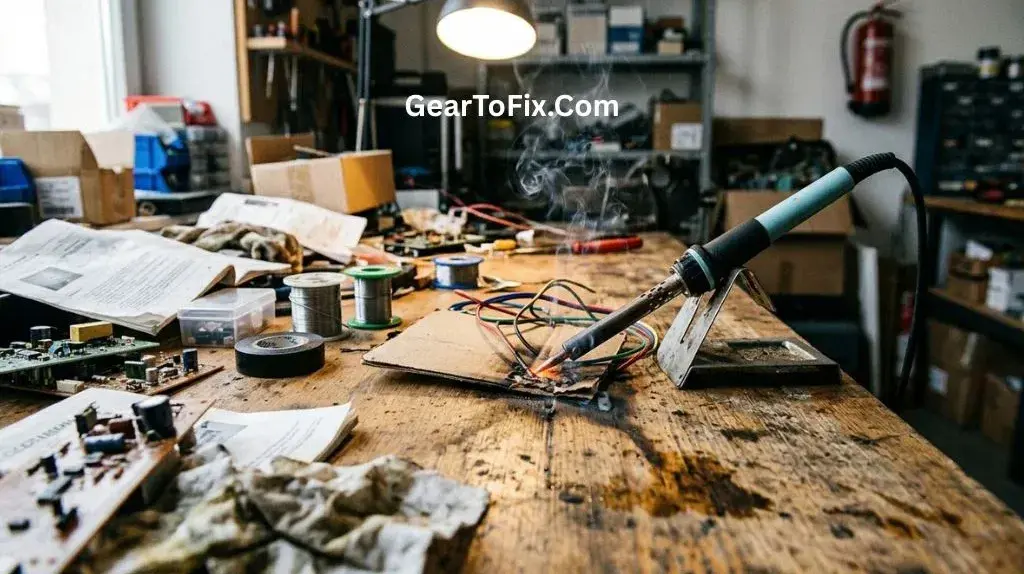
- Direct Contact: The most common cause of ignition is when the hot tip directly touches a combustible object, such as a manual, a piece of cardboard, a cleaning rag, or a wooden workbench.
- Radiant Heat: Even without touching an object directly, a soldering iron left very close to highly sensitive materials (like thin plastics, paper, or solvents) can heat them to their ignition point through thermal radiation.
- Thermal Runaway in Cheap Irons: Inexpensive, unregulated soldering irons continuously draw power and heat up without a ceiling limit. If left plugged in for hours, the internal heating element can fail catastrophically, melting the plastic handle or igniting nearby materials.
- Molten Solder Splashes: Flicking excess solder off a hot tip can send tiny balls of molten metal flying across a room. If these hot droplets land on flammable fabrics, sawdust, or paper, they can smolder and start a fire.
Ignition Points of Common Workbench Materials
To put the danger into perspective, it helps to compare the typical operating temperature of a soldering iron with the ignition temperatures of materials frequently found in workshops and craft rooms.
| Material | Approximate Ignition Temperature | Risk Level with a 700°F (370°C) Soldering Iron |
|---|---|---|
| Paper / Cardboard | 451°F (233°C) | extremely High (Ignites almost instantly on contact) |
| Dry Pine Wood | 428°F to 500°F (220°C to 260°C) | High (Chars immediately; ignites with brief contact) |
| Cotton Fabric | 410°F to 482°F (210°C to 250°C) | Extremely High (Smolders quickly; open flame follows) |
| Polyester Fabric | 900°F (482°C) | Medium-High (Melts rapidly; can ignite under sustained heat) |
| Isopropanol (99% Rubbing Alcohol) | 750°F (399°C) | Extremely High (Fumes can flash-ignite near the tip) |
As shown in the table, almost every common material found on a standard desk or workbench will char, melt, or ignite at temperatures far below what a standard soldering iron produces during normal operation.
Common Mistakes That Lead to Soldering Fires
Most soldering-related fires do not occur because of equipment failure. Instead, they are usually the result of simple user oversight or poor workshop habits.
1. Working on an Uncluttered Surface
A cluttered workbench is the single greatest fire hazard in a electronics or crafting area. Having schematics, component packaging, paper towels, and plastic bins near the soldering station increases the likelihood of a hot tip accidentally brushing against something flammable.
2. Not Using a Dedicated Safety Stand
Setting a hot soldering iron directly down on a table, even for a few seconds, is incredibly dangerous. The iron can easily roll over, come into contact with its own power cord, or roll off the table entirely and land on carpet or a chair.
3. Melting the Iron’s Own Power Cord
This is a frequent accident in busy workspaces. If the heavy, flexible power cord of the soldering station or iron drapes across the workbench, it can easily touch the hot tip. The tip will instantly melt through the rubber or PVC insulation, causing a short circuit, sparks, and potentially igniting the cord material.
4. Leaving the Iron Plugged In and Unattended
It is easy to get distracted by a phone call, a knock at the door, or a quick trip to another room. If you leave your iron plugged in and active while you walk away, any sudden vibration, pet movement, or draft could cause the iron to fall from its stand and touch a combustible surface.
Practical Ways to Prevent Soldering Iron Fires
Preventing a fire while soldering requires a combination of the right equipment, a clean workspace, and safe habits. By implementing a few simple protocols, you can virtually eliminate the risk of an accidental fire.
- Always Use a Heavy-Duty Safety Stand: Never lay a soldering iron flat on a table. Use a dedicated stand with a heavy base that will not tip over. The stand should have a protective shroud that covers the hot tip completely when the iron is resting.
- Clear a Three-Foot Safety Zone: Keep your immediate soldering area free of paper, plastic, solvents, and rags. Maintain a clean, non-flammable surface—such as a silicone soldering mat or a ceramic tile—directly underneath your work.
- Unplug the Iron Immediately After Use: Make it a habit to unplug your iron or switch off your soldering station the second you finish your last joint. Do not wait for the project to dry or cool down before turning off the heat source.
- Invest in an Auto-Sleep Soldering Station: Modern digital soldering stations often feature an accelerometer or a sensor in the handle. If the iron sits idle in the stand for a set period (usually 5 to 10 minutes), the station automatically drops the temperature or shuts down completely.
- Keep a Fire Extinguisher Nearby: Always keep a working fire extinguisher within arm’s reach of your soldering bench. A Class ABC dry chemical extinguisher is recommended, as it is safe for electrical fires as well as wood, paper, and plastic fires.
What to Do If a Soldering Fire Starts
If a fire does break out while you are soldering, you must act quickly and calmly.
First, unplug the soldering iron immediately if it is safe to reach the outlet. Cutting the electrical power stops the generation of heat and prevents the risk of electrocution if you need to use a fire extinguisher or water.
Second, assess the size of the fire. If it is a small smoldering spot on a piece of wood or paper, you can smother it with a damp sponge or a silicone mat.
If the fire has spread to plastics, electrical cords, or surrounding furniture, do not use water. Water conducts electricity and can cause a dangerous shock if the circuit is still live. Instead, use a Class ABC fire extinguisher. Point the nozzle at the base of the flames, pull the pin, and sweep from side to side until the fire is completely out.
If the fire cannot be contained within 15 to 20 seconds, immediately evacuate the room and call emergency services.
Frequently Asked Questions Of Can A Soldering Iron Cause A Fire
Can a soldering iron catch fire if left plugged in overnight?
Yes. If left plugged in overnight, an unregulated soldering iron can overheat, leading to an electrical short or the breakdown of its heating element. If the iron is resting in an unstable holder or near flammable materials, the continuous, unmonitored heat can easily trigger a fire.
Is it safe to rest a hot soldering iron on a wooden table?
No, it is highly unsafe. While hard woods do not ignite instantly at 600°F, they will char, smoke, and can eventually catch fire under sustained exposure to a hot soldering iron tip. Always use a metal or ceramic soldering iron stand.
Can soldering flux fumes catch fire?
Under normal soldering conditions, flux fumes will not catch fire. However, the liquid or paste flux itself is flammable if exposed directly to an open flame. Additionally, using flammable solvents like isopropyl alcohol to clean flux residue off a circuit board while the soldering iron is still hot creates a serious flash-fire hazard.
How long does a soldering iron take to cool down safely?
A standard soldering iron can take anywhere from 10 to 20 minutes to cool down to a safe touching temperature after being unplugged. During this cooling period, the iron must remain secured in its safety stand to prevent accidental burns or fires.
Safe Soldering Takeaway
A soldering iron is a highly effective tool, but its operating temperatures are more than high enough to initiate rapid combustion in everyday materials. The tool itself is rarely the source of danger; rather, fire hazards stem from clutter, lack of proper resting stands, and simple forgetfulness. By maintaining a clear workspace, using a heavy, shrouded safety stand, and ensuring the iron is powered down immediately after use, you can enjoy a safe, productive, and fire-free soldering environment.

Scott Yarnell is a tool expert focused on practical guides, product research, and real-world tool performance to help readers make informed decisions.