How To Clean And Tin A Soldering Iron Tip: Guide
A dirty, blackened soldering iron tip is one of the most common causes of poor solder joints. When a tip becomes covered in oxidation and burnt flux residue, it loses its ability to conduct heat efficiently. Solder will begin to bead up and roll off the tip rather than cling to it, making precise work nearly impossible.
To keep your equipment working properly, you must know how to clean and tin a soldering iron tip. This simple maintenance routine ensures rapid heat transfer, protects the metal from oxidation, and extends the life of your tools.
To clean and tin a soldering iron tip, heat the iron to its operating temperature, wipe away debris using a brass wire sponge, and immediately apply a fresh layer of rosin-core solder to cover the tip entirely. This protective layer must remain on the tip at all times, especially when the iron is idle or stored away.
Why Cleaning and Tinning Your Soldering Iron Tip Matters
Soldering iron tips are typically made of a copper core (for excellent heat conductivity) plated with iron, nickel, and chromium to protect the soft copper from dissolving into the solder. However, hot iron reacts rapidly with oxygen in the air, creating a layer of iron oxide.
Oxidation acts as a thermal barrier. If you do not maintain your tip, the following issues will occur:
- Poor Heat Transfer: The heat cannot travel from the heating element through the oxide crust to the joint, forcing you to hold the iron on sensitive components for dangerously long periods.
- Solder Repelling: Molten solder is attracted to clean, hot metal. It is repelled by oxide, causing it to ball up and fall off the tip.
- Premature Tip Failure: Once the protective iron plating oxidizes completely, the inner copper core will dissolve, leaving the tip pitted, misshapen, and permanently ruined.
Tinning is the process of applying a thin coat of molten solder over the tip. This coat acts as a physical barrier that prevents oxygen from reaching the iron plating, preserving its integrity and facilitating immediate heat transfer during your next joint.
Essential Tools for Tip Maintenance
Before you begin, gather the appropriate cleaning and maintenance tools. Using the wrong materials can strip the protective plating off your tip and permanently ruin it.
| Tool | Primary Function | Key Consideration |
|---|---|---|
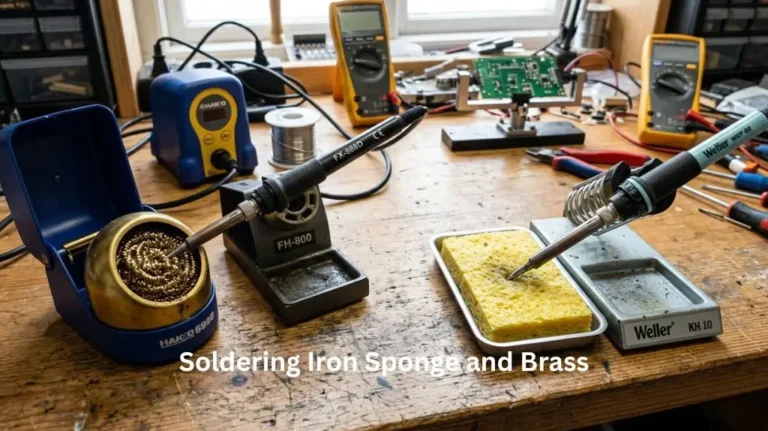
| Brass Wire Sponge | Removes excess solder and light oxidation without dropping tip temperature. | Preferred over steel wool, which is too abrasive and can damage the plating. |
| Cellulose Sponge | Damp wipe for removing stubborn, sticky flux residues. | Must be damp, not dripping wet. Excess water causes thermal shock. |
| Rosin-Core Solder | Protects the tip and acts as the tinning agent. | Use the same alloy (leaded or lead-free) that you use for your soldering projects. |
| Tip Tinner (Chemical) | Restores severely oxidized, black tips that reject regular solder. | Highly acidic; use only when standard cleaning methods fail. |
Step-by-Step Guide: How to Clean and Tin a Soldering Iron Tip
This procedure should be performed before you start soldering, periodically during your work session, and immediately before you turn off the power.
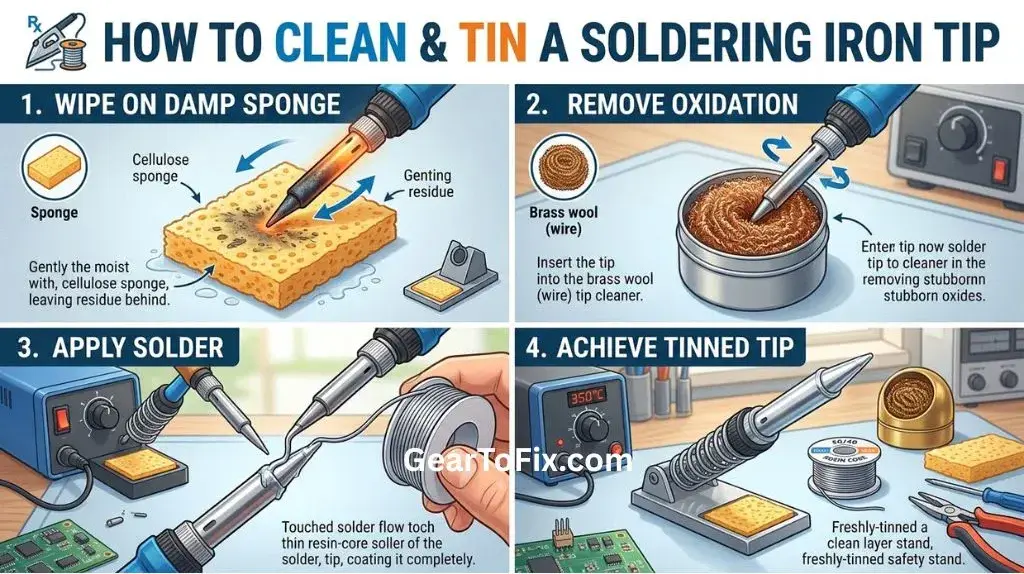
Step 1: Heat the Iron
Turn on your soldering station and set it to its normal operating temperature, typically between 300°C and 350°C (570°F to 660°F). Avoid cranking the heat to its maximum setting, as excessive heat accelerates oxidation.
Step 2: Wipe Away Old Debris
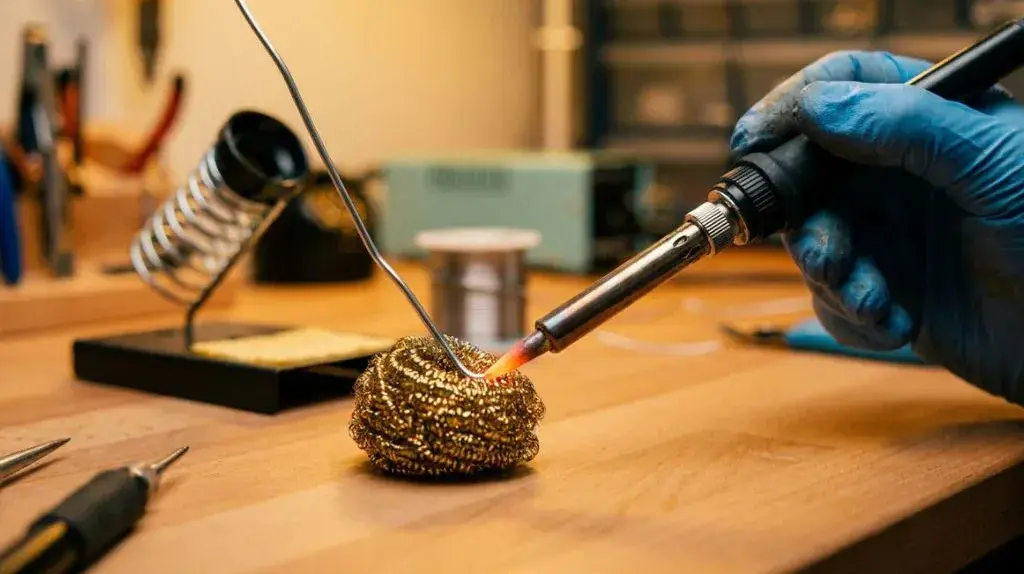
Once the iron reaches temperature, plunge the tip into a brass wire sponge two or three times. The brass ribbons will scrape away oxidized solder and burnt flux without dropping the tip’s temperature. If you have stubborn, sticky flux residue, quickly wipe the tip across a damp cellulose sponge, then immediately return to the brass sponge.
Step 3: Apply Fresh Solder (Tinning)
Immediately touch your rosin-core solder wire to the very end of the clean tip. Allow the solder to melt and flow smoothly over the entire working surface of the tip. The flux inside the solder wire will clean away any remaining microscopic oxide, while the alloy coats the metal.
Step 4: Wipe Off the Excess
Gently swipe the tip through the brass wire sponge once to remove any thick drips. You should be left with a bright, shiny, silver-like coating of solder over the entire working end of the tip.
Step 5: Tin Before Storage
When you are finished soldering, do not wipe the tip clean before turning off the station. Instead, apply a generous layer of fresh solder to the tip and place the iron directly into its stand to cool. This sacrificial layer of solder protects the tip from oxidizing while it cools down and while it sits in storage.
How to Restore a Severely Oxidized (Black) Tip
If your soldering iron tip has turned completely black and regular solder simply rolls off it, the tip has suffered severe oxidation. You can often restore it using a commercial chemical tip tinner (sometimes called tip activator).
- Heat the Iron: Set the iron to roughly 320°C (600°F).
- Dip the Tip: Press the hot tip directly into the block of cold chemical tip tinner. The mixture of mild acid and metal powder will melt, producing a small amount of smoke.
- Roll the Tip: Roll the tip in the mixture for two to three seconds to ensure full coverage.
- Wipe Clean: Pull the tip out and immediately clean it thoroughly in your brass wire sponge to remove the acidic residue.
- Tin Instantly: Apply standard rosin-core solder to the tip to seal it. If dark patches remain, repeat the process once more.
Safety Warning: Chemical tip tinners produce acidic fumes when melted. Always perform this restoration in a well-ventilated area and avoid breathing in the smoke.
Best Practices to Prevent Future Tip Damage
- Never Use Files or Sandpaper: Abrasives will scratch off the microscopic iron plating, exposing the soft copper core underneath. Once the copper is exposed, the tip will dissolve within a few hours of use.
- Avoid High Idle Temperatures: Leaving an iron idling on its stand at temperatures above 400°C (750°F) causes rapid oxidation. Turn the iron off or lower the temperature to 200°C if you step away for more than a few minutes.
- Use High-Quality Solder: Low-quality solder often contains aggressive fluxes or impurities that can chemically attack the iron plating of your tip.
- Avoid Wet Sponges When Possible: While traditional damp sponges work, the sudden temperature drop (thermal shock) of touching hot metal to cold water causes the metal plating of the tip to expand and contract rapidly, leading to micro-fractures over time. Use a brass wire sponge as your primary cleaner.
FAQs About How To Clean And Tin A Soldering Iron Tip
How often should I tin my soldering iron tip?
You should tin your tip every time you pick up the iron, every few joints during your work session, and right before you turn the station off. Keeping the tip constantly wet with solder is the best defense against oxidation.
What is the difference between leaded and lead-free solder for tinning?
Lead-free solder has a higher melting point and oxidizes much faster than leaded solder. If you are using lead-free solder, you must clean and tin your tip more frequently, and you may need to rely on brass wire cleaners exclusively to avoid thermal shock.
Why does the solder roll off my tip into balls?
This occurs because a layer of oxidation has formed over the iron plating. Because molten solder cannot bond with iron oxide, surface tension causes the solder to bead up and roll off. You must clean the oxide off using a brass sponge or tip tinner before solder will adhere again.
Can I use steel wool to clean my tip?
Do not use standard household steel wool. It is too hard and abrasive, which will scratch and ruin the protective plating. Use only soft brass wire sponges specifically designed for soldering iron maintenance.
Final Takeaway
Maintaining a clean and tinned soldering iron tip is not a chore to save for the end of a project; it is an active part of the soldering process. By keeping a brass wire sponge nearby and ensuring your tip is always coated with a bright, shiny layer of fresh solder, you will enjoy faster heat transfer, cleaner solder joints, and tools that last for years rather than weeks. Never store your iron dry—always let it cool down with a generous coat of protective solder.

Scott Yarnell is a tool expert focused on practical guides, product research, and real-world tool performance to help readers make informed decisions.