Can I Solder Aluminum Wire: A Complete Beginner’s Guide
Yes, you can solder aluminum wire, but it requires special materials and a different technique from soldering copper wire. Aluminum quickly develops a hard oxide layer that prevents ordinary solder from bonding properly. To create a reliable joint, you need aluminum-specific flux, compatible solder, proper surface preparation, and controlled heating.
This guide explains why aluminum wire is difficult to solder, what tools and materials you need, how to solder it step by step, and when another connection method is a better choice.
Why Is Aluminum Wire Difficult to Solder?
The biggest challenge when soldering aluminum wire is its natural oxide layer. When aluminum comes into contact with air, it quickly forms a thin layer of aluminum oxide on its surface.
This oxide layer protects aluminum from further corrosion, but it also makes soldering difficult. Aluminum oxide has a much higher melting point than the aluminum underneath it. Ordinary electronics solder cannot easily pass through this layer and bond with the bare metal.
There is another difference between aluminum and copper. Copper transfers heat efficiently, while aluminum also transfers heat quickly and can spread it away from a small soldering area. This makes temperature control important when working with aluminum wire.
If you are learning basic wire connections first, read this guide on how to solder wires with a soldering iron. It explains the standard wire preparation and soldering process used for common electrical connections.
Can You Solder Aluminum Wire With Regular Solder?
Not reliably. Regular rosin-core electronics solder is designed mainly for materials such as copper. It usually cannot remove the tough oxide layer on aluminum, so the solder may form small balls instead of spreading across the wire.
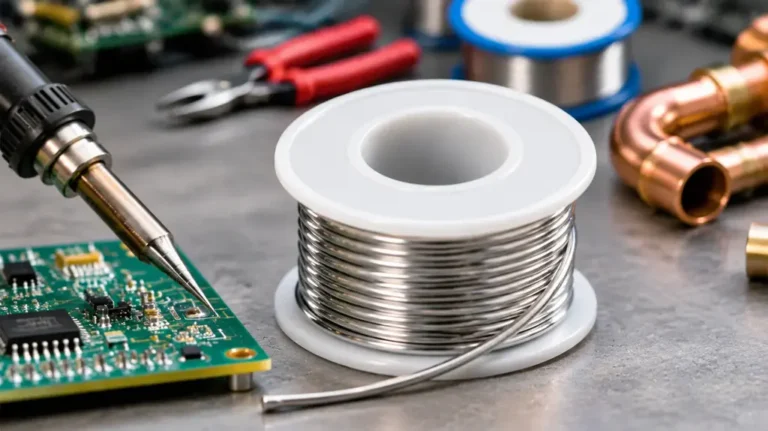
You need a soldering product specifically designed for aluminum. Depending on the application, this may include an aluminum-compatible solder alloy and a suitable aluminum soldering flux.
| Material | Suitable for Aluminum? | Reason |
|---|---|---|
| Regular rosin-core solder | Generally no | Cannot reliably remove aluminum oxide. |
| Aluminum-specific solder | Yes, when compatible | Designed to wet suitable aluminum surfaces. |
| Aluminum soldering flux | Yes | Helps remove or disrupt the oxide layer. |
| Acid-core plumbing solder | Not recommended for electronics | Its flux may leave damaging residues. |
| Rosin electronics flux | Generally no | Usually not active enough for aluminum oxide. |
Always check the solder and flux manufacturer’s compatibility instructions. Not every aluminum alloy can be soldered using the same materials or procedure.
What Do You Need to Solder Aluminum Wire?
Before starting, collect the correct tools and materials. Using ordinary copper-soldering supplies may lead to a weak connection or complete soldering failure.
1. Aluminum-Compatible Solder
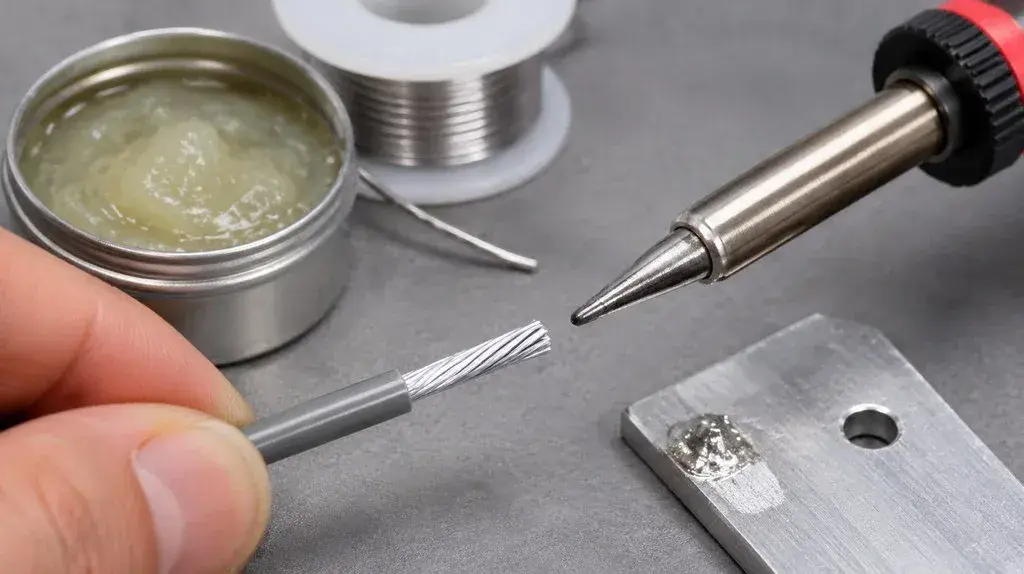
Use solder specifically intended for aluminum or aluminum-to-dissimilar-metal connections. Some products contain zinc or other alloying elements to improve their ability to bond with aluminum.
Check the product instructions to confirm that the solder is suitable for your wire type and intended application.
2. Aluminum Soldering Flux
Aluminum soldering flux helps remove or disrupt the oxide layer so the solder can contact the underlying metal.
Choose a flux specifically formulated for the solder alloy and aluminum application. Some aluminum fluxes are highly active and can leave corrosive residues. Follow the manufacturer’s cleaning instructions after soldering.
3. Suitable Soldering Iron or Heat Source
A temperature-controlled soldering iron may work for small aluminum wires when it can transfer enough heat to the joint. Larger wires may require a more powerful heating tool or another joining process.
The correct heat source depends on the wire diameter, aluminum alloy, solder, and flux. Do not assume that a soldering iron suitable for copper will automatically work for aluminum.
4. Cleaning and Preparation Tools
You may need the following items:
- Fine stainless-steel brush or suitable abrasive tool
- Wire cutters
- Wire strippers
- Clean, lint-free cloth
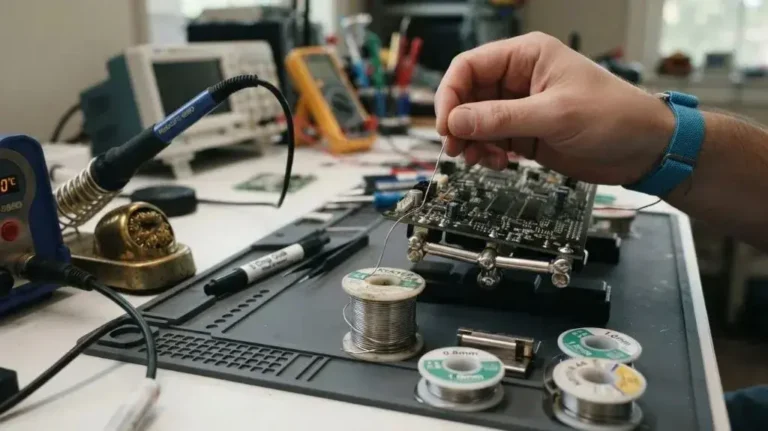
- Suitable clamps or helping hands
- Safety glasses
- Heat-resistant work surface
Use cleaning materials that will not contaminate the joint. Follow the solder and flux manufacturer’s recommendations for surface preparation.
How to Solder Aluminum Wire Step by Step
Once you have the correct materials, you can prepare the wire and make the connection. The following process is intended for small, suitable low-voltage projects and metalworking applications, not household branch-circuit repairs.
Step 1: Identify the Aluminum Wire
First, confirm that the conductor is actually aluminum. Some wires have copper-colored insulation or protective coatings that can make identification difficult.
Check the wire markings, product documentation, or manufacturer’s information. Also identify the aluminum alloy if possible because some alloys are more difficult to solder than others.
Step 2: Cut and Prepare the Wire
Cut away damaged or heavily corroded sections. If the wire has insulation, remove only the amount needed for the connection.
Inspect the exposed aluminum surface. Remove dirt, grease, and other contaminants using a cleaning method approved for the material and flux.
Step 3: Remove the Aluminum Oxide Layer
Carefully prepare the soldering area using a suitable stainless-steel brush or the surface-preparation method recommended by the solder manufacturer.
Aluminum oxide reforms quickly after it is removed. For this reason, surface preparation and flux application should be coordinated closely rather than leaving the cleaned wire exposed for a long time.
Step 4: Apply Aluminum Soldering Flux
Apply the recommended aluminum flux to the prepared area. Use only the amount and application method specified by its manufacturer.
Do not substitute ordinary electronics flux for aluminum-specific flux. Also avoid touching the prepared area with dirty tools or bare fingers.
Step 5: Position the Wire Securely
Place the aluminum wire in a stable position using a suitable clamp or fixture. If you are joining two wires, arrange the joint according to the solder product’s instructions.
The wire should remain stable throughout the process. Solder should not be expected to provide the only mechanical support for the connection.
Step 6: Heat the Aluminum Carefully
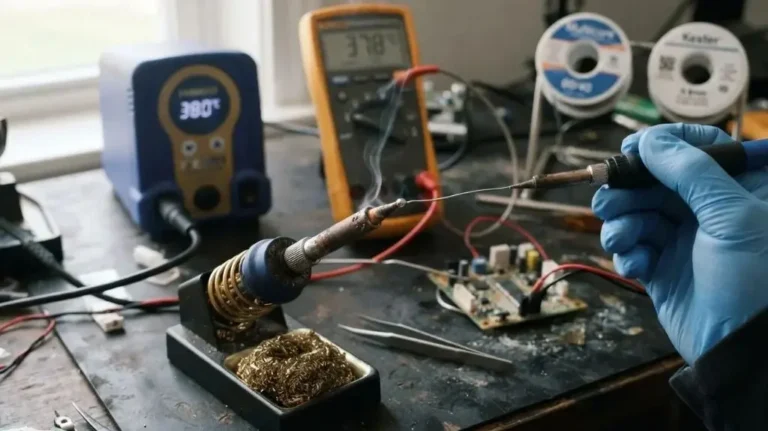
Apply heat using the method recommended for the selected solder and flux. Heat the aluminum itself so the solder can flow onto the prepared surface.
A common mistake is to melt solder on the iron and transfer it onto a relatively cold aluminum wire. This may produce a coating without creating a proper bond.
Avoid overheating the wire or flux. Excessive heat can damage the workpiece, burn the flux, or cause the solder to behave incorrectly.
Step 7: Apply the Compatible Solder
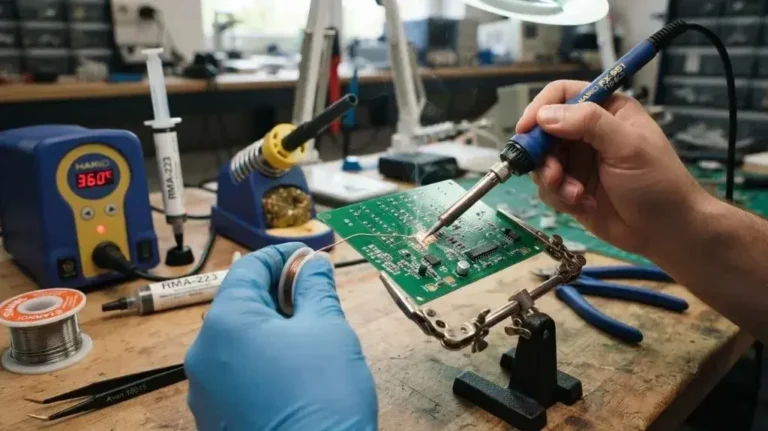
Feed the compatible solder into the heated joint according to the manufacturer’s instructions. The solder should wet and spread across the prepared aluminum surface rather than forming separate balls.
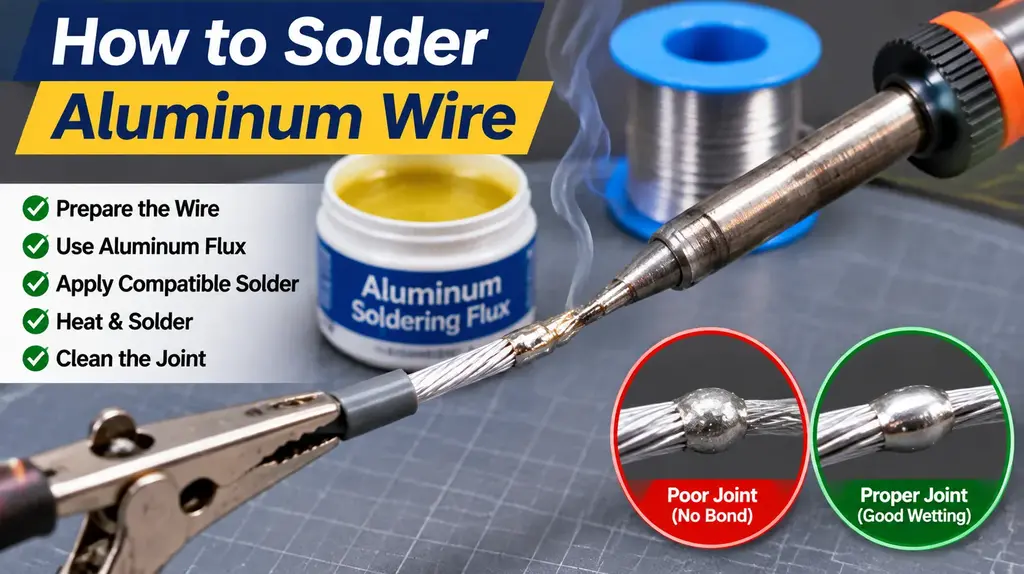
If the solder does not flow, stop and check the surface preparation, flux compatibility, and heat transfer. Adding more solder will not solve an oxide or temperature problem.
Step 8: Allow the Joint to Cool
Remove the heat source and allow the connection to cool without movement. Do not pull, twist, or bend the wire while the solder is solidifying.
Keep the connection supported until it has cooled sufficiently for inspection.
Step 9: Clean the Flux Residue
This step is particularly important when using active aluminum soldering flux. Some formulations can corrode the aluminum or nearby materials if their residue remains on the joint.
Follow the flux manufacturer’s exact cleaning instructions. Depending on the product, this may involve hot water, a suitable cleaner, or another specified cleaning process.
Do not assume that every aluminum flux is water-soluble or that water alone is sufficient.
Step 10: Inspect and Test the Connection
Examine the finished joint for incomplete wetting, visible gaps, cracks, excessive solder, and remaining flux residue.
For an appropriate low-voltage circuit, perform a suitable continuity or electrical test after the connection has cooled and been cleaned. A continuity reading alone does not prove that the joint can safely carry its intended current.
Can You Solder Aluminum Wire to Copper Wire?
Yes, aluminum can be soldered to copper in certain applications, but joining these two metals requires additional care.
Aluminum and copper have different physical and chemical properties. Their connection can also develop galvanic corrosion when moisture and other environmental conditions are present.
Use a solder and flux system specifically approved for aluminum-to-copper joining. The product must be suitable for both metals and the intended service conditions.
For electrical wiring, do not simply twist aluminum and copper together and cover the connection with solder. Use a connector specifically identified for the conductor materials and application. For permanent building wiring, follow the applicable electrical code and manufacturer instructions.
Common Problems When Soldering Aluminum Wire
Even with the correct materials, aluminum soldering can be challenging. Understanding common problems can help you identify why a joint is failing.
Solder Will Not Stick to the Aluminum
This usually happens because the oxide layer remains on the surface, the flux is unsuitable, or the aluminum has not reached the required working temperature.
Check the manufacturer’s surface-preparation instructions and confirm that the solder and flux are compatible.
Solder Forms Small Balls
Small solder balls often indicate poor wetting. Contamination, oxide, unsuitable flux, or insufficient heating may be responsible.
Stop heating and reassess the joint instead of adding more solder.
The Flux Produces Too Much Smoke
Some aluminum fluxes produce noticeable fumes during heating. Excessive heat can make this problem worse.
Work in a properly ventilated area, follow the product’s safety data sheet, and use suitable eye and skin protection. Do not lean directly over the work.
The Finished Joint Develops Corrosion
Corrosion may occur when active flux residue remains on the surface or when dissimilar metals are exposed to unsuitable environmental conditions.
Clean the joint using the manufacturer’s recommended method and inspect it for signs of damage.
Is Soldering Aluminum Wire Better Than Crimping?
Not always. Soldering and crimping are different joining methods, and the better option depends on the application.
| Factor | Soldering | Crimping |
|---|---|---|
| Required materials | Compatible solder and flux | Correct connector and crimping tool |
| Heat required | Yes | Usually no external heat |
| Surface preparation | Very important | Important and connector-specific |
| Mechanical strength | Depends on joint design | Depends on connector and correct crimping |
| Repeated movement | May create fatigue near the rigid joint | Often suitable when properly designed |
| Electrical wiring | Application-specific | Often preferred when an approved connector is available |
A properly selected aluminum-rated crimp connector can provide a reliable connection without the difficulties of soldering. However, the connector, conductor size, tooling, and installation procedure must all match.
Safety Precautions When Soldering Aluminum Wire
Aluminum soldering involves hot tools, molten metal, chemical flux, and potentially irritating fumes. Take the following precautions before starting:
- Work in a well-ventilated area with appropriate local fume extraction.
- Wear safety glasses and suitable protective gloves.
- Read the flux safety data sheet before use.
- Keep flammable materials away from the heating area.
- Use a stable, heat-resistant work surface.
- Do not touch the heated wire or molten solder.
- Keep children and pets away from the workspace.
- Disconnect electrical equipment before working on its wiring.
- Follow the cleaning and disposal instructions for the flux.
Important electrical warning: Do not use this small-wire soldering procedure to repair household aluminum branch-circuit wiring. Electrical connections must use devices and materials identified for the conductor and installation conditions. Use a qualified electrician when working on building wiring.
When Should You Avoid Soldering Aluminum Wire?
Although aluminum can be soldered, it is not the right choice for every connection. Consider another joining method when:
- The wire carries high electrical current.
- The connection is part of household mains wiring.
- The joint will experience regular movement or vibration.
- The connection will be exposed to moisture or corrosive conditions.
- The aluminum alloy is not approved for the selected solder.
- You cannot safely remove the flux residue.
- The manufacturer recommends a specific crimping, welding, or mechanical connection.
For some aluminum applications, brazing or welding may provide a more suitable connection. The correct method depends on the metal alloy, wire size, required strength, operating temperature, and working conditions.
FAQs About Can I Solder Aluminum Wire
Can I solder aluminum wire with a regular soldering iron?
Yes, a suitable soldering iron may work on small aluminum wires, but it must provide enough heat and be used with compatible aluminum solder and flux. A standard copper-soldering setup is generally not sufficient.
What type of solder works on aluminum wire?
Use an aluminum-compatible solder alloy designed for the particular aluminum material and application. Check its manufacturer’s instructions to confirm the required flux and working temperature.
Why does regular solder not stick to aluminum?
Aluminum quickly develops a hard oxide layer that prevents ordinary solder from properly wetting the metal. Aluminum-specific flux and compatible solder are needed to overcome this problem.
Can I solder aluminum wire without flux?
Some specialized soldering products have an integrated flux system, but ordinary solder without a suitable oxide-removal method generally will not bond reliably to aluminum. Follow the product instructions.
Can aluminum wire be soldered to copper wire?
Yes, with a compatible solder and flux system designed for dissimilar metals. However, galvanic corrosion and electrical compatibility must be considered. For electrical wiring, use an approved aluminum-to-copper connector instead of an improvised joint.
Is soldering aluminum wire safe for household electrical wiring?
Do not use ordinary DIY soldering methods for household aluminum branch-circuit repairs. Use electrical connectors specifically identified for aluminum conductors and the intended installation. A qualified electrician should handle unfamiliar or safety-critical wiring.
Final Thoughts
So, can you solder aluminum wire? Yes, but success depends on choosing the right solder, using aluminum-specific flux, preparing the surface correctly, and controlling the heat.
For small and suitable metalworking or low-voltage projects, specialized soldering products can make aluminum joining possible. However, for household wiring, high-current connections, and applications exposed to vibration or moisture, a properly rated mechanical or crimp connection may be a better choice.
Before starting, check the solder and flux manufacturer’s instructions for the specific aluminum alloy and application. For additional technical guidance, consult the manufacturer’s aluminum soldering flux specifications and instructions.

Scott Yarnell is a tool expert focused on practical guides, product research, and real-world tool performance to help readers make informed decisions.