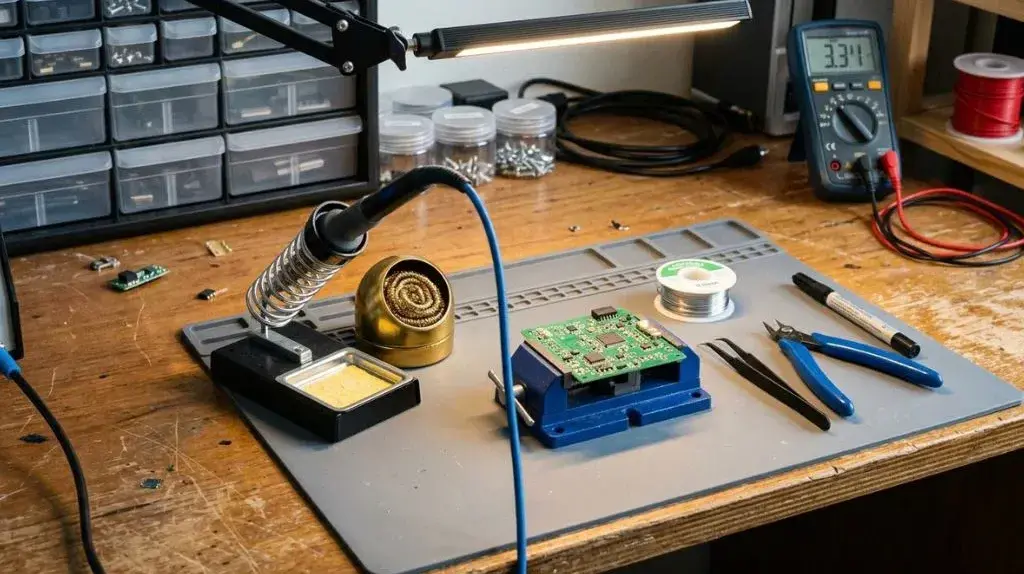
Why Should I Use a Soldering Iron Stand: Key Benefits
You should use a soldering iron stand because it gives the hot iron a stable, controlled place to rest when you are not actively soldering. This reduces the risk of burns, damaged work surfaces, melted materials, and accidental contact with the iron tip.
A stand also helps protect the soldering iron itself. It keeps the heated tip away from clutter, prevents the tool from rolling or falling, and makes it easier to work in a consistent rhythm. For occasional repairs or regular electronics work, a stand is a simple accessory that improves both safety and convenience.
How a Soldering Iron Stand Improves Safety
A soldering iron can remain hot long after it is switched off. Depending on the tool and its temperature setting, the tip and nearby metal parts may stay hot enough to cause burns or damage objects placed against them.
A stand helps manage that heat by keeping the iron in a predictable position. Instead of placing the tool on a bench, against another object, or on the edge of a work surface, you can return it to a holder designed for that purpose.
A suitable stand helps reduce several common hazards:
- Accidental contact with the heated tip
- Burns caused by an unstable or poorly placed iron
- Melted plastic, paper, fabric, or other nearby materials
- Damage to the workbench or table
- Cords being pulled when the iron rolls or falls
- Unexpected movement while the tool is heating or cooling
The stand does not make soldering risk-free. You still need to keep the iron away from flammable materials, avoid touching the tip, and place the stand on a stable, heat-resistant surface.
Why Should I Use a Soldering Iron Stand During Work?
The main reason is that soldering requires frequent pauses. You may need to reposition a circuit board, pick up solder, inspect a joint, or adjust a component. During those pauses, the iron needs a safe resting place.
Without a stand, people often place the iron directly on the bench or balance it against another object. These improvised solutions can allow the hot tip to touch the surface or cause the tool to fall.
A stand provides a repeatable place to put the iron down. That small improvement can make the work area more organized and reduce interruptions.
It Keeps the Heated Tip Off the Workbench
The tip is usually the hottest and most delicate part of a soldering iron. Resting it directly on a bench can leave scorch marks, damage the surface, or contaminate the tip with dirt and debris.
A stand supports the iron so the tip is separated from the work surface. This helps protect the bench and reduces the chance that the tip will contact objects that should not be heated.
It Reduces Accidental Damage
A loose soldering iron can damage more than the surface beneath it. The tip may touch a cable, plastic housing, component, tool handle, or unfinished project.
The damage may happen quickly because heat transfers from the tip into whatever it contacts. A stand creates a designated resting position and makes accidental contact less likely.
It Prevents the Iron from Rolling or Falling
Some soldering irons are rounded or unevenly balanced. If placed on a flat surface, they may roll when the cord moves or when the workbench is bumped.
A fall can:
- Expose the hot tip to an unsafe area
- Damage the iron or its cord
- Knock over nearby components
- Burn the floor or furniture
- Create a distraction while you are handling a circuit board
A stand with a stable base helps keep the tool in place between soldering operations.

A Stand Helps Preserve the Soldering Tip
A stand is not a replacement for proper tip care, but it supports better maintenance habits.
Soldering tips work best when they are kept clean, properly tinned, and protected from unnecessary contact with dirt or abrasive surfaces. Leaving a tip against a bench or placing it where debris can collect may make maintenance more difficult.
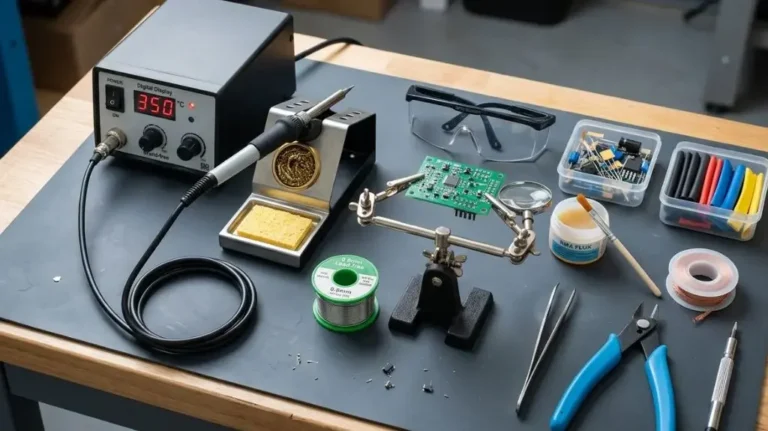
A stand helps by providing a clean resting location. Some stands also include a small cleaning container, such as a brass wool holder or a damp sponge compartment. The exact design varies, so the stand should be used according to its instructions.
Avoid Using the Stand as a Tip Cleaner Unless It Is Designed for That Purpose
A basic metal cradle may only be intended to hold the iron. It may not include a safe cleaning surface. Do not scrub the tip against random parts of the stand, as rough or unsuitable materials can damage the tip or remove its protective coating.
When cleaning is needed, use a method appropriate for the soldering iron and tip. A compatible cleaning area built into the stand can make this easier, but not every stand includes one.
The Stand Supports Better Temperature Habits
Putting the iron in its stand during pauses can reduce the temptation to leave it lying on the workbench or to keep holding it unnecessarily. If the soldering station has a sleep or idle-temperature function, placing the iron in its holder may also activate that feature, depending on the design.
Whether this feature is available depends on the soldering station. A simple stand without electronic controls will only hold the iron; it cannot change the tool’s temperature.
What Features Matter in a Soldering Iron Stand?
A stand does not need to be complicated to be useful. The most important qualities are stability, heat resistance, and compatibility with the soldering iron.
Stable Base
The stand should remain steady when you insert or remove the iron. A lightweight stand with a narrow base may slide or tip, especially if the power cord pulls against it.
Look for a base that:
- Sits flat on the work surface
- Does not tip easily
- Has enough weight or grip for the tool
- Leaves room for the iron cord to move without pulling it over
The correct balance depends on the size and design of the iron. A stand intended for a small pencil-style iron may not be suitable for a larger station handpiece.
Secure Holder
The holder should guide the iron into place without forcing you to touch hot parts. It should support the tool securely while leaving the handle accessible.
A holder that is too loose may allow the iron to shift or fall. One that is too tight may make removal awkward and increase the chance of contacting the heated section.
Heat-Resistant Construction
The part of the stand near the tip must tolerate repeated exposure to heat. Materials and designs vary, so check that the stand is intended for use with a soldering iron rather than treating any metal container or improvised bracket as a substitute.
Heat resistance does not mean the entire stand will remain cool. Metal parts near the iron may become hot during extended use. Handle the stand carefully and allow it to cool before moving it if necessary.
Compatibility With the Iron
Soldering irons differ in shape, size, balance, and heating arrangement. A stand made for one type of handpiece may not hold another securely.
Before using a stand, check that:
- The iron fits without wobbling
- The heated section does not contact an unsafe part of the holder
- The handle remains easy to remove
- The cord does not interfere with placement
- The stand supports the tool in a stable orientation
A stand designed as part of a soldering station may provide a better fit than a generic holder, but compatibility still matters.
Optional Cleaning Features
Some stands include a place for brass wool, a damp sponge, or other tip-cleaning material. These features can be convenient, especially when you are soldering repeatedly.
They are optional rather than essential. A stand that safely holds the iron is still useful even if it does not include cleaning accessories.
Soldering Iron Stand vs. Placing the Iron on the Bench
Placing a soldering iron directly on the bench may seem convenient, but it creates several avoidable problems.
| Resting method | Main benefit | Main limitation |
|---|---|---|
| Soldering iron stand | Holds the tool in a stable, designated position | Requires suitable placement and basic maintenance |
| Directly on the bench | Quick and requires no accessory | May cause burns, surface damage, rolling, or accidental contact |
| Against another object | May keep the handle elevated temporarily | Can be unstable and may expose nearby materials to heat |
| In an improvised container | May separate the iron from the work surface | The container may not be heat-resistant or properly balanced |
An improvised solution is especially risky if its heat resistance, stability, or clearance is uncertain. A stand designed for soldering provides a more dependable resting position.
How to Use a Soldering Iron Stand Correctly
Using a stand is simple, but placement and handling still matter.
- Place the stand on a stable, clear surface. Keep it away from paper, solvents, loose fabric, plastic parts, and other materials that may be damaged by heat.
- Position it within easy reach. You should be able to return the iron to the holder without stretching across the project.
- Insert the iron carefully. Place the tool into the holder without forcing it or allowing the hot tip to strike the stand.
- Keep the cord arranged safely. Avoid routing the cord where it can catch on your hand or pull the stand from the bench.
- Return the iron to the stand whenever you pause. Do not leave it resting on the project or work surface.
- Check the stand periodically. Remove built-up solder, flux residue, and debris when the stand is cool and the cleaning method is appropriate.
- Allow the tool and stand to cool before storage. Switching off the iron does not mean the tip is immediately safe to touch.
The holder should make the safe action easy. If returning the iron to the stand feels awkward, the stand may be poorly positioned or incompatible with the tool.
Common Mistakes When Using a Soldering Iron Stand
A stand improves safety only when it is used correctly. Several mistakes can reduce its effectiveness.
Using an Unstable Stand
A stand that tips, slides, or rocks can create a hazard of its own. If the tool does not sit securely, replace the stand or use one with a more suitable base.
Placing the Stand Near Flammable Materials
The stand controls where the iron rests, but it does not eliminate heat. Keep the entire setup away from paper, cardboard, cloth, solvents, aerosols, and other materials that should not be exposed to heat.
Touching the Holder Immediately After Use
Some stands become hot around the section supporting the iron. Do not assume the holder is cool simply because it is not the heated tip. Let it cool before moving or cleaning it.
Letting Solder Build Up Around the Holder
Residue can interfere with the iron’s placement and may make the stand harder to clean. Turn off and unplug the iron, allow all parts to cool, and then clean the stand using a suitable method.
Treating the Stand as a Substitute for Supervision
Never leave a heated soldering iron unattended just because it is in a stand. The stand reduces the risk of accidental contact, but the tool still produces enough heat to cause injury or property damage.
Do Beginners Need a Soldering Iron Stand?
Yes, beginners benefit from using a stand because they are still developing safe tool-handling habits. A stand provides a clear place to put the iron during pauses and reduces the need to improvise.
It also helps beginners focus on the soldering task instead of worrying about where to place the tool. Establishing the habit early is useful: lift the iron to solder, then return it to the holder when the operation is complete.
Experienced users benefit as well. Frequent soldering involves many pauses, and a stable stand keeps the work area more orderly regardless of skill level.
Can I Solder Without a Stand?
You can solder without a stand, but doing so is less convenient and may increase the chance of burns, surface damage, or accidental contact. The absence of a stand does not automatically make soldering impossible, but it removes a simple control that helps manage the hot tool.
If a stand is unavailable, the iron should still be placed only on a stable, heat-resistant surface designed or verified for that type of heat. Do not rely on paper, wood, plastic, fabric, or an unstable object as a resting place.
For regular soldering, using a proper stand is the more dependable approach.
FAQs About Why Should I Use a Soldering Iron Stand
Does a soldering iron stand prevent burns?
A stand can reduce the chance of burns by keeping the iron in a predictable location, but it cannot prevent every injury. The tip and nearby holder parts may still be hot, so avoid touching them and keep the stand away from areas where hands may accidentally make contact.
Should the soldering iron tip touch the stand?
The tip should rest only in the part of the holder designed to support it. Avoid dragging or rubbing the tip against the stand, since unsuitable contact may damage the tip or transfer residue.
Can any metal container be used as a soldering iron stand?
No. A metal container may not provide enough stability, clearance, or protection for the iron. It may also become dangerously hot or allow the tool to roll out. A purpose-designed stand is generally a safer and more practical option.
Does a soldering iron stand cool the iron?
A basic stand mainly holds the iron; it does not actively cool it. The iron may cool gradually when switched off, but the rate depends on its design, temperature, surrounding air, and other conditions.
Where should I place a soldering iron stand?
Place it on a stable, heat-resistant work surface within easy reach, but away from flammable materials and areas where the cord can be pulled. The iron should be easy to return to the stand without crossing over the project or reaching near other hazards.
Do soldering stations need a separate stand?
Many soldering stations include a matching holder or stand for the handpiece. If one is included, use it unless the manufacturer specifies another arrangement. A separate stand may be useful only when the original holder is missing, damaged, or unsuitable.
Final Takeaway
You should use a soldering iron stand because it gives a hot tool a stable and controlled resting place. It helps prevent burns, bench damage, melted materials, accidental contact, and falls while also supporting better soldering habits.
Choose a stand that fits the iron securely, remains stable on the work surface, and provides adequate heat-resistant clearance. The stand is a simple accessory, but returning the iron to it whenever you pause is one of the easiest ways to make soldering safer and more organized.

Scott Yarnell is a tool expert focused on practical guides, product research, and real-world tool performance to help readers make informed decisions.