What Are The Different Types Of Soldering Irons: Guide
Soldering is a fundamental skill across electronics repair, jewelry making, stained glass crafting, and plumbing. To perform these tasks safely and effectively, you must match the tool to the specific job. Using the wrong tool can lead to cold solder joints, ruined circuit boards, or damaged components.
To understand your options, you must first ask: What are the different types of soldering irons?
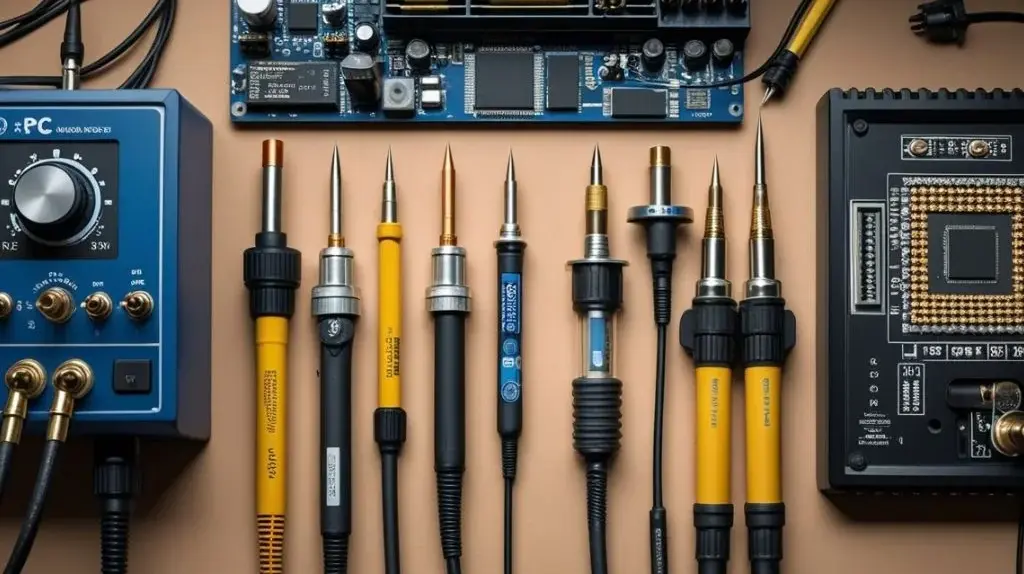
Soldering tools are generally classified by their power source, temperature control capabilities, and overall design. They range from simple, plug-and-play hand tools to advanced stations featuring digital microprocessors.
Quick Comparison of Soldering Iron Types
The table below outlines the primary types of soldering tools, their typical temperature control mechanisms, and their best applications.
| Tool Type | Temperature Control | Power Source | Best For |
|---|---|---|---|
| Simple Pencil Iron | None (Runs hot continuously) | AC Wall Outlet | Basic DIY crafts, simple wire splicing |
| Soldering Station | Adjustable (Dial or Digital) | AC Wall Outlet | Electronics repair, PCB assembly, hobbyist projects |
| Hot Air Rework Station | Adjustable (Airflow and Temp) | AC Wall Outlet | Surface-mount technology (SMD), desoldering |
| Soldering Gun | Instant on/off (Trigger-operated) | AC Wall Outlet | Heavy wire splicing, stained glass, plumbing |
| Butane Soldering Iron | Manual gas valve | Butane Gas | Fieldwork, automotive repairs, outdoor use |
| Battery-Powered Iron | Fixed or low/high toggle | AA or Li-ion Batteries | Light, quick field repairs where power is unavailable |
The Core Types of Soldering Irons
Selecting the right tool requires a closer look at how each type operates, its distinct advantages, and its physical limitations.
Simple Soldering Irons (Pencil Irons)
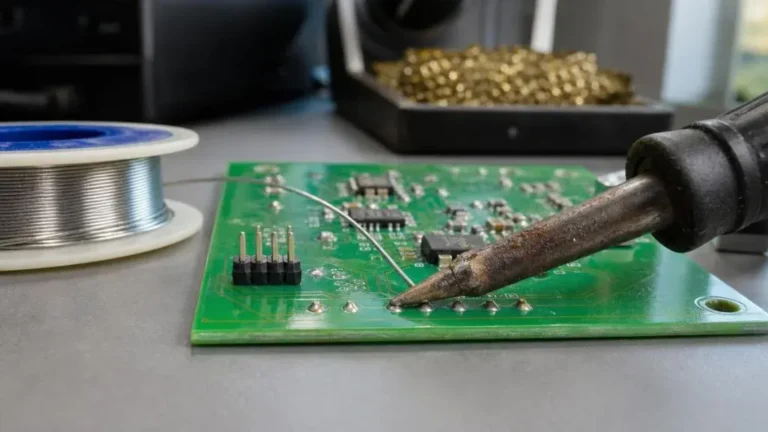
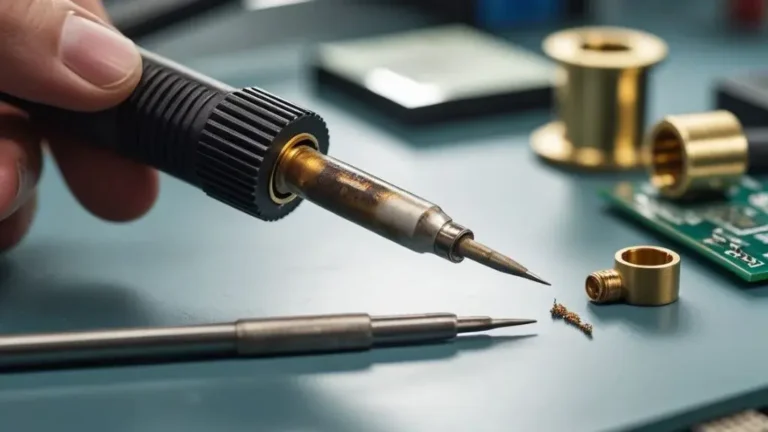
A simple soldering iron, often called a pencil iron, is a straight, wand-like tool that plugs directly into a wall outlet. It features a heating element inside a metal tube, which transfers heat directly to a solid copper or iron-plated tip.
These irons typically operate at a fixed wattage, usually between 15 and 40 watts. Because they lack internal temperature regulation, they continue to draw power and heat up until they reach a thermal equilibrium.
- Best For: Occasional household tasks, joining thick wires, and basic craft work.
- Limitations: The lack of temperature control makes them risky for delicate electronics. They can easily overheat printed circuit board (PCB) pads, causing the copper traces to lift and ruin the board.
Soldering Stations
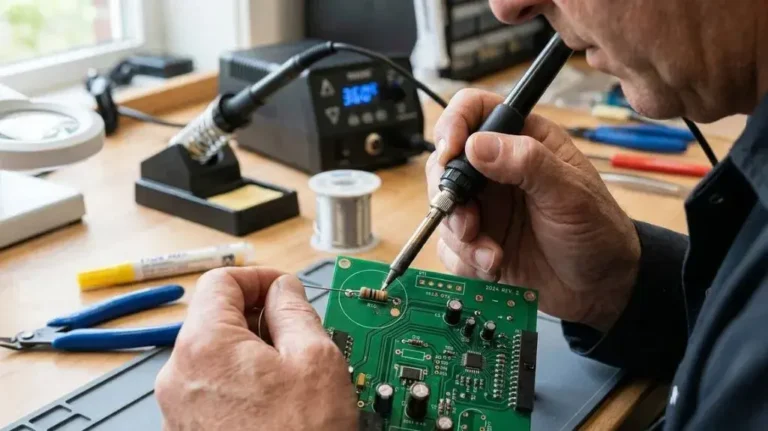
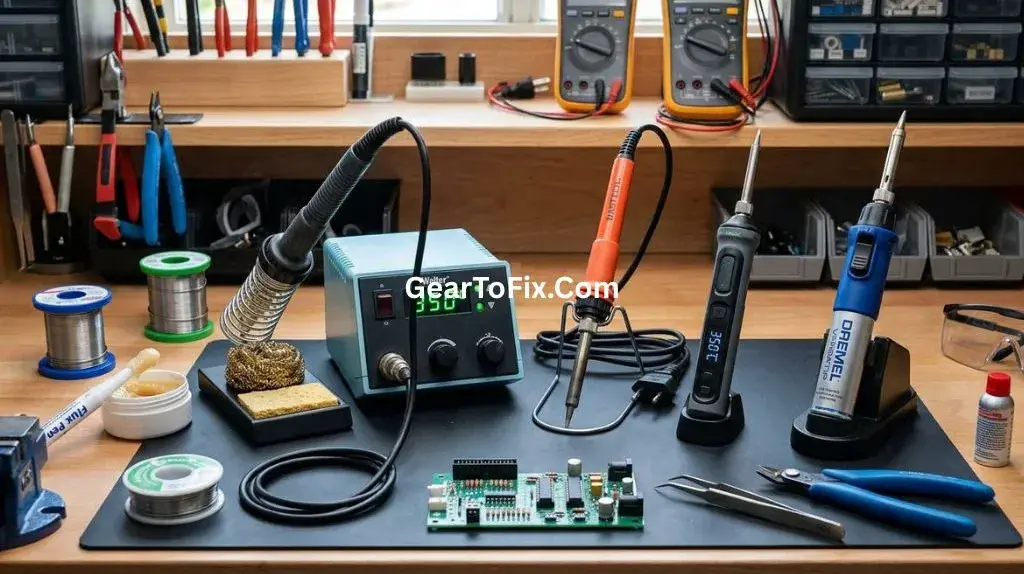
A soldering station consists of a desktop control unit connected to a lightweight, insulated soldering pencil. The main unit houses the power transformer, temperature adjustment dials or digital displays, and a safety stand for the hot iron.
Soldering stations offer closed-loop temperature control. A sensor near the tip monitors heat levels and signals the control unit to adjust the power flow. This ensures that the tip maintains a stable, consistent temperature even when touching cold metal joints that pull heat away.
- Best For: Microelectronics, drone building, keyboard modification, and professional repair work.
- Limitations: They are bulky and require a dedicated workspace with access to a power outlet, making them poorly suited for portable or outdoor use.
Hot Air Rework Stations
Unlike traditional irons that use a solid tip to transfer heat through physical contact, a hot air rework station uses a high-volume blower to direct heated air onto a joint. The station allows you to adjust both the temperature of the air and the speed of the airflow.
These stations are essential for handling surface-mount devices (SMD) and integrated circuit (IC) chips with dozens of tiny pins. Hot air can heat multiple connections simultaneously, allowing you to lift a multi-pin component off a board without damaging the delicate traces beneath it.
- Best For: Desoldering multi-pin components, reflowing solder paste on SMDs, and applying heat-shrink tubing.
- Limitations: They require specialized skills to prevent blowing tiny, un-soldered components off the circuit board. They are also unsuitable for standard through-hole soldering.
Soldering Guns
A soldering gun is characterized by its pistol-grip shape and trigger operation. Unlike pencil irons that take several minutes to warm up, a soldering gun heats up almost instantly.
Pressing the trigger sends a high-current electrical charge through a step-down transformer and directly into a loop-shaped wire tip. Because the tip has very low electrical resistance, it heats to working temperatures within seconds. Releasing the trigger cuts the power, allowing the tip to cool down quickly.
- Best For: Heavy-duty electrical connections, heavy-gauge wire splicing, stained glass assembly, and light sheet metal work.
- Limitations: They generate intense heat and a strong electromagnetic field, both of which can permanently destroy sensitive electronic components on computer or phone boards. They are also heavy and fatiguing to use for long periods.
Cordless Soldering Irons (Butane and Battery-Powered)
When a wall outlet is out of reach, cordless irons provide portability. These tools fall into two distinct categories:
Butane-Powered Irons: These irons use a small reservoir of pressurized butane gas. The gas burns over a catalytic tip, creating a high-heat output comparable to a corded iron. Many butane irons can be converted into mini-torches or hot air blowers by removing the soldering tip.
Battery-Powered Irons: These tools run on standard AA batteries or rechargeable lithium-ion cells. They are lightweight and heat up relatively quickly, but they have limited thermal recovery and run time.
Best For: Field service work, automotive wiring repairs, and remote outdoor environments.
Limitations: Battery-powered units struggle with larger joints due to limited power reserves. Butane units require regular fuel refills and emit hot exhaust gases that can melt nearby insulation if you are not careful.
Technical Factors That Affect Performance
When evaluating different types of soldering irons, looking beyond the physical shape of the tool is helpful. Several operational characteristics dictate how well an iron performs.
Wattage vs. Temperature
A common misconception is that higher wattage means a hotter iron. In reality, wattage represents the iron’s power capacity, or how much heat it can produce and sustain.
- A low-wattage iron (15W to 25W) will eventually get hot enough to melt solder, but it will lose its heat rapidly when touched to a cold joint and struggle to recover.
- A high-wattage iron (50W to 80W) retains its heat much better, transferring thermal energy quickly to create a solid joint in seconds before the heat can migrate and damage surrounding components.
Thermal Recovery
Thermal recovery refers to how fast the soldering tip returns to its target temperature after transferring heat to a joint. When the cold metal of a wire or component touches the hot tip, the tip temperature drops.
High-quality soldering stations with advanced heating elements inside the tip structure offer near-instant thermal recovery, allowing you to work quickly from joint to joint without waiting for the tool to reheat.
FAQs Of What Are The Different Types Of Soldering Irons
What is the difference between a soldering iron and a soldering gun?
A soldering iron is a lightweight, wand-style tool that runs continuously once plugged in, making it ideal for detailed, precision work. A soldering gun is a heavy, trigger-operated, pistol-shaped tool that heats instantly and is designed for heavy-duty applications like thick wires and stained glass.
What wattage soldering iron is best for electronics?
For general electronics work, a variable temperature soldering station rated between 40 and 60 watts is ideal. If you are using a fixed-wattage pencil iron, look for one rated between 25 and 30 watts to avoid overheating delicate circuit board traces.
Can I use a basic pencil iron for stained glass?
No. Stained glass copper foil techniques require a high-wattage iron, typically 80 to 100 watts, with a large chisel tip. Basic pencil irons do not have the thermal mass or power needed to heat long runs of solder on glass joints.
Why is temperature control so important?
Different types of solder require different temperatures. Traditional leaded solder melts at around 361°F (183°C), while modern lead-free solder requires higher temperatures of around 422°F (217°C). Temperature control allows you to set the iron to the exact melting point of your solder while preventing damage to sensitive components.
Conclusion
The right soldering iron depends on the scale of your project and how often you plan to use the tool. For occasional, basic wire repairs, a simple and affordable pencil iron is often sufficient. If you are working with circuit boards, modern electronics, or plan to solder regularly, investing in an adjustable temperature soldering station is highly recommended for its safety, precision, and consistent heat control. For heavy materials like stained glass or heavy-gauge automotive wiring, choose a soldering gun or a high-wattage iron designed to handle high thermal demands.

Scott Yarnell is a tool expert focused on practical guides, product research, and real-world tool performance to help readers make informed decisions.