
Portable Soldering Iron Vs Soldering Station: Comparison
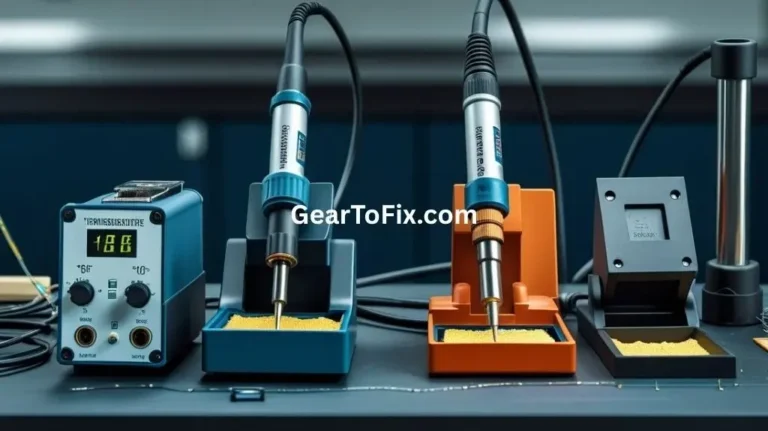
Choosing between a portable soldering iron vs soldering station is tough. I spent weeks using both tools on real circuit boards and wires at my own workbench. Product 1 is a sleek, pen-style portable iron. Product 2 is a sturdy, desktop digital soldering station.
If you need to make quick repairs on the go, the portable iron is a lifesaver. But if you sit at a desk for hours building projects, the station is far better. After many hours of melted solder and warm tips, I found that each has some annoying flaws. Here is my honest guide to help you find the right fit for your budget and skill level.
Side-by-Side Specs Comparison
Before we look at the daily bench experience, let us look at the numbers. These specs show how each tool handles power, heat, and space. Here is how they stack up side by side.
| Feature | Product 1 (Portable Iron) | Product 2 (Soldering Station) |
|---|---|---|
| Price | Budget-Friendly | Mid-Range |
| Wattage | 65W Max | 75W |
| Temp Range | 100°C – 400°C | 200°C – 480°C |
| Heat-Up Time | 10 Seconds | 15 Seconds |
| Tip Type | Proprietary Slim | Standard Series |
| Cord Type | USB-C (Flexible) | Heavy Silicone |
| Warranty | 1 Year | 2 Years |
These basic numbers do not tell the whole story. Let us dive into how these tools actually feel when you plug them in for the first time.
Unboxing and First Impressions
Unboxing Product 1 felt like opening a new smartphone. The box is tiny and holds just the slim pen-style iron, a single tip, and a small USB-C cable. There was no chemical smell, but the tool felt very light in the hand, almost like a thick pen. The setup took seconds. I plugged it into a power brick, and the tiny screen lit up instantly.
Product 2 arrived in a large cardboard box with many parts. Inside was the heavy metal base, a separate iron holder, a brass sponge, and five extra tips. When I first powered it on, a strong plastic smell filled my small room for about ten minutes. The heavy base stayed put on my messy bench, but the thick cord felt stiff and clumsy during my first few joints.
Build Quality and Components
The materials used in these tools will decide how long they last. Here is a close look at how well each tool is put together.
| Component | Product 1 (Portable Iron) | Product 2 (Soldering Station) |
|---|---|---|
| Outer Housing | High-Grade Plastic | Heavy Sheet Metal |
| Grip Type | Slim Silicone Ring | Thick Silicone Sleeve |
| Cable Material | Ultra-Flex USB-C | Thick Rubber Cord |
The shell of Product 1 is made of smooth, hard plastic. It has a tiny rubber grip that keeps your fingers from sliding down toward the hot tip. It uses a high-tech ceramic heating element built directly into the tip itself. The USB-C cord is soft and highly flexible, so it never fights your hand, but the plastic body feels like it might crack if dropped on a hard floor.
Product 2 has a rugged metal housing that feels like a tank. The iron handle uses a soft, thick silicone sleeve that stays cool even after two hours of continuous work. It uses standard tips that slide over a ceramic heater core. The main cord is very thick, which makes it durable but also quite stiff, though the fit and finish of the connectors feel solid and secure.
Ease of Use and Handling
Using a tool should feel natural, not like a chore. Here is how these two options handle during real work at the bench.
Product 1 is amazingly light, which makes it feel like you are drawing rather than soldering. This lightweight design makes it easy to hit tiny, fine-pitch joints on small circuit boards without hand fatigue. However, the lack of a heavy stand means you have to be very careful where you set it down, or it might roll off and burn your desk.
Product 2 is much easier for a beginner because of its rock-solid base. You can slip the iron into the heavy metal holder without looking, which keeps your hands safe. The thicker grip is comfortable for large hands, though it feels a bit clumsy when you try to solder tiny pins under a microscope. It gives you a highly consistent feel across long, multi-hour projects.

Performance and Reliability Over Time
A good tool must work just as well in week four as it did on day one. Here is how they held up after weeks of daily use.
After three weeks of building radio kits, the tip on Product 1 began to show signs of dark oxidation. Because the tip has a built-in heater, replacements are quite pricey, and I had to clean and re-tin it constantly to keep the heat flowing. The temperature remained very accurate, but the screen once glitched and showed a false error when the USB cable was slightly loose.
Product 2 showed no temperature drift at all, and its cheap, standard tips were easy to clean with a quick dip in the brass sponge. The base unit runs silent with no hum, and the heavy-duty switch still clicks firmly. The only real issue was that the iron cable retained its coiled shape, sometimes dragging small components across my cluttered desk when I pulled the iron too far.
Heat-Up Time and Temperature Stability
Speed and steady heat are key to avoiding cold, dull solder joints. Here is how both units managed their thermal performance.
Product 1 heats up from cold to 350°C in just ten seconds. Its thermal recovery is fast on small joints, but it struggles on thick ground planes because the tiny tip cannot hold enough heat. If you try to solder a large battery terminal, the tip temperature drops fast, and the solder balls up instead of flowing smoothly.
Product 2 takes about fifteen seconds to reach the same temperature, but it holds that heat like a champ. The larger tip mass means you can move from joint to joint without waiting for the temperature to recover. Every solder joint turned out shiny and clean because the heat stayed perfectly stable, even when working on thick copper wires.
Design and Build Comparison
The physical layout of your tool changes how you manage your workspace. Let us compare the design choices of these two products.
| Feature | Product 1 (Portable Iron) | Product 2 (Soldering Station) |
|---|---|---|
| Material | Lightweight Plastic | Heavy Steel and Metal |
| Grip Feel | Thin and Pen-Like | Thick and Cushioned |
| Display Clarity | Small but Very Sharp | Large and Easy to Read |
| Portability | Excellent (Fits in Pocket) | Poor (Bulky and Heavy) |
| Bench Footprint | Tiny (No Base Needed) | Large (Requires Dedicated Space) |
| Overall Feel | Modern and High-Tech | Traditional and Industrial |
If you have a tiny desk, Product 1 is a joy because it takes up almost no space. Product 2 demands its own permanent spot on your bench, but it offers far better safety in return.
Fumes and Ventilation — What You’ll Notice While Working
Soldering always creates some smoke as the rosin core melts. During my testing, I noticed that the way you use each tool affects how much smoke gets in your face. Since Product 1 is so small, you naturally hold your face closer to the board, which means you breathe in more of those stingy fumes. I had to use a small desk fan to push the smoke away from my eyes.
With Product 2, the longer handle and heavy stand let you sit back at a safer, more comfortable distance. The smoke still drifts upward, but it is much easier to keep your face out of the direct path of the rising fumes. If you work in a small bedroom or a shared apartment, you will definitely want some form of ventilation or a small carbon filter box nearby.
Temperature Control and Precision
Getting the exact heat level is critical for protecting delicate chips. Here is how these tools let you control your thermal environment.
| Feature | Product 1 (Portable Iron) | Product 2 (Soldering Station) |
|---|---|---|
| Digital Precision | Exact to the Degree | Steps of 5 Degrees |
| Temp Range Usefulness | Good for Small Tasks | Great for All Tasks |
| Fine-Pitch Work | Perfect (Very Nimble) | Decent (Slightly Bulky) |
| Recovery Speed | Fast on Light Joints | Excellent on Heavy Joints |
| Sleep/Idle Behavior | Fast Smart Sleep Mode | Mechanical Auto-Off Timer |
| Multi-Project Suitability | Best for Small Repairs | Best for Heavy Assembly |
Product 1 shines when you need to change settings quickly using its tiny buttons. Product 2 uses a simple dial that is much faster to use when your hands are busy with solder and flux.
Ease of Use and Daily Bench Routine
A tool should fit into your daily flow without causing extra steps. Here is how these two models compare in a typical weekly routine.
| Task | Product 1 (Portable Iron) | Product 2 (Soldering Station) |
|---|---|---|
| Setup and Power-On | Instant (One Cable) | Slow (Plugging and Placing) |
| Cleanup After Use | Let Cool and Pack | Wipe Tip and Switch Off |
| Storage Convenience | Fits in any Drawer | Needs a Shelf or Bench Spot |
| Travel or Portable Use | Incredible (Runs on Power Bank) | Hard (Too Many Loose Parts) |
| Speed to Work | Under 15 Seconds | Around 20 Seconds |
| Maintenance Needed | Frequent Tip Tinning | Standard Tip Cleaning |
For quick five-minute fixes, I found myself reaching for the portable iron every time. But for long Sunday afternoon projects, the station made the work feel much less stressful.
Long-Term Performance and Durability
After weeks of heating up and cooling down, minor wear starts to show. Product 1 still works perfectly, but the plastic casing near the tip has started to discolor slightly from the radiant heat. The USB-C port also feels a tiny bit looser than it did on day one, which makes me worry about the cord getting yanked. It is a brilliant tool, but I suspect it may not survive years of heavy, daily workshop abuse.
Product 2 feels like it will last for a decade. The heavy metal housing is scratch-free, and the thick silicone cable shows no signs of wear or stiffening. The temperature has remained rock-solid, and I have not noticed any drift when checking it with a tip thermometer. For long-term reliability on a dedicated workbench, the traditional station is the clear winner.
Price and Value for Money
Value is not just about the price tag; it is about what you get for your hard-earned cash. Here is how the financial side of these tools breaks down.
Product 1 sells for a low price, but you must factor in the cost of a high-quality USB-C power supply and cord if you do not already own them. Its integrated heater tips also cost more to replace when they eventually oxidize or wear out. Product 2 costs more upfront, but it comes as a complete kit with a stand, cleaning brass, and cheap, widely available replacement tips. If you plan to solder regularly, the station actually offers better value over a year of use.
How It Compares to Similar Products
To give you a broader view, let us see how these tools compare to other common options on the market today.
Cheap Wall-Plug Irons
These basic irons lack any temperature control and run way too hot, which quickly ruins your copper pads. Both Product 1 and Product 2 are much safer and easier to use because they prevent tip overheating.
High-End Professional Stations
Professional-grade stations offer instant heat recovery and ESD safety, but they cost five times as much. For hobbyists and makers, the performance gap is too small to justify that massive price jump.
Who Should Buy Which?
- Buy Product 1 if you have very limited desk space, need to do repairs away from a wall outlet, or want a high-tech tool that fits inside a small toolbox.
- Buy Product 2 if you have a dedicated workbench, want to build large electronic kits, need a safe and heavy stand, or want a tool that will last for many years.
- Consider Neither If you only need to join thick copper plumbing pipes or heavy automotive wires, which require a high-wattage heavy-duty soldering gun instead of a fine electronic iron.
Long-Term Ownership Considerations
Owning a tool means thinking about the future. When you choose between these two, consider how easy it will be to find new tips when yours finally burn out. Product 1 uses special tips with built-in heaters that can be hard to find locally, while Product 2 uses standard tips that you can buy almost anywhere for cheap. If you plan to grow your skills into advanced surface-mount soldering, Product 1 is actually very nimble, but Product 2 offers the stability you need for long sessions under a magnifying glass.
Power Output and Efficiency: Portable Soldering Iron vs Soldering Station
The way these tools handle power directly impacts how quickly you can finish a project. Product 1 draws up to 65 watts of power, which is impressive for its small size, but it relies on a smart chip to deliver quick bursts of heat. Product 2 uses a steady 75-watt transformer that provides a constant flow of raw power. For light electronics work, both options have plenty of power, but the station is much more efficient at maintaining its temperature on thick ground planes. You do not need to pay for ultra-high wattage unless you are regularly working on heavy mechanical parts.
FAQs About Portable Soldering Iron vs Soldering Station
What is the main difference between a portable soldering iron and a soldering station?
A portable soldering iron is designed for mobility and can operate without a permanent workstation setup, while a soldering station uses a separate control unit and handpiece for more controlled bench work.
Is a portable soldering iron good for electronics repair?
Yes. A portable soldering iron can handle many electronics repair tasks, particularly when mobility or access to a power outlet is limited.
Does a soldering station provide better temperature control?
Generally, a dedicated soldering station provides more precise and consistent temperature control than many basic portable irons, although capabilities vary by model.
Which tool is easier to carry, a portable soldering iron or soldering station?
A portable soldering iron is considerably easier to carry because it combines the essential heating components into a compact handheld tool, while a soldering station includes a separate control unit and accessories.
Can a portable soldering iron replace a soldering station?
For occasional repairs and mobile soldering, it can handle many of the same basic tasks. However, a soldering station may offer better temperature stability, tip selection, and control for extended bench work.
Final Verdict
In the end, the winner depends on where you do your work. Product 1 is the ultimate tool for portable repairs, offering quick heat-up times and amazing precision in a tiny package.
However, Product 2 remains the king of the home workbench. Its heavy base, excellent thermal capacity, and low-cost tips make it the most reliable choice for anyone looking to build a serious soldering setup.

Scott Yarnell is a tool expert focused on practical guides, product research, and real-world tool performance to help readers make informed decisions.