Soldering Iron Vs Hot Air Station: How They Compare
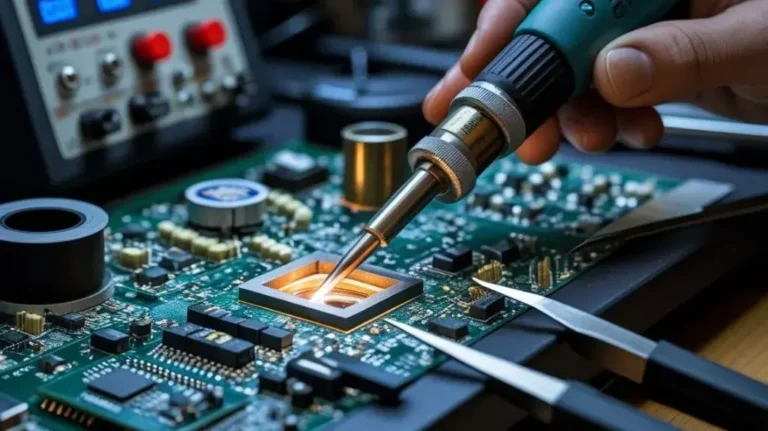
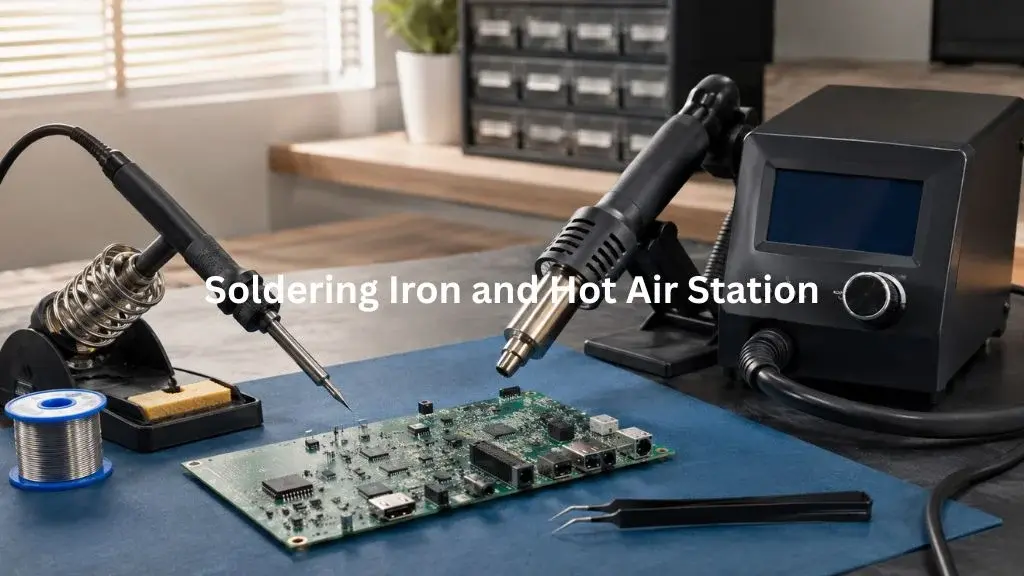
I spent several weeks using a basic soldering iron and a hot air rework station at my bench. The iron suited through-hole parts, wires, and quick repairs. The hot air station made SMD work and component desoldering much easier, but it needed more care.
This Soldering Iron vs Hot Air Station comparison is for anyone unsure where to spend their money. My short answer: beginners on a tight budget should start with the iron. Anyone working on small boards, chips, or SMD parts will get more from hot air.
Side-by-Side Specs Comparison
These are the practical specs I noticed during normal bench use. Exact figures vary by model, so treat the ranges as a guide.
| Feature | Product 1: Soldering Iron | Product 2: Hot Air Station |
|---|---|---|
| Price | Low to mid range | Mid to high range |
| Wattage | 30–60 W | 400–700 W |
| Temperature Range | Fixed or limited control | About 100–500°C |
| Heat-Up Time | 2–5 minutes | 20–45 seconds |
| Tip / Nozzle Type | Replaceable iron tips | Round and square hot air nozzles |
| Airflow Range | None | Adjustable fan speed |
| Bench Footprint | Very small | Larger base and handpiece |
| Warranty | Usually 1–3 years | Usually 1–3 years |
The iron costs less and takes up less room. The hot air station offers better control for SMD rework, but the extra cost only makes sense if your projects need it.
Unboxing and First Impressions
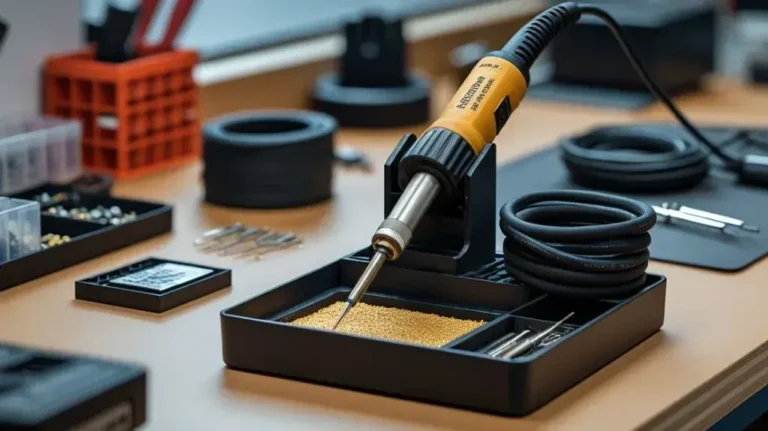
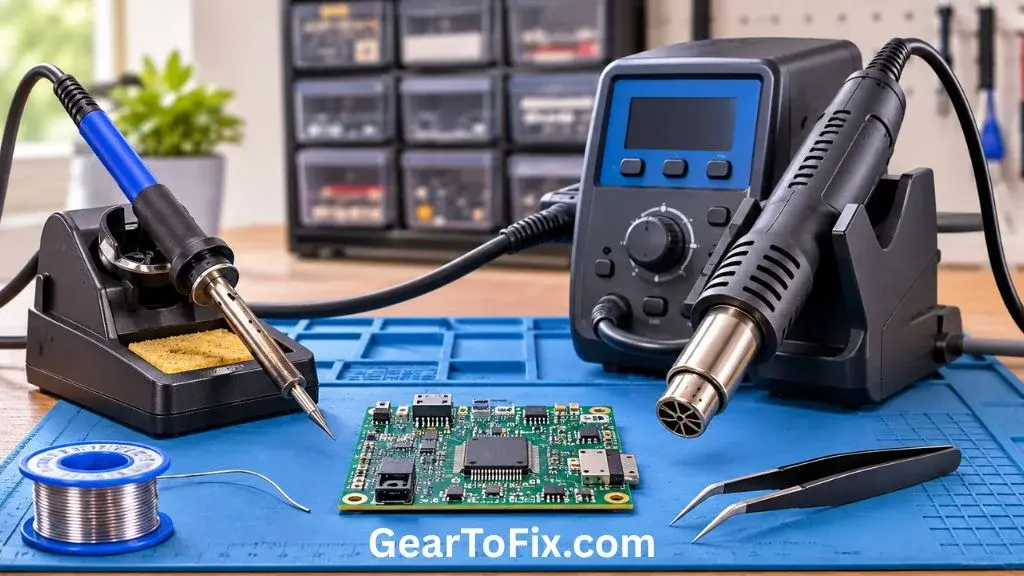
Product 1 arrived with the iron, a simple stand, and a small set of tips. The plastic felt light but not unsafe. The grip sat well in my hand, although the cord felt stiff near the handle. It pushed back against my wrist when I tried to hold the iron at a shallow angle.
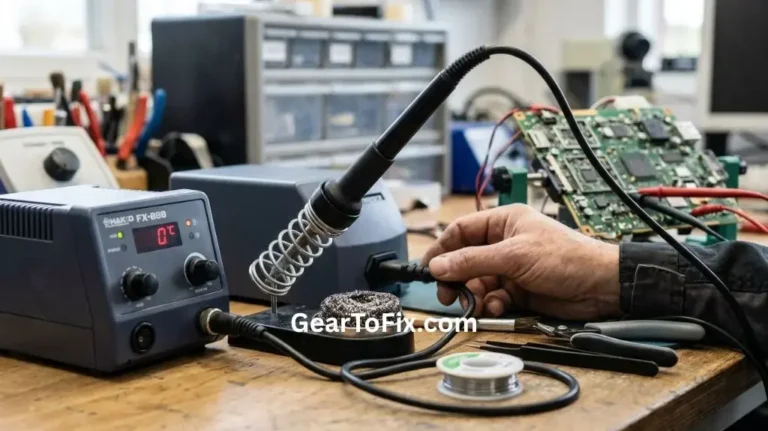
The hot air station felt more serious straight away. Its base had more weight, and the handpiece rested in a side holder. The screen was easy to read, though the buttons took a few minutes to understand. The first power-up brought a warm plastic smell, but it faded after a few sessions. The fan was louder than expected.
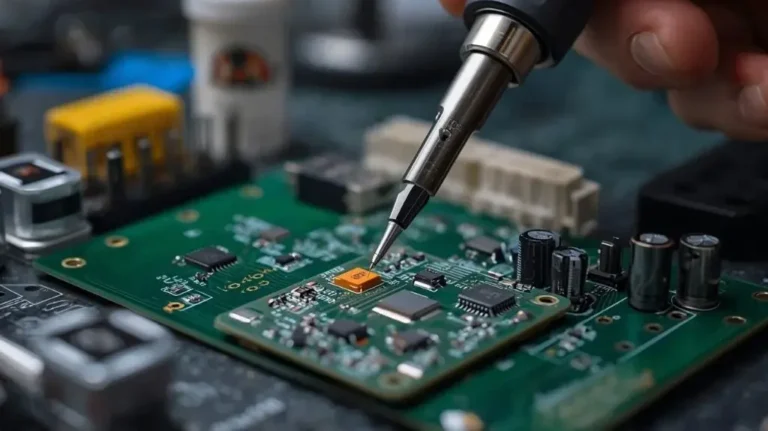
My first iron joint was on a wire terminal. It worked, but the fixed temperature made me wait for heat to reach the joint. The first hot air job was a small SMD component. I used too little heat at first. The part stayed stuck. A small increase in temperature and airflow finally lifted it cleanly.
Build Quality and Components
The iron used a light plastic housing with a rubber-like grip. It stayed comfortable for short work, but the balance felt front-heavy during long sessions. The tip fit was acceptable, though one spare tip sat slightly looser than the main tip.
The included tips covered basic work well. I had a fine point, a chisel tip, and a wider tip for larger pads. Tip quality was average. After the first week, the fine tip started turning black when I left it hot for too long. It needed more cleaning and re-tinning than I expected.
The hot air station had a stronger base and better overall fit. The handpiece cable was thick but flexible enough. It did not fight my wrist the way the iron cord did. The nozzles were metal and felt durable, although swapping one while it was still warm took longer than I liked.
The nozzle set was useful rather than decorative. I used a small round nozzle for single parts and a wider nozzle for connectors. The plastic buttons and display did not feel premium, but nothing came loose during weeks of use.
Ease of Use and Handling
The soldering iron has the shorter learning curve. Plug it in, wait for heat-up, clean the tip, and start working. It is beginner friendly for wires, switches, headers, and larger pads.
Its weakness shows on fine-pitch work. The fixed temperature made it harder to control heat on small pads. I also had to watch the tip closely. Solder sometimes balled up instead of flowing when oxidation built up.
The hot air station took more practice. Temperature control and airflow control both matter. Too much airflow can move tiny parts across the board. Too much heat can lift pads or damage nearby plastic.
After a few sessions, hot air felt more precise for SMD rework. I could warm a wider area without dragging solder across adjacent pins. Still, a standard iron remained faster for one loose wire or a single through-hole joint.
Performance and Reliability Over Time
Both tools worked reliably during repeated sessions, but they demanded different habits. The iron needed frequent tip cleaning and re-tinning. Its heat also felt less stable during long joints on large ground pads.
The hot air station kept its set temperature more consistently. Airflow became slightly less smooth after long sessions, likely from dust near the intake. It still removed SMD parts well, but I learned to keep the rear vents clear.
For hobbyists, the difference is simple. The iron is dependable for basic repairs. The hot air station is more useful when the work involves many small components or repeated component desoldering.
Heat-Up Time and Temperature Stability
The iron took several minutes to reach a useful working temperature. It felt hot before it was truly ready. Early on, I touched solder to the tip too soon and watched it sit there without flowing well.
Once hot, it handled small joints fairly well. Large copper areas pulled heat away quickly. Recovery between joints was slow, especially with the wider tip.
The hot air station reached working temperature in under a minute. Its temperature stayed close to the display setting during normal rework. Recovery was quick after moving from a small nozzle to a larger joint area.
Temperature stability had a clear effect on joint quality. The iron produced clean joints when the tip was freshly tinned. The hot air station produced more even heating, but only when I kept the nozzle moving.
Design and Build Comparison
The iron wins on simplicity and storage. The hot air station needs more bench space, but its heavier base feels safer during delicate work.
| Feature | Product 1: Soldering Iron | Product 2: Hot Air Station |
|---|---|---|
| Material | Plastic housing, metal tip | Plastic and metal base, metal nozzle |
| Grip or Handling Feel | Light but slightly front-heavy | Balanced handpiece, thicker cable |
| Label / Display Clarity | Basic markings or none | Clear digital display |
| Portability | Excellent | Fair |
| Bench Footprint | Very small | Moderate to large |
| Overall Feel | Simple and practical | More capable but more complex |
The iron was easier to grab for quick repairs. The hot air station was easier to control once I settled into a steady hand position. Storage favored the iron by a wide margin.
Fumes and Ventilation — What You’ll Notice While Working
The soldering iron produced a small stream of smoke when flux melted. The smell lingered around the bench, especially during long wire jobs. In a bedroom or small apartment, I would not use it beside my face without a window open or a fume extractor nearby.
The hot air station spread fumes over a wider area. Airflow pushed smoke away from the joint, but not always away from me. During one SMD session, the smoke drifted upward into my face because I held the nozzle too close and at the wrong angle.
Neither tool is pleasant in a sealed room. The hot air station made the smell more noticeable across the workspace. The iron created less total smoke for small repairs, but both need sensible ventilation.
Temperature Control and Precision
Temperature control is the largest difference in this Soldering Iron vs Hot Air Station comparison. One is direct and simple. The other gives you control over both heat and airflow.
| Feature | Product 1: Soldering Iron | Product 2: Hot Air Station |
|---|---|---|
| Digital Precision | Low or none | Good |
| Temperature Range Usefulness | Limited | Useful for many SMD parts |
| Suitable for Fine-Pitch Work | Fair with practice | Good with correct nozzle |
| Recovery Speed | Slow to moderate | Fast |
| Sleep / Idle Behavior | Usually none | Varies by model |
| Multi-Project Suitability | Basic repairs and wiring | SMD, connectors, chips, and rework |
The iron was more forgiving when I used it on large joints. The hot air station was more forgiving when I needed to heat several pins evenly. It was less forgiving of poor technique.
Over several weeks, I got more consistent results from the hot air station on SMD boards. For everyday repairs, the iron still required fewer decisions.
Ease of Use and Daily Bench Routine
A good tool should fit the way you actually work. I compared setup time, cleanup, storage, and the small chores that become annoying after a few weeks.
| Task | Product 1: Soldering Iron | Product 2: Hot Air Station |
|---|---|---|
| Setup and Power-On | Plug in and wait | Set temperature and airflow |
| Cleanup After Use | Wipe and re-tin tip | Clean nozzle and clear handpiece |
| Storage Convenience | Very easy | Needs dedicated space |
| Travel or Portable Use | Good | Poor to fair |
| Speed of Getting to Work | Slower heat-up | Fast heat-up |
| Maintenance Needed | Tip cleaning and re-tinning | Nozzle care and dust removal |
The iron slots into a weekly bench routine more easily. It asks less from me before and after a job. The hot air station saves time once it is already set up, but it feels excessive for a five-minute repair.
Long-Term Performance and Durability
After several weeks, the iron tip showed the most wear. The fine point darkened faster than the larger chisel tip. Fresh solder and a brass sponge helped, but the tip still needed regular care.
The cord remained usable, although its stiffness never improved. I also learned not to reach for the iron without checking the stand. I nearly burned a finger during one distracted moment. That was my fault, but a stable stand matters more than the low price suggests.
The hot air station showed less visible wear. The nozzles stayed clean when I avoided burnt flux buildup. Its fan remained steady, though the noise became tiring after about twenty minutes of continuous rework.
I would continue using both. The iron would stay on my main bench. The hot air station would remain nearby for boards that need SMD work. If I had to keep only one, I would choose based on the projects rather than the tool itself.
Price and Value for Money
A basic iron usually costs much less than a hot air station. The iron may need replacement tips, a better stand, and possibly a separate fume extractor. The hot air station costs more at the start, and its nozzles may cost extra.
I found the price gap justified only for SMD work. If you mostly solder wires, headers, switches, and large pads, the cheaper iron gives better price per use. If you repair boards with small chips and tight spacing, the hot air station earns its cost.
Buy from a seller with clear warranty coverage. A low price is less useful if the heating element, fan, or control board fails and replacement parts are impossible to find.
How It Compares to Similar Products
The two tools sit between very cheap pen-style irons and full professional rework systems.
Digital Soldering Station
A digital soldering station offers better temperature accuracy than the basic iron. It also has faster recovery time, easier tip swap, and a more stable grip. It remains simpler and safer for beginners than hot air.
For mixed bench work, a soldering station may be the better middle choice. It gives fine control without the airflow risks of a hot air gun.
Hot Air Gun Without a Rework Base
A basic hot air gun costs less but usually gives weaker airflow control and less stable heat. It can work for heat-shrink tubing and rough desoldering, but it is harder to use safely on small boards.
The dedicated hot air station is better for SMD rework, though it still needs practice. It also tends to offer better long-term durability and nozzle compatibility.
Soldering Kit for Beginners
An all-in-one kit may include an iron, tips, solder, a stand, and helping hands. It is often the cheapest way to start, but the included stand and solder can be weak points.
A beginner kit is more approachable than a hot air station. For first-time soldering, that simplicity matters. You can always add hot air later as projects become more complex.
Who Should Buy Which?
Buy Product 1: Soldering Iron if:
- You are new to soldering.
- You repair wires, plugs, switches, and through-hole boards.
- You have a small bench or limited budget.
- You want a simple tool with low maintenance.
- You do not often work on fine-pitch SMD parts.
Buy Product 2: Hot Air Station if:
- You regularly repair SMD boards.
- You need to remove chips, connectors, or many-pin parts.
- You want adjustable temperature and airflow control.
- You are willing to practice board safety.
- You can afford extra nozzles and dedicated bench space.
Consider Neither If:
- You need professional production accuracy.
- You have no safe ventilation.
- You expect either tool to fix poor solder technique automatically.
- You need a complete kit but have not budgeted for solder, flux, and safety gear.
Long-Term Ownership Considerations
Replacement tips are usually easier and cheaper to find than hot air nozzles. Before buying either tool, check tip compatibility and nozzle sizes. A tool is less useful when its consumables disappear from the market.
The iron’s housing and cable should survive months of normal use, but cheap cords can crack near the handle. The hot air station has more parts that may wear, including the fan, heater, buttons, and control board.
Both tools can grow with your skills. The iron remains useful even after you begin SMD work. The hot air station becomes more valuable as boards get smaller and repairs become more involved.
Expected yearly cost depends on use. A light user may only need a few tips and some solder. A repair tech may spend more on tips, nozzles, flux, and replacement parts. Warranty coverage usually protects the main unit, not normal tip wear or damage from overheating.
Soldering Iron vs Hot Air Station: Power Output and Efficiency
The iron uses less power and wastes little energy once it reaches heat. Its lower wattage is enough for small joints, but large ground planes can pull heat away faster than the element can recover.
The hot air station draws more power during heat-up. That higher output improves recovery and lets it warm a wider area. It does not automatically improve results. Too much airflow can move components, and too much heat can discolor a board.
For fine electronics work, control matters more than maximum wattage. A mid-range unit is enough for most hobby repairs. Paying more makes sense when you do repeated SMD rework, not when you only solder a few wires each month.
Frequently Asked Questions: Soldering Iron vs Hot Air Station
1. What is the main difference between a soldering iron and a hot air station?
A soldering iron transfers heat through a heated metal tip that contacts the solder joint, while a hot air station uses a controlled stream of heated air to heat components and solder.
2. Is a soldering iron or hot air station better for circuit boards?
It depends on the task. A soldering iron is well suited to individual joints and precise connections, while a hot air station is useful for working with surface-mounted components and removing or installing multiple nearby solder connections.
3. Can a hot air station replace a soldering iron?
Not completely. A hot air station can handle many rework tasks, but a soldering iron generally provides better direct control for making precise individual solder joints.
4. When should you use a hot air station?
A hot air station is particularly useful for removing and installing surface-mount components, reflowing solder, and working on areas where direct contact with a soldering tip is less practical.
5. Is a hot air station safe for sensitive electronic components?
Yes, when used correctly. Proper temperature, airflow, nozzle selection, and technique are important to avoid overheating components or disturbing nearby parts.
6. Which is easier for beginners, a soldering iron or hot air station?
A soldering iron is generally easier to learn for basic soldering because the heat is applied directly to a specific joint. Hot air rework requires more control over temperature, airflow, distance, and nozzle position.
Final Verdict
The soldering iron is the overall winner for beginners, simple repairs, and tight budgets. It is small, easy to store, and useful for most basic bench tasks. Its fixed temperature, slower heat-up time, and tip oxidation are the main drawbacks.
The hot air station wins for SMD rework and component desoldering. It offers better temperature control, faster recovery, and more even heating. My honest recommendation is to start with the iron unless your current projects already involve small SMD parts. In that case, the hot air station is worth the extra cost and learning curve.

Scott Yarnell is a tool expert focused on practical guides, product research, and real-world tool performance to help readers make informed decisions.