Electric Vs Butane Soldering Iron: How They Differ and Which Tasks Suit Each
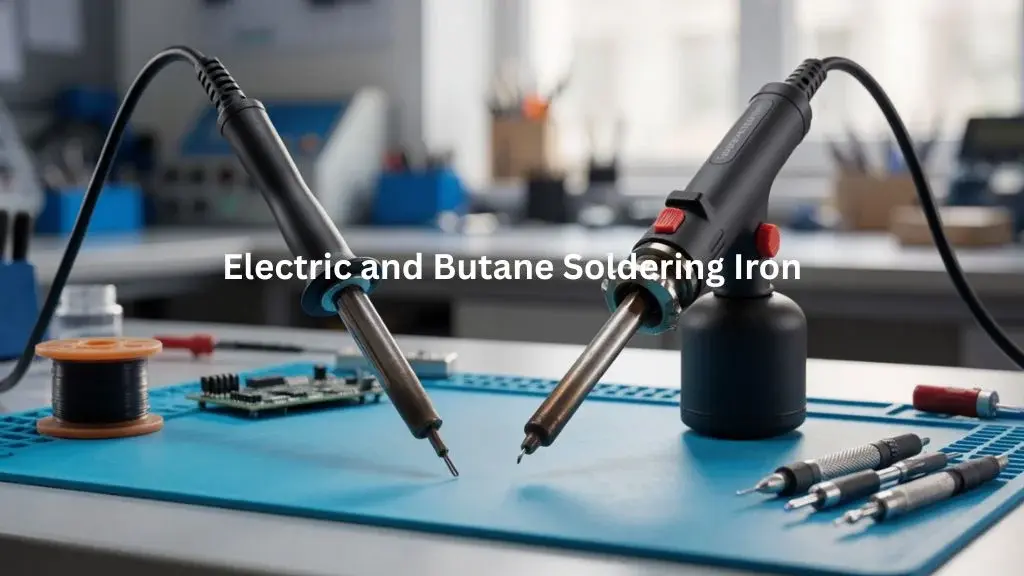
Choosing between an electric and butane soldering iron is less about which tool is universally better and more about where, how, and why you plan to solder. Electric models are usually easier to control and better suited to electronics and bench work. Butane models offer portability and independence from wall power, making them useful for field repairs, automotive work, and jobs in places where an outlet is unavailable.
The difference comes from how each tool creates and transfers heat. That affects temperature control, warm-up time, runtime, handling, ventilation, and the types of joints each tool can make reliably.
The main difference between electric and butane soldering irons
An electric soldering iron uses electrical resistance to heat a metal element and, in turn, the soldering tip. Power may come from a wall outlet, a battery, or a USB-compatible source, depending on the design.
A butane soldering iron burns pressurized butane inside the tool. The flame usually heats a catalytic element or metal tip rather than exposing the work directly to an open flame. Many butane tools can also operate as hot-air torches or miniature burners when fitted with the appropriate accessory.
That gives the two tools different strengths:
- Electric irons: predictable control, precision, and convenient bench use
- Butane irons: portability, fast availability in the field, and freedom from electrical outlets
- Electric irons: generally better for delicate circuit-board work
- Butane irons: generally more practical for mobile repairs and heavier connections
- Electric irons: quieter and cleaner during normal operation
- Butane irons: require fuel, ventilation, and more awareness of combustion heat
Neither tool automatically produces better solder joints. Joint quality depends on tip condition, temperature, flux, technique, and whether the tool is appropriate for the work.
How each soldering iron generates heat
Electric soldering irons use resistance heating
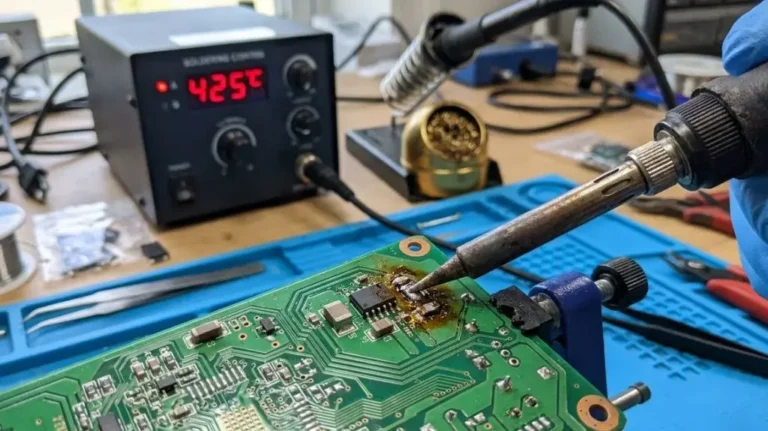
Inside an electric iron, current passes through a heating element. Electrical resistance converts that energy into heat, which is transferred to the tip. The user then applies the heated tip to the pad, wire, terminal, or component lead and feeds solder into the heated joint.
Some electric irons regulate temperature with a thermostat, while more advanced designs use electronic control and sensors near the heater or tip. Basic models may provide only a rough heat level, so their actual tip temperature can change considerably as the tool contacts a large joint or ground plane.
An electric iron stays connected to its power source during use unless it is cordless. That makes it well suited to repeated work at a fixed station.
Butane irons use combustion and catalytic heating
A butane iron stores liquid fuel in a refillable reservoir. When the fuel is released and ignited, the resulting heat warms a catalytic element or tip assembly. The catalytic system can provide a flameless soldering mode, although the combustion process still produces significant heat and exhaust gases.
Many butane irons use a sliding or rotary control to adjust the fuel flow. This changes the amount of heat available, but it is not always equivalent to the precise closed-loop temperature control found on a quality electronically regulated electric iron.
The tool’s heat output can also change as the fuel level, airflow, or surrounding temperature changes. That does not make a butane iron unsuitable for soldering, but it means the operator may need to manage heat more actively.
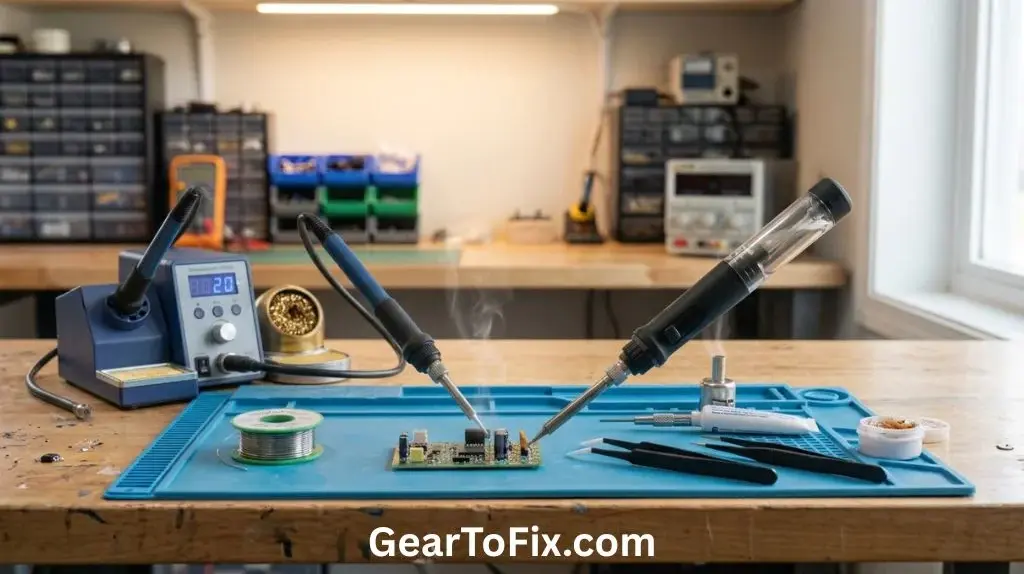
Electric vs butane soldering iron: practical differences
| Factor | Electric soldering iron | Butane soldering iron |
|---|---|---|
| Power source | Wall outlet, battery, or USB depending on design | Refillable butane fuel |
| Portability | Corded models are station-based; cordless models vary | Highly portable when fueled |
| Temperature control | Often more consistent, especially with regulated models | Usually controlled by fuel flow and airflow |
| Warm-up | Typically quick, depending on power and design | Usually quick, often ready within a short time |
| Runtime | Continuous with an available power source | Limited by fuel capacity |
| Precision | Strong choice for small pads and fine components | Possible, but depends heavily on tip and control |
| Field use | Limited by power access unless cordless | Well suited to remote work |
| Noise and emissions | Quiet and normally produces no combustion exhaust | May produce combustion gases and heat |
| Alternative functions | Usually limited to soldering and related tips | May support hot-air or torch attachments |
| Best working environment | Bench, electronics station, controlled workspace | Field repairs, outdoor work, automotive or utility tasks |
Specifications vary widely. A compact battery-powered iron may be more portable than a corded electric model, while a larger butane iron may offer more heat than a small cordless unit. The categories describe the heating method, not one fixed level of performance.
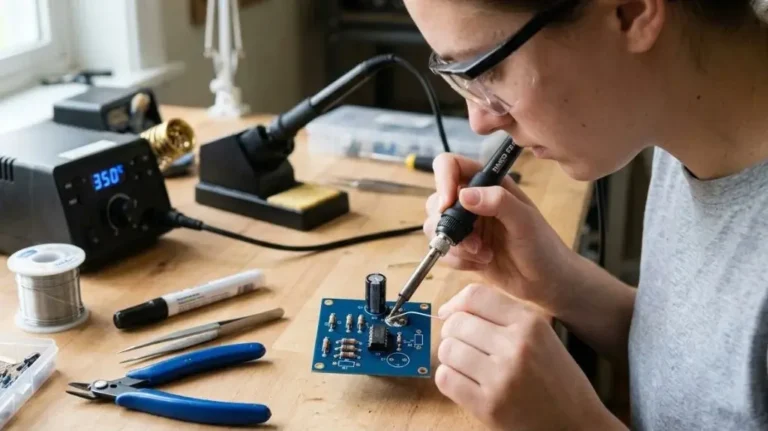
Why electric irons are usually favored for electronics
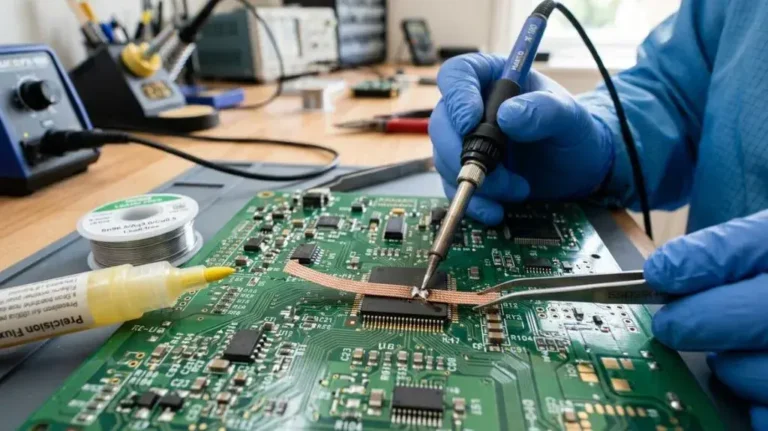
Circuit boards reward controlled, localized heating. Small pads, closely spaced pins, plastic connectors, and heat-sensitive components can be damaged if too much heat remains in one area.
An electric iron with stable temperature regulation provides several advantages:
- The tip temperature is easier to keep within a suitable working range.
- Fine tips are readily available for small joints.
- The iron can remain ready at a bench without consuming fuel.
- There is no combustion flame or fuel exhaust near the circuit.
- The operator can make repeated joints with relatively consistent behavior.
- A stand, sponge, brass wool, and soldering fume extraction can be arranged around the tool.
This does not mean every electric iron is suitable for delicate electronics. A low-cost model with poor regulation may overshoot, recover slowly, or run hotter than expected. Excessive heat and prolonged contact can lift copper pads, damage insulation, or stress components.
For printed circuit boards, tip size and shape often matter as much as the heating method. A clean, properly tinned tip transfers heat more effectively than an oxidized or poorly matched tip.
Where a butane iron has a practical advantage
A butane iron becomes attractive when access to electricity is the main problem. It can be carried to a vehicle, rooftop, jobsite, outdoor installation, or remote repair location without needing a cord, battery charger, or inverter.
Common situations that may favor butane include:
- Automotive wiring repairs away from a garage outlet
- Field service and maintenance work
- Marine or utility repairs where power access is inconvenient
- Emergency repairs in equipment enclosures
- Joining heavier wires that require more heat than a small portable electric iron can provide
- Work where a hot-air or torch function is useful in addition to a soldering tip
A butane tool can also recover heat effectively when used on larger conductors, depending on its design and fuel setting. That is useful when a joint draws heat away from the tip faster than a small electric iron can replace it.
However, portability does not automatically make butane the better mobile tool. A battery-powered electric iron may be preferable in an enclosed space, around combustible vapors, or anywhere combustion exhaust is undesirable.
Temperature control is more important than the power label
Comparing wattage alone can lead to the wrong conclusion. A higher power rating may help a tool recover heat, but it does not by itself guarantee a hotter or more effective soldering tip.
The useful questions are:
- How stable is the tip temperature?
- How quickly does the tool recover after contacting a large joint?
- Is the tip appropriate for the joint size?
- Does the control adjust actual temperature or only heating intensity?
- How much thermal mass does the tip have?
- Can the operator regulate heat without overheating nearby materials?
A regulated electric station typically gives more direct temperature control than a basic fuel-flow adjustment. But a well-designed butane iron can still deliver ample, practical heat for many wire and terminal jobs.
For small electronics, stability and precision usually matter more than maximum heat. For large connectors or thick wire, heat recovery and tip thermal capacity become more important.
Tip design and heat transfer
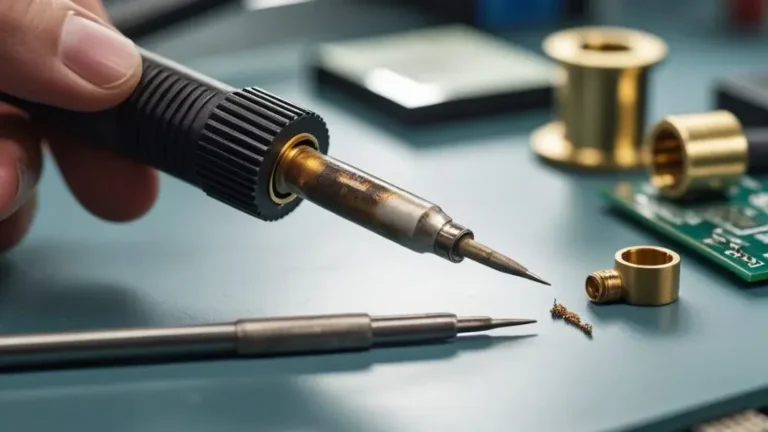
The tip is the point where the tool’s energy reaches the joint. Its size, shape, plating, cleanliness, and contact area all affect performance.
A fine conical tip may reach narrow spaces, but it has limited thermal mass and may struggle with a large wire. A chisel or bevel tip can transfer heat more efficiently across a broader joint. This principle applies to both electric and butane irons.
A common mistake is using a very fine tip for every task. The narrow point may appear more precise, but it can deliver heat poorly to a substantial connection. The operator then compensates by holding the tip against the joint longer, increasing the chance of damaging insulation, pads, or components.
The tip should be large enough to transfer heat efficiently without touching neighboring parts. Good contact, a clean surface, and a small amount of solder on the tip can improve heat transfer.
Warm-up, heat recovery, and continuous operation
Both tool types can warm up quickly, but their behavior after contacting the work may differ.
An electric iron connected to a suitable power source can operate continuously. If its controller and heater are well matched, it can restore tip temperature quickly after each joint. This is useful during repetitive assembly or rework.
A butane iron also provides continuous energy as long as fuel is available. Its performance depends on fuel flow, the catalytic element, airflow, and the thermal demands of the joint. At a high setting, fuel is consumed more quickly. At a low setting, the tool may not provide enough heat for a large connection.
Cordless electric irons occupy a middle ground. They remove the cord but depend on battery capacity and charging. Their runtime and heat recovery vary considerably, so they may be convenient for short repairs but less practical for long, heavy-duty sessions.
Where the two tools overlap
Both electric and butane irons can handle many basic soldering tasks:
- Joining stranded wires
- Soldering terminals and connectors
- Repairing small switches
- Attaching component leads
- Making cable repairs
- Working on simple hobby electronics
- Reflowing solder on accessible joints
The quality of the result depends less on the fuel or electricity itself and more on matching the tool to the work. A butane iron with a fine tip can perform some electronics repairs, while a powerful electric iron can handle substantial wire connections.
The overlap ends when the working environment or level of control becomes the deciding factor. A tool that is acceptable for a large exposed terminal may be inappropriate near tightly packed surface-mount components. Likewise, a delicate electric iron may be frustrating on a large connector that rapidly pulls heat from the joint.
Situations where they are not interchangeable
Fine circuit-board rework
A butane iron may be physically capable of soldering a circuit board, but its broader heat output, fuel-based control, and hot metal body can make delicate rework more difficult. It is not usually the first choice for closely spaced pins, small surface-mount parts, or work requiring repeatable temperature settings.
A temperature-controlled electric iron is generally more appropriate for this type of task.
Work near flammable materials
A butane tool should not be treated as harmless simply because it has a flameless soldering mode. The catalytic element and surrounding metal can become extremely hot, and the tool uses combustible fuel.
Electric equipment may be preferable around flammable vapors or materials, but it still creates a hot tip and should be used according to the tool’s safety instructions. The correct choice depends on the entire environment, not only on whether a visible flame is present.
Heavy wires and large terminals
A small electric iron may lack the thermal capacity to heat a large terminal properly. The user may end up applying heat for too long, allowing solder to melt unevenly or damaging nearby insulation.
A larger electric iron, a suitable soldering gun, or a butane tool may be more practical for this work. The goal is to heat the joint quickly and evenly, not simply to use the tool with the highest advertised power.
Enclosed or poorly ventilated spaces
Butane combustion produces exhaust and consumes oxygen. Even when the soldering tip is flameless, the tool requires appropriate ventilation. An electric iron avoids combustion gases and may be the better choice for indoor bench work.
Solder and flux fumes still require attention with either tool. Local extraction or suitable ventilation helps reduce exposure, especially during extended work.
Portability, storage, and maintenance
Butane irons are ready for mobile use once filled, but fuel handling becomes part of ownership. The reservoir must be refilled with compatible fuel, and the tool should be stored away from heat sources and ignition hazards. Fuel remaining in the reservoir also affects how the tool is transported and stored.
Electric irons are simpler to store from a fuel perspective. A corded model requires access to a suitable outlet, while a battery-powered model needs charging and battery maintenance. Cords, plugs, heating elements, and tip assemblies can still wear out.
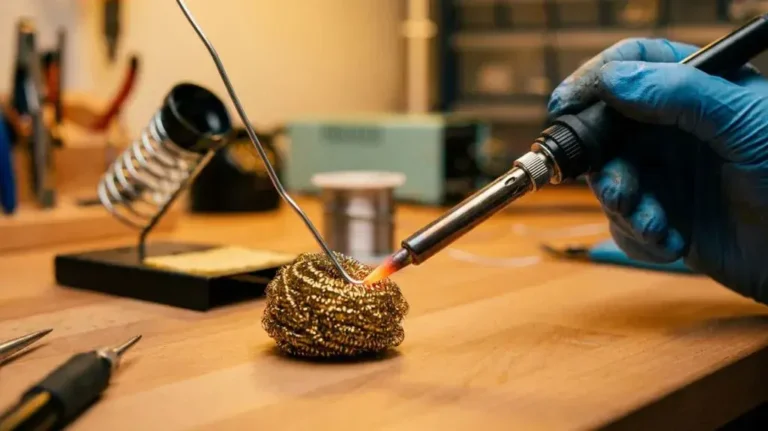
Both types need regular tip care. Oxidized tips transfer heat poorly and encourage the user to increase heat or apply excessive pressure. Soldering tips should be kept appropriately tinned, cleaned with a suitable method, and replaced when their plating is damaged or badly worn.
Butane tools may require additional attention to the burner, catalytic element, fuel valve, and ignition system. A clogged or damaged fuel path can affect heating behavior. Repairs should follow the manufacturer’s instructions rather than improvised disassembly.
Safety differences that matter
Both tools contain surfaces hot enough to cause serious burns and ignite nearby materials. Use a stable stand, keep the hot tip away from cords and work surfaces, and allow the tool to cool before storing it.
Butane irons add several specific concerns:
- Refill only in a well-ventilated area away from ignition sources.
- Do not refill while the tool is hot.
- Check for fuel leaks or unusual fuel odor before use.
- Keep the fuel container away from heat and direct sunlight.
- Avoid using the tool near flammable vapors, solvents, or combustible dust.
- Provide adequate ventilation for combustion exhaust.
- Do not leave the tool unattended while fueled or hot.
Electric irons have their own risks, including damaged cords, unsuitable power supplies, exposed conductors, and battery faults in cordless designs. A battery-powered iron should be charged with the intended charger or power source, and a corded tool should be removed from service if its insulation or plug is damaged.
Common mistakes when choosing between them
Assuming portable means universally convenient
A butane iron is independent of electrical power, but it still needs fuel, ventilation, and safe storage. In a clean indoor electronics workspace, an electric iron may be more convenient despite its cord.
Choosing only by maximum heat
More heat is not always better. Excessive temperature can burn flux, damage insulation, oxidize the tip, and harm electronic components. Heat should be sufficient for the joint and controlled well enough to avoid unnecessary exposure.
Ignoring the work environment
A tool that works well outdoors may be a poor fit for a confined enclosure. Consider airflow, nearby fuel or solvents, combustible materials, and access to power before deciding.
Using the wrong tip
Tool category cannot compensate for a poorly matched tip. A small tip on a heavy connection causes slow heating, while a broad tip near delicate components increases the risk of accidental contact.
Treating soldering as a substitute for mechanical strength
Neither tool changes the basic requirement for a sound connection. Wires should be mechanically supported, insulation should be protected, and strain relief should be provided where movement is expected. Solder should not be used as the only support for a connection that will be flexed repeatedly.
Which one fits different tasks?
An electric soldering iron is generally the more practical choice for:
- Bench electronics
- Circuit-board assembly and repair
- Fine-pitch or closely spaced connections
- Repetitive soldering
- Work requiring stable temperature control
- Indoor use where combustion exhaust is undesirable
- Tasks performed near sensitive components
A butane soldering iron is generally more practical for:
- Remote and field repairs
- Automotive and utility work
- Locations without convenient electrical power
- Large exposed wires or terminals, when the tool has sufficient heat capacity
- Short repair jobs where portability matters
- Work that may benefit from interchangeable hot-air or torch accessories
A cordless electric iron can bridge part of the gap, particularly for short, clean repairs. It may be the better option when portability is needed but combustion is not appropriate.
When exploring tools in either category, pay attention to the intended application, temperature-control method, tip compatibility, heat recovery, fuel or battery requirements, and the physical size of the joints you expect to solder. Those details are more useful than comparing the tool categories by power rating alone.
The practical takeaway
Electric and butane soldering irons overlap in basic soldering ability, but they are optimized for different working conditions. Electric models usually provide the control and repeatability favored for electronics and bench work. Butane models stand out when portability, rapid setup, and independence from wall power matter more.
Choose based on the joint size, required precision, working environment, available power, ventilation, and expected runtime. The right tool is the one that can deliver enough controlled heat for the task without creating unnecessary risk or inconvenience.
FAQs About Electric vs Butane Soldering Iron
Is a butane soldering iron as precise as an electric soldering iron?
It can perform precise work with the right tip and careful adjustment, but many butane irons offer less direct temperature control than regulated electric models. Electric irons are generally easier to manage for fine circuit-board work.
Can an electric soldering iron replace a butane iron for field repairs?
A cordless electric model may handle many short field repairs, but runtime depends on its battery. A corded electric iron needs a suitable power source, so it may be less practical in remote locations.
Does a butane soldering iron have an open flame?
Some butane irons include a visible torch mode, while their soldering mode often uses a catalytic, flameless heating element. Even in flameless mode, the tool contains combustible fuel and reaches very high temperatures.
Which is better for soldering thick wires?
The better choice depends on the wire and terminal size, but a tool with strong heat recovery and an appropriately sized tip is essential. A small electric iron may struggle, while a larger electric model or suitable butane iron may heat the connection more effectively.
Are butane soldering irons safe to use indoors?
They can require ventilation because butane combustion produces exhaust gases. Follow the manufacturer’s instructions and avoid using the tool in confined areas, near flammable vapors, or where ventilation is inadequate.
Can either type of soldering iron damage electronics?
Yes. Excessive temperature, prolonged contact, poor tip control, and static discharge can damage circuit boards or components. Use suitable temperature control, a properly sized tip, and appropriate handling procedures for sensitive electronics.

Scott Yarnell is a tool expert focused on practical guides, product research, and real-world tool performance to help readers make informed decisions.