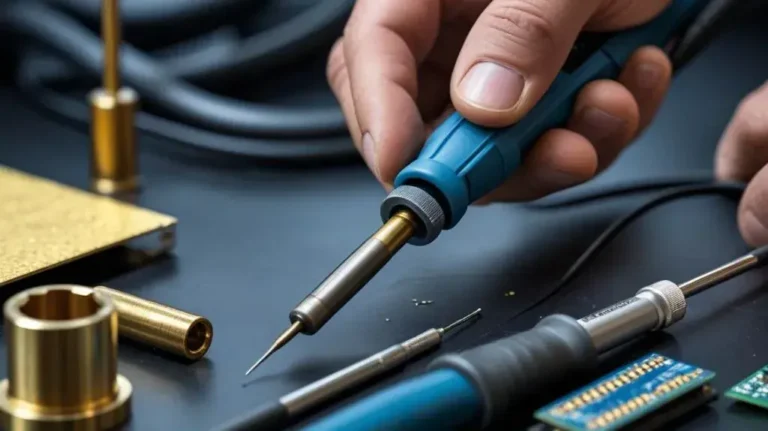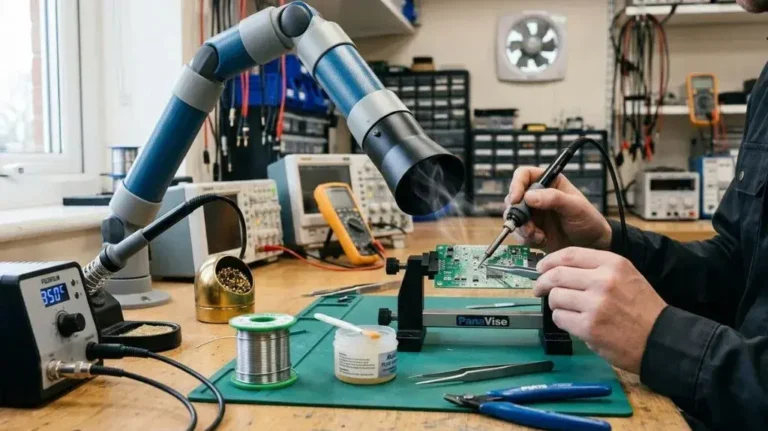
How To Choose A Soldering Iron Tip Cleaner: Expert Guide
The right soldering iron tip cleaner removes oxidation, excess solder, and flux residue without cooling or damaging the tip. For most electronics work, a brass wool cleaner is the best everyday choice because it cleans effectively while causing less temperature shock than a wet sponge. A damp sponge can still be useful, especially when you need to wipe away visible residue, but it requires more careful use.
The best cleaner depends on your soldering temperature, tip type, frequency of use, and whether you need portability or a built-in holder. This guide explains the main options, what to look for, common mistakes, and how to keep a soldering iron tip clean without shortening its service life.
Why Soldering Iron Tip cleaning Matters
A soldering iron tip must transfer heat efficiently to the joint. Oxidation, burned flux, and old solder can interfere with that heat transfer and make soldering less predictable.
A dirty tip may show several symptoms:
- Solder forms a ball instead of wetting the tip.
- The tip takes longer to transfer heat.
- Solder joints become uneven or poorly formed.
- More pressure is needed to heat a connection.
- Flux residue burns onto the tip.
- The tip develops dark, rough, or uneven areas.
- Solder sticks to some parts of the tip but not others.
Cleaning does not repair a severely worn or pitted tip. It does, however, help a serviceable tip remain tinned and usable.
A good cleaning method should remove contamination while preserving the tip’s protective plating. Excessive scraping, abrasive materials, or aggressive filing can expose the copper core inside the tip. Once that happens, the tip may deteriorate quickly.
The Main Types of Soldering Iron Tip Cleaners
Most tip cleaners fall into three categories: brass wool, damp sponge, and chemical tip-cleaning products such as tip tinner or re-tinning compound. Each has a different purpose.
| Cleaner type | Main benefit | Main limitation | Best suited for |
|---|---|---|---|
| Brass wool | Cleans without adding much thermal shock | May leave small solder particles around the holder | Routine cleaning during soldering |
| Damp sponge | Wipes away visible residue thoroughly | Briefly cools the tip and can promote oxidation if misused | Occasional wiping and general bench work |
| Tip tinner or re-tinning compound | Helps restore solder wetting on an oxidized tip | Does not replace normal cleaning and may create fumes | Light oxidation or re-tinning |
| Abrasive file or sandpaper | Removes heavy deposits mechanically | Can damage protective plating | Generally unsuitable for modern plated tips |
Brass Wool Cleaners
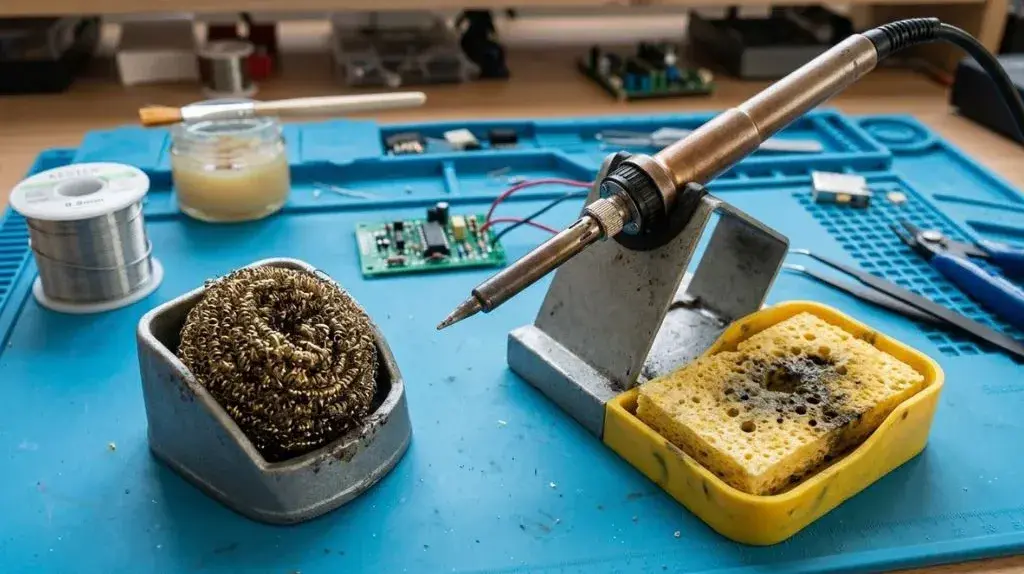
Brass wool, sometimes called brass sponge, consists of curled brass strands held in a small container or holder. You insert the hot tip into the wool and twist or wipe it gently to remove residue.
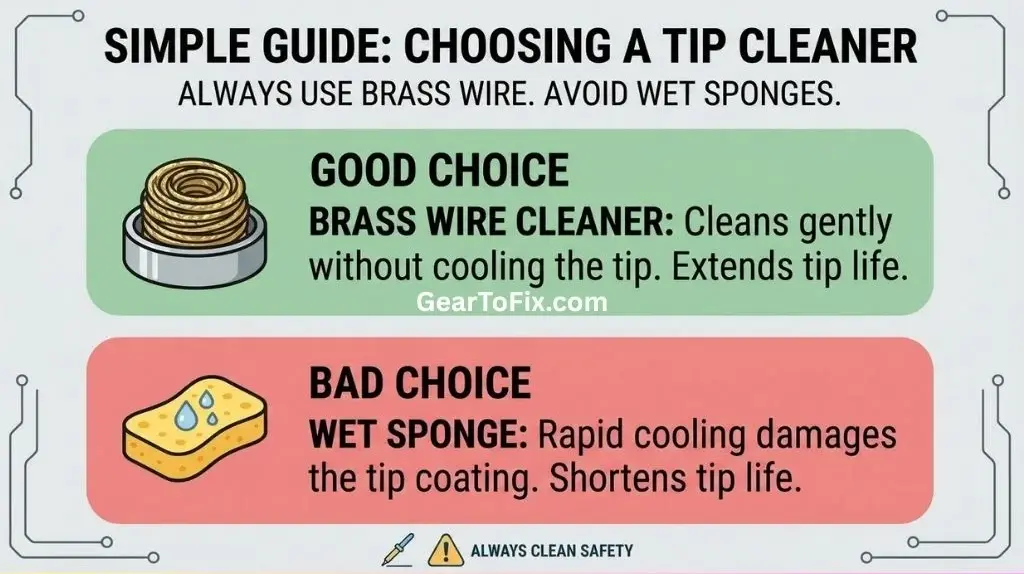
For many users, brass wool is the most practical general-purpose cleaner. It removes excess solder and burned flux without requiring water, so the tip does not experience the same sudden cooling associated with a wet sponge.
Brass wool is particularly useful when:
- The iron is used continuously.
- You want to maintain the working temperature.
- You need to clean the tip frequently.
- You work with lead-free solder or higher temperatures.
- You want a cleaner that does not require regular moisture.
A brass wool cleaner should not be packed so tightly that the tip must be forced into it. The cleaning action should come from light contact with the brass strands, not heavy pressure.
Damp Sponges
A traditional soldering sponge is made from heat-resistant material that is dampened with water. When the hot tip touches the sponge, residue is wiped away.
Sponges can provide a clean, visible wipe and are widely used with soldering stations. They are useful when you want to remove a noticeable layer of flux or solder quickly. However, touching a hot tip to a wet sponge causes a rapid temperature drop. Repeated thermal cycling can make temperature recovery slower and may contribute to oxidation over time.
If you choose a sponge:
- Use a purpose-made soldering sponge rather than an ordinary household sponge.
- Dampen it so it is moist, not dripping wet.
- Do not press the tip forcefully into the sponge.
- Allow the iron to recover before making a joint.
- Replace the sponge when it becomes hard, dirty, or damaged.
A sponge is not necessarily a poor choice. It is simply less convenient for users who want frequent cleaning with minimal temperature change.
Tip Tinner and Re-Tinning Compounds
Tip tinner is a solder-like compound, often containing flux, used to improve solder wetting on a tip that has become lightly oxidized. It can help when fresh solder will not spread across the working surface.
Tip tinner is not a substitute for a regular cleaner. It should be used only when the tip needs help accepting solder after normal cleaning. Follow the product instructions because formulations differ.
Use it when:
- The tip is intact but no longer wets easily.
- Fresh solder beads up after cleaning.
- The surface has light oxidation.
- You need to restore a protective layer of solder.
If the tip is deeply pitted, cracked, or missing its plating, re-tinning compound is unlikely to restore it permanently. Replacement is usually more appropriate in that situation.
How to Choose the Best Tip Cleaner for Your Work
Consider How Often You Clean the Tip
Frequent cleaning favors a low-abrasion method that does not cause large temperature changes. Brass wool is often a good fit for continuous bench work because it can be used quickly between joints.
If you solder only occasionally, a damp sponge may be adequate. A compact brass wool cleaner is also convenient because it does not dry out between uses.
Match the Cleaner to the Tip’s Condition
A normal working tip usually needs only the removal of excess solder and residue. Brass wool or a damp sponge is generally sufficient.
A lightly oxidized tip may need cleaning followed by fresh solder or a small amount of tip tinner. A heavily damaged tip should not be aggressively scraped in an attempt to make it usable again.
Use a new tip when you see:
- Deep pits or holes
- Cracks in the plating
- Exposed copper
- A badly misshapen working surface
- Persistent inability to accept solder after cleaning and re-tinning
Check the Tip Cleaner’s Material
The cleaner should be softer or less damaging than the tip’s protective surface. Brass wool is commonly used because it provides mechanical cleaning without requiring a sharp abrasive edge.
Avoid cleaners made from materials that can scratch or cut the tip. Files, knives, hard metal brushes, and coarse abrasives may remove plating. The same applies to excessive rubbing with any material.
The goal is to remove contamination, not to grind the tip clean.
Look at the Holder Design
A cleaner is easier and safer to use when it has a stable holder. The holder should remain on the workbench when the tip is inserted or wiped.
Useful holder features include:
- A broad, stable base
- Heat-resistant construction
- Enough depth to contain loose brass strands or solder
- A design that keeps the cleaner from sliding
- A replaceable cleaning insert, when available
- Enough clearance for the soldering iron handle and tip
A lightweight container that moves across the bench can be frustrating and may increase the chance of touching a hot surface accidentally.
Consider Portability
For a fixed soldering station, a larger holder may be comfortable and stable. For field repairs or compact work areas, a small brass wool container may be more practical.
Portability matters if the cleaner must fit inside a tool case or travel with a portable iron. In that situation, a dry cleaner is often easier to manage than a damp sponge because it cannot spill or dry out.
Think About Your Solder and Flux
Different solder and flux combinations leave different amounts of residue. Some fluxes burn onto the tip more quickly, while lead-free solder may require higher working temperatures and more frequent maintenance.
Do not choose a cleaner solely because it is labeled for a specific solder type. The more useful questions are:
- Does the cleaner remove the residue you actually encounter?
- Does it allow the tip to remain properly tinned?
- Does it avoid excessive cooling?
- Can it be used frequently without damaging the tip?
How to Use a Brass Wool Tip Cleaner
Brass wool cleaning is simple, but technique still matters.
- Heat the soldering iron normally. Use the temperature appropriate for the solder, tip, and workpiece.
- Touch the working area of the tip to the brass wool. Insert or wipe the tip gently.
- Rotate or move the tip lightly. This loosens excess solder and residue.
- Inspect the tip. The surface should be reasonably clean and covered with a thin layer of solder.
- Add fresh solder if needed. A small amount of solder helps protect the cleaned surface and improve heat transfer.
- Return the iron to its stand. Do not leave a clean, dry tip exposed to heat for longer than necessary.
Do not scrub aggressively. If the tip requires strong force to look clean, it may be oxidized or damaged beyond what routine cleaning can correct.
How to Use a Damp Soldering Sponge
A sponge should be moist rather than saturated. Excess water produces a more severe temperature drop and may splash when it contacts the hot tip.
Use this procedure:
- Moisten the sponge with clean water.
- Squeeze out excess water until the sponge is damp.
- Wipe the hot tip across the surface with light pressure.
- Allow the iron to recover its temperature.
- Apply fresh solder to the working area before soldering or storing the iron.
Do not leave the tip resting on the wet sponge. The sponge is for brief wiping, not for holding the iron.
Should You Use Brass Wool or a Wet Sponge?
For most routine work, brass wool is the more convenient choice. It produces less temperature shock and works well when the tip must be cleaned repeatedly during a soldering session.
A wet sponge may be preferable when:
- You already use a compatible soldering station with a sponge holder.
- You want to remove a visible layer of flux residue.
- You prefer a traditional wiping method.
- Brief cooling is not a concern.
Some workbenches use both. Brass wool can handle frequent cleaning, while a damp sponge can be used occasionally for a more thorough wipe. The important point is to avoid pressing the tip into either cleaner with excessive force.
When a Tip Cleaner Is Not Enough
Cleaning cannot solve every soldering problem. Poor wetting may also result from incorrect temperature, contaminated surfaces, unsuitable solder, insufficient flux, or a damaged tip.
Check the following before discarding the iron:
- Is the tip fully heated?
- Is fresh solder being applied to the tip?
- Are the workpiece surfaces clean?
- Is the flux suitable for the application?
- Is the tip shape appropriate for the joint?
- Has the tip been left hot and un-tinned for a long period?
- Is the tip’s plating cracked, pitted, or missing?
If fresh solder continues to bead up after cleaning and re-tinning, the tip may be too oxidized or damaged to use reliably.
Common Mistakes That Shorten Tip Life
Using Abrasive Tools on a Plated Tip
Filing or sanding may appear to remove oxidation, but it can also remove the protective plating. Modern soldering tips are generally intended to be cleaned without aggressive abrasion.
Leaving the Tip Dry While Hot
A hot tip without a thin solder coating is more exposed to oxidation. Before placing the iron in its stand, apply a small amount of solder to the working area when appropriate.
Keeping the Sponge Too Wet
Excess water creates a larger temperature shock and can make the iron take longer to recover. A damp sponge is enough.
Applying Too Much Pressure
Heavy pressure does not necessarily clean better. It can deform the cleaner, damage the tip surface, or put unnecessary strain on the iron.
Using the Wrong Sponge
Household sponges may contain materials that melt, burn, or release unwanted residue. Use a sponge intended for soldering work.
Treating Tip Tinner as a Permanent Repair
Tip tinner can help a mildly oxidized tip accept solder again, but it cannot restore missing plating or deep damage. Repeatedly applying it to a badly worn tip usually delays replacement rather than solving the problem.
Safety Considerations
A soldering iron tip remains hot long after it is switched off. Keep the cleaner in a stable location away from loose paper, plastic, cables, and other heat-sensitive materials.
When using a damp sponge, avoid splashing water onto the soldering station, power connection, or other electrical equipment. Keep the iron in a proper stand when it is not in use, and allow the cleaner and surrounding surface to cool before handling them for storage.
Flux residue and solder particles may also accumulate around the cleaner. Keep the work area clean and wash your hands after soldering, especially when working with solder that contains lead. Follow the handling guidance for the solder and flux being used.
FAQs Of How To Choose A Soldering Iron Tip Cleaner
Is brass wool safe for soldering iron tips?
Brass wool is generally suitable for routine cleaning when used gently. It should not require forceful scrubbing. Excessive pressure or a contaminated, overly aggressive cleaner can still damage a tip, so light contact is the better approach.
Can I use steel wool to clean a soldering iron tip?
Steel wool is not a good general-purpose choice. It can be more abrasive than needed and may leave particles that create contamination or electrical problems around sensitive work. A purpose-made brass wool cleaner or soldering sponge is more appropriate.
Should I clean the tip while the soldering iron is hot?
Yes. Tip cleaners are normally used while the tip is hot enough for solder to flow. Use the cleaner briefly and gently, then apply fresh solder when needed. Do not handle the tip or cleaner insert until they have cooled.
Why does solder bead up after I clean the tip?
Beading can indicate oxidation, contamination, insufficient flux, an unsuitable temperature, or a damaged tip. Try cleaning the tip, applying fresh solder, and checking that the iron has reached its normal operating temperature. If solder still will not wet the surface, the tip may need replacement.
How often should I clean a soldering iron tip?
Clean the tip whenever excess solder or residue interferes with soldering. Many users clean it briefly between joints or whenever moving to a different connection. The correct frequency depends on the solder, flux, temperature, and type of work.
Is tip tinner the same as tip cleaner?
No. A cleaner removes residue, while tip tinner or re-tinning compound helps a lightly oxidized tip accept solder. Tip tinner can support maintenance, but it does not replace regular cleaning or repair a badly damaged tip.
Final Takeaway
For most soldering work, choose a stable brass wool cleaner for frequent maintenance and minimal temperature disruption. A damp soldering sponge remains a useful option when you prefer a traditional wipe or need to remove visible residue, while tip tinner is best reserved for light oxidation and re-tinning.
Whichever method you use, clean the tip gently, keep a thin layer of solder on the working surface, and avoid files or coarse abrasives. The best soldering iron tip cleaner is the one that removes residue without stripping the tip’s protective plating.

Scott Yarnell is a tool expert focused on practical guides, product research, and real-world tool performance to help readers make informed decisions.