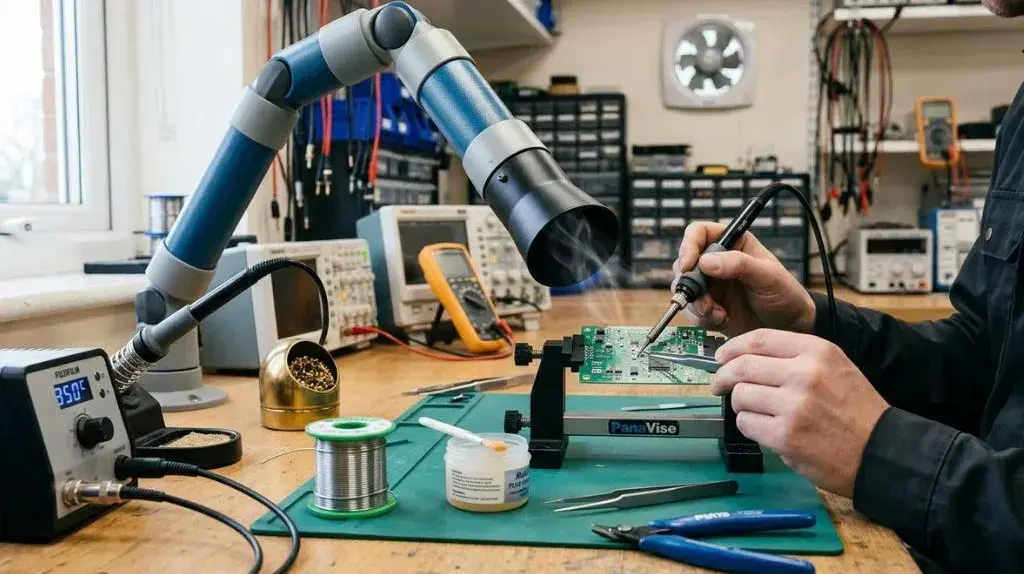
Why Do I Need Ventilation When Soldering: Safety Guide
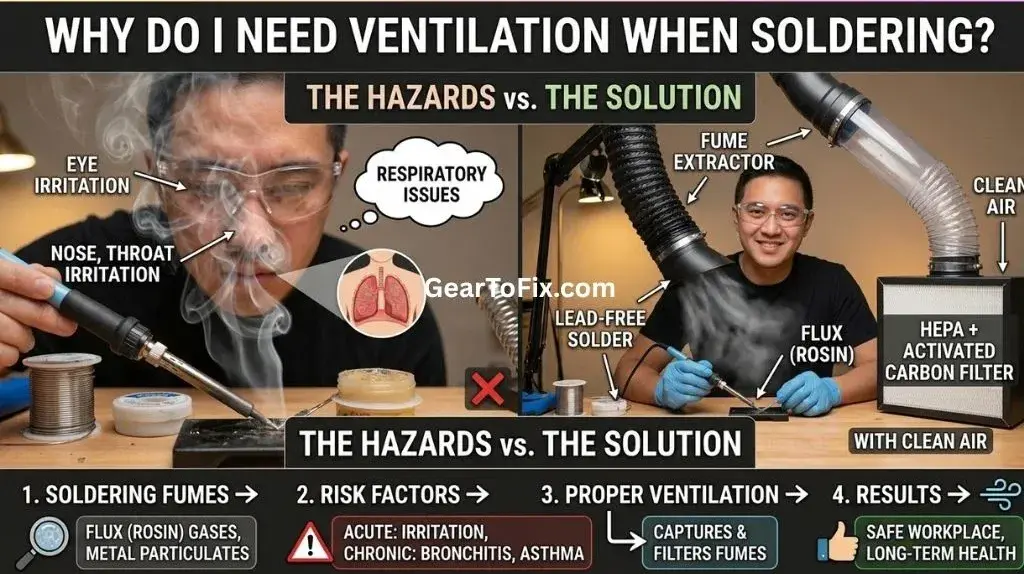
You need ventilation when soldering because heating solder and flux can release smoke, fumes, and fine particles that may irritate your eyes, throat, lungs, and skin. Good ventilation reduces the amount of contaminated air you breathe and helps prevent soldering fumes from spreading through the room.
The safest approach is to capture fumes close to the soldering point with a fume extractor or local exhaust system. A fan that simply blows smoke across your workspace may spread the fumes instead of removing them.
What Is Released When You Solder?
Soldering does not normally produce the same kind of smoke as burning wood or plastic, but the process can still contaminate the air. The materials released depend on the solder, flux, circuit board, temperature, and work being performed.
Flux fumes
Flux is used to help solder flow and bond to metal surfaces. When heated, it can produce visible smoke or vapor. Rosin-based flux, also called colophony flux, is a common source of soldering fumes.
Breathing flux fumes may cause:
- Eye, nose, or throat irritation
- Coughing or a scratchy throat
- Headaches or nausea in some people
- Worsening of asthma symptoms
- Skin or respiratory sensitization after repeated exposure
A person may not notice immediate symptoms even when the fumes are irritating. Repeated exposure can be more concerning for people who are sensitive to rosin-based flux or who solder frequently.
Fine particles and thermal decomposition products
Heating flux and other materials can create fine airborne particles and chemical compounds. The exact composition varies with the product and temperature, so it is not accurate to assume that every soldering operation produces the same fumes.
Visible smoke is a useful warning that airborne material is being released, but the absence of visible smoke does not prove that the air is completely free of contaminants.
Solder-related exposure
Solder may contain lead or other metals, depending on the type used. At typical hand-soldering temperatures, the main airborne concern is often the flux smoke rather than large amounts of vaporized lead. However, lead can still contaminate hands, tools, benches, clothing, and nearby surfaces.
That contamination can later enter the body through hand-to-mouth contact, food, drinks, or touching the face. Ventilation helps control airborne contamination, but it does not replace careful hygiene.
Smoke from other materials
Soldering may also heat:
- Wire insulation
- Cable jackets
- Adhesives
- Plastic connectors
- Circuit board coatings
- Residue from cleaning products
- Previously applied conformal coatings
These materials can release unpleasant or harmful fumes if overheated. Avoid heating materials unless you know they are suitable for the task.
Why Ventilation Matters Even During Small Soldering Jobs
A short soldering task may seem too minor to require ventilation, but fumes can accumulate around your face when you work close to the joint. Small electronics work often places the operator only a few inches from the smoke source.
Ventilation is especially useful because it:
- Reduces the concentration of fumes in the breathing zone
- Removes smoke before it spreads around the room
- Limits exposure during repeated soldering tasks
- Helps protect other people sharing the workspace
- Reduces residue settling on benches and equipment
- Improves visibility when smoke would otherwise obscure the joint
The amount of ventilation needed depends on the frequency of soldering, the materials used, the workspace size, and whether other people are nearby. Occasional work with a small iron has different requirements from several hours of assembly work each day.
What Type of Ventilation Is Best?
The most effective method is usually local exhaust ventilation, which removes contaminants near their source instead of allowing them to mix with the room air.
Fume extractor
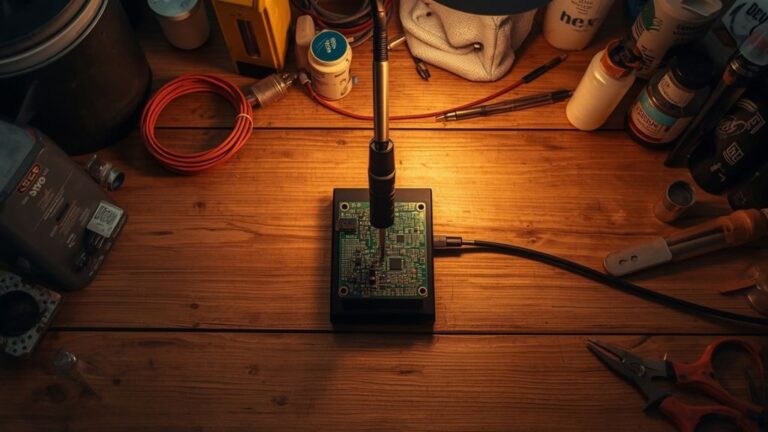
A soldering fume extractor uses a fan and filter to draw smoke away from the work area. Many units use activated carbon to help adsorb certain gases and odors, along with a particle filter for airborne particles.
Place the intake close enough to capture the smoke, but not so close that it interferes with the soldering iron, component placement, or visibility.
A fume extractor should:
- Pull smoke away from your face
- Capture fumes at or near the soldering point
- Remain stable during use
- Have filters maintained according to the manufacturer’s instructions
- Be sized appropriately for the workspace and task
A small desktop unit may be suitable for occasional hobby work, while frequent or professional soldering may require a more capable extraction system.
Ducted exhaust
A ducted system discharges contaminated air outside the building. When properly designed, this can provide effective source control because the captured fumes do not remain in the room.
The system must be installed so that exhausted air does not re-enter through windows, doors, air intakes, or neighboring work areas. Permanent installations may require professional design, especially in commercial environments.
General room ventilation
An open window, building ventilation system, or room fan can help dilute fumes, but general ventilation is usually less effective than capturing smoke at the soldering point.
Room ventilation may be reasonable for occasional, low-volume work when combined with careful positioning and safe work habits. It should not be treated as a substitute for local extraction during frequent soldering or when stronger fumes are produced.
Why a Regular Fan May Not Be Enough
A regular fan can make smoke disappear from one location without actually removing it from the room. If the airflow passes from the soldering joint toward your face, it may increase your exposure.
Avoid arrangements where a fan:
- Blows fumes across your breathing zone
- Pushes smoke toward another person
- Spreads fumes throughout the room
- Disturbs the soldering joint or cools the work unexpectedly
- Sends contaminated air toward a heating system or air intake
If you use a fan for temporary ventilation, position the airflow so it carries fumes away from people and toward a suitable exhaust route. Source capture remains the better option.
How to Set Up a Safer Soldering Workspace
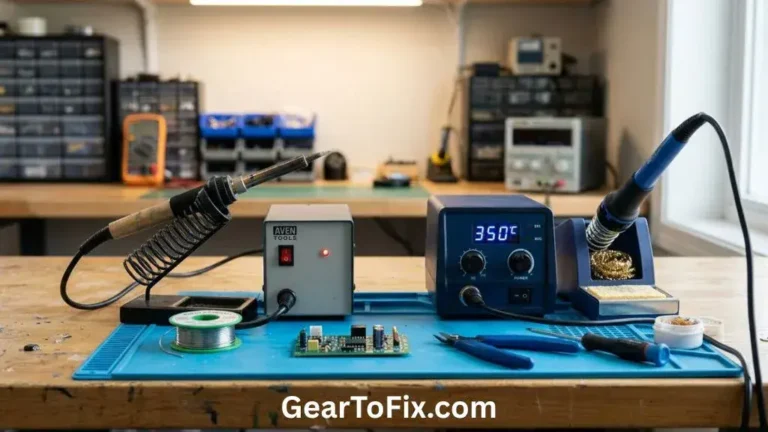
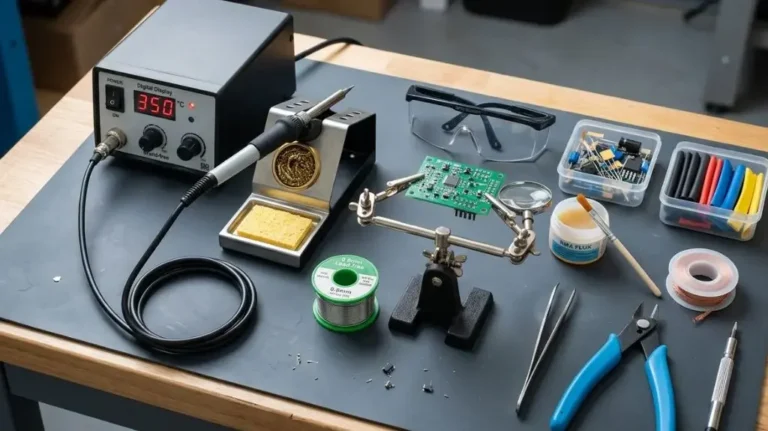
A good setup controls fumes, heat, contamination, and fire risk together.
1. Position the work below your breathing zone
Keep your head to the side of the smoke rather than directly above the joint. Rising fumes can move straight toward your face if you lean over the work.
Do not deliberately inhale fumes to check whether an extractor is working. Instead, observe whether smoke is being drawn away from the joint.
2. Place extraction near the smoke source
The extractor intake should be close enough to capture the fumes before they reach your face. The ideal position varies by extractor design, soldering angle, and workpiece size.
An intake placed too far away may allow fumes to escape. An intake placed directly in the way may make the work awkward or interfere with heat control.
3. Keep the workspace uncluttered
Remove unnecessary materials from around the soldering area, especially paper, packaging, solvents, and loose fabric. A clean workspace makes it easier to position the extractor and reduces the chance of accidental contact with the hot iron.
4. Wash your hands after soldering
Wash your hands with soap and water after handling solder, circuit boards, or contaminated tools. Do this before eating, drinking, smoking, or touching your face.
Avoid eating or drinking at the soldering bench. Do not use food containers to store solder, components, flux, or cleaning materials.
5. Keep food and personal items away
Phones, keyboards, tools, and frequently touched objects can collect residue. Store food, drinks, cosmetics, and personal items away from the work area.
Clean the bench regularly using a method appropriate for the materials present. Do not spread contamination by using the same cloth on the soldering bench and household surfaces.
6. Follow product instructions
Read the safety information for the solder, flux, coatings, cleaners, and other materials being heated. Their handling requirements may differ.
Some fluxes are designed for specific processes and may produce more irritating fumes than others. Lower-smoke or no-clean products may reduce visible residue, but “no-clean” does not mean “fume-free” or risk-free.
Do I Need a Respirator for Soldering?
A respirator is not usually the first solution for routine bench soldering. Local exhaust ventilation is generally more useful because it removes fumes at the source before they reach the breathing zone.
A respirator may be considered for specific tasks or materials when ventilation cannot adequately control exposure, but the choice must match the hazard. A basic dust mask does not provide reliable protection against chemical vapors, and a respirator is only effective when it is suitable, properly fitted, maintained, and used under an appropriate respiratory-protection program.
For home soldering, improve the workspace and source capture before relying on respiratory protection. If soldering produces unusual fumes, involves coatings or plastics, or causes repeated symptoms, stop and evaluate the materials and ventilation rather than simply wearing a generic mask.
Ventilation for Leaded and Lead-Free Solder
Both leaded and lead-free soldering require sensible ventilation and hygiene.
Leaded solder
Leaded solder creates an additional contamination concern. The greatest practical risk during ordinary hand soldering may come from residue on hands and surfaces rather than inhaling lead vapor directly from the solder joint.
Use these precautions:
- Wash hands thoroughly after handling solder
- Keep food and drinks away from the bench
- Avoid touching your face while working
- Clean the work surface regularly
- Store solder securely and label it clearly
- Keep children and pets away from the workspace
- Do not use household cookware or utensils for soldering materials
Ventilation remains useful for flux smoke, even when the solder contains lead.
Lead-free solder
Lead-free solder avoids intentional lead exposure, but it does not eliminate the need for ventilation. Lead-free alloys often require different working conditions, and flux fumes are still produced when flux is heated.
The correct ventilation setup depends more on the whole soldering process than on whether the solder is labeled lead-free.
Common Ventilation Mistakes
Blowing smoke directly toward another person
A fan may protect the person operating the iron while exposing someone sitting nearby. Always consider where the airflow ends.
Relying on smell
Some hazardous or irritating contaminants may not have a strong smell. A lack of odor does not prove that the air is safe.
Treating visible smoke as the only problem
Smoke is easy to notice, but contamination can also come from residue on hands, tools, and surfaces. Combine ventilation with handwashing and good housekeeping.
Placing the extractor too far away
A filter unit across the room cannot capture fumes as effectively as one positioned near the soldering point. Capture works best before the fumes disperse.
Using an unmaintained filter
Filters become less effective as they load with particles or absorb vapors. Check the equipment instructions for replacement or cleaning intervals and watch for reduced airflow or persistent odors.
Soldering in a kitchen or bedroom
These areas contain food, fabrics, personal items, and surfaces that are not designed for workshop contamination. Use a dedicated, well-ventilated workspace when possible.
When Should You Improve Your Ventilation?
Improve your setup if:
- Smoke regularly reaches your face
- The room smells strongly of flux after soldering
- You solder for long periods or several days per week
- Multiple people share the workspace
- You work with coated wires, plastics, or treated components
- You develop coughing, throat irritation, headaches, or breathing discomfort
- Residue accumulates on nearby surfaces
- Your extractor no longer captures smoke effectively
If soldering causes persistent breathing problems, wheezing, chest tightness, or other concerning symptoms, stop the activity and seek appropriate medical advice. Do not assume that symptoms are harmless simply because the task is small.
FAQs About Why Do I Need Ventilation When Soldering
Is soldering indoors safe if a window is open?
It can be reasonable for occasional work if the airflow carries fumes away from people and the room is not used for food or sleeping. An open window alone may not provide adequate control for frequent soldering or irritating materials. Local fume extraction is more reliable.
Can a soldering fume extractor remove all harmful fumes?
No. A fume extractor can reduce airborne contaminants, but its effectiveness depends on its design, airflow, filter condition, placement, and the materials being heated. It does not eliminate the need for handwashing, surface cleaning, and proper material handling.
Are soldering fumes harmful if I cannot see them?
They may still be irritating or contaminated even when no visible smoke is present. Visibility is not a reliable measure of air quality. Use suitable ventilation and avoid placing your face over the work.
Is lead-free solder safe without ventilation?
No. Lead-free solder reduces lead-related concerns but does not eliminate flux fumes or other emissions created by heating soldering materials. Ventilation is still appropriate.
Should I use a carbon filter or a particle filter?
They serve different purposes. Particle filters capture airborne particles, while activated carbon is used to adsorb certain gases and vapors. Some soldering extractors combine both, but the correct setup depends on the materials and the manufacturer’s design.
Can I solder outside instead of using ventilation?
Outdoor work can disperse fumes, but it does not remove the need for safe handling. Wind may blow fumes toward your face or other people, and outdoor work introduces additional risks from unstable surfaces, moisture, and fire hazards.
Final Takeaway
You need ventilation when soldering because heated flux and other materials can release irritating fumes and fine particles, while solder—especially leaded solder—can also contaminate hands and surfaces. The best approach is to capture fumes close to the soldering point, keep them away from your breathing zone, and combine ventilation with handwashing and a clean workspace.
For occasional work, a properly positioned small extractor and good room airflow may be sufficient. Frequent soldering, unusual materials, or shared workspaces call for stronger source-control ventilation and closer attention to the products being heated.

Scott Yarnell is a tool expert focused on practical guides, product research, and real-world tool performance to help readers make informed decisions.