Soldering Iron Vs Torch: Which Tool Do You Need
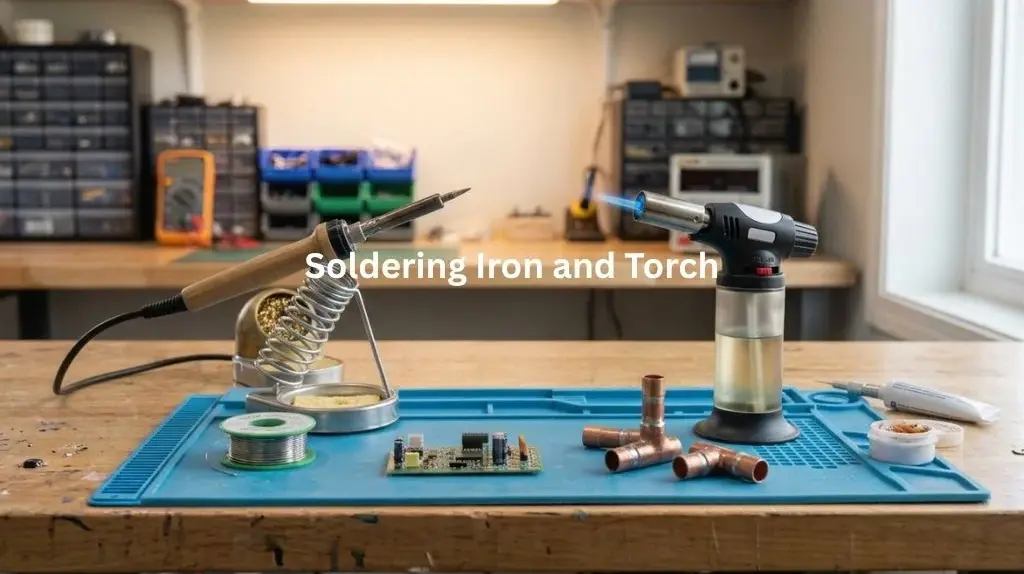
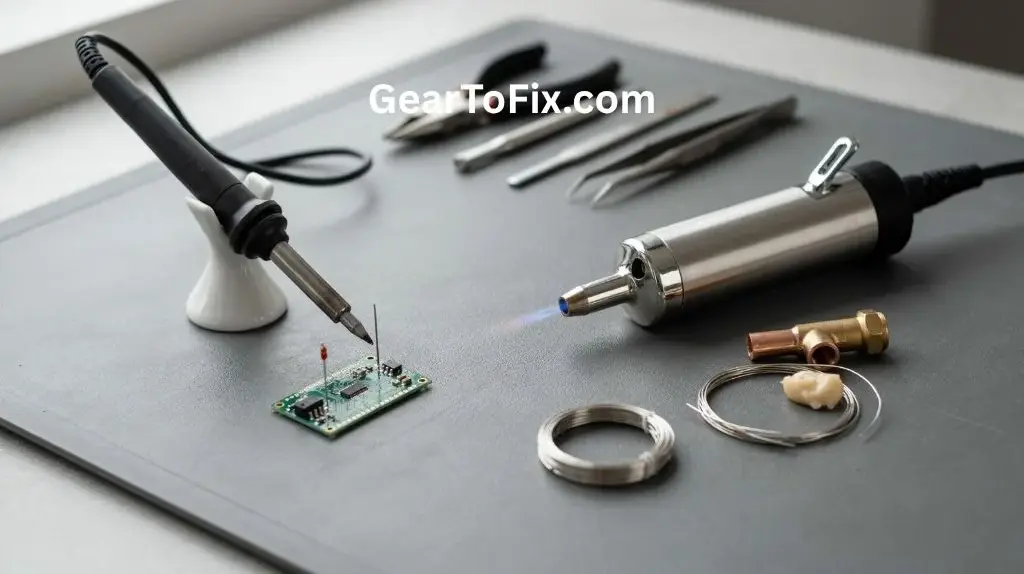
Choosing between a Soldering Iron Vs Torch mainly comes down to the size of the work, the materials involved, and how much heat control you need. A soldering iron transfers heat through a metal tip, making it precise and relatively gentle. A torch applies heat with a flame, producing much higher temperatures across a wider area.
Neither tool is universally better. A soldering iron is usually the right choice for electronics, wires, circuit boards, and small connections. A torch becomes more useful for copper pipe, heavy-gauge metal, plumbing joints, metalwork, and soldering tasks that require more heat than an iron can deliver.
The difference is not simply “low heat versus high heat.” Heat control, heat distribution, portability, joint size, and the risk of damaging nearby materials all matter.
The Basic Difference in How They Deliver Heat
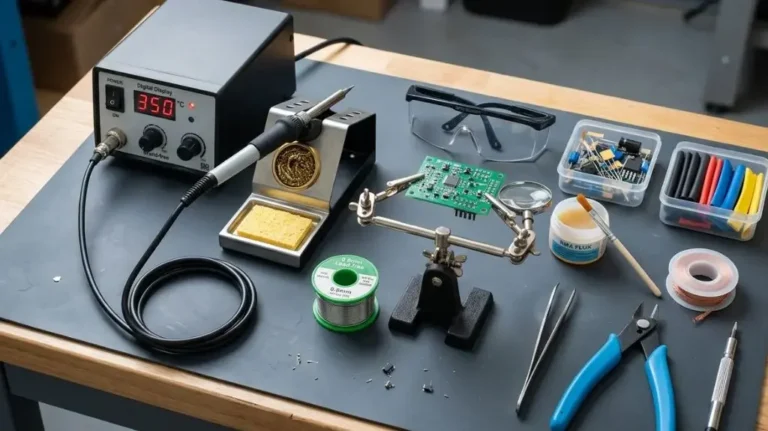
A soldering iron heats a metal tip that touches the workpiece. The tip transfers heat directly to the joint, allowing the user to place heat in a small, controlled area.
A torch heats the workpiece with a flame. Instead of transferring heat through physical contact, it warms the surrounding metal until the solder melts and flows into the joint.
This creates two very different working styles:
- Soldering iron: concentrated, controlled contact heat
- Torch: broader, more powerful flame-based heat
The solder itself still needs to be suitable for the materials and temperature involved. A torch does not automatically make a joint stronger, and an iron is not automatically safer for every material. The tool must match the job.
Soldering Iron vs Torch at a Glance
The following comparison covers the differences that matter most during actual work.
| Feature | Soldering Iron | Torch |
|---|---|---|
| Heat delivery | Direct contact through a heated tip | Flame heats the workpiece |
| Precision | Excellent for small joints | Lower, especially with a large flame |
| Heat output | Suitable for light and medium work | Suitable for larger or heat-demanding work |
| Temperature control | Usually easier and more consistent | Depends on fuel, flame adjustment, and technique |
| Best suited for | Electronics, wires, circuit boards, small terminals | Plumbing, heavy wire, copper tubing, metalwork |
| Main limitation | May not heat large joints effectively | Can damage components or overheat nearby areas |
In practical use, the iron gives you control over where the heat goes. The torch gives you more ability to heat how much material needs to reach soldering temperature.
When a Soldering Iron Is the Better Choice
A soldering iron is generally better when the joint is small, delicate, or close to heat-sensitive parts.
Electronics and Circuit Boards
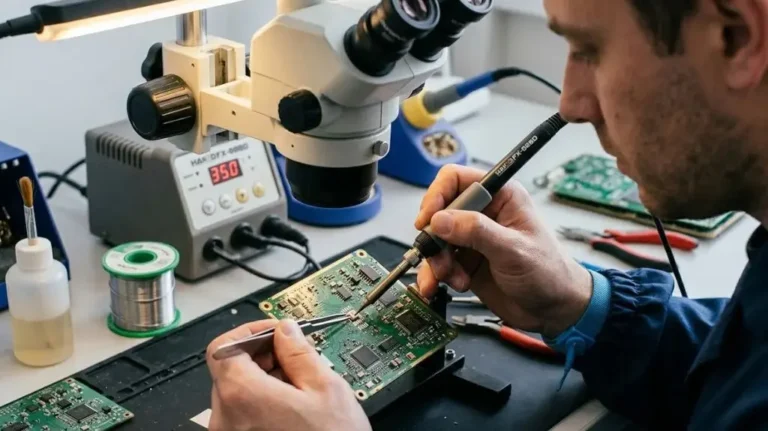
For printed circuit boards, an iron is normally the appropriate tool. Its narrow tip can heat an individual pad, pin, or wire without exposing the entire board to a flame.
A temperature-controlled iron also lets the user work with different solder types and component sizes. Lower heat and shorter contact time can reduce the risk of lifting copper pads, melting plastic connectors, or damaging semiconductor components.
A torch is rarely suitable for ordinary electronics repair. Even a small flame can heat several components at once and may scorch the board, insulation, or plastic housing.
Joining Wires and Small Terminals
A soldering iron works well for joining small and medium-gauge wires, attaching connectors, and repairing cable ends. The tip can heat the wire and terminal together while solder is fed into the joint.
For thick power cables, large ground wires, or heavy metal terminals, an iron may struggle to transfer enough heat. The joint can absorb heat faster than the iron supplies it, causing solder to melt poorly or form a weak connection.
Fine or Closely Spaced Work
An iron is preferable when several joints are close together. The user can select a fine tip and apply heat to one connection at a time.
This is especially important for:
- Small switches
- Audio connectors
- Fine-pitch component leads
- Sensor wires
- Model-making electronics
- Small electrical repairs
A torch flame does not have the same physical precision. Even when the flame is small, radiant heat spreads beyond the exact point being worked on.
Read More: Soldering Iron vs Soldering Station
When a Torch Makes More Sense
A torch becomes more practical when the workpiece is large enough to draw heat away from the joint or when the material requires more heat than an iron can provide.
Copper Pipe and Plumbing Joints
A torch is commonly used to solder copper tubing and fittings because the pipe absorbs substantial heat. A typical electronics-style iron cannot heat the fitting evenly enough for plumbing solder to flow around the joint.
The torch heats the pipe and fitting together. Once the correct temperature is reached, solder can be applied to the joint and drawn around the connection by capillary action.
The flame must be controlled carefully. Excessive heat can burn flux, discolor the copper, damage nearby valves, or overheat seals and other plumbing components.
Large Metal Parts
A torch is useful for larger metal components such as:
- Heavy copper connectors
- Large brass fittings
- Metal tabs
- Thick wire lugs
- Sheet-metal seams
- Some jewelry and craft-metal applications
The goal is to bring the entire joint area to soldering temperature. Heating only one small spot with an iron may leave the rest of the joint too cool for proper wetting.
Outdoor or Cord-Free Work
A small butane torch can be convenient when there is no electrical outlet nearby. It can also be useful for heat-shrink tubing, loosening certain fasteners, or heating larger metal parts.
That portability comes with trade-offs. Fuel must be available, the flame needs a safe working area, and wind can make temperature control difficult. A cordless soldering iron may be a better option when the job is small and flame-free operation is important.
Heat Control Is More Important Than Maximum Temperature
A common misconception is that the hottest tool is the most capable. In soldering, the better question is whether the tool can deliver the right amount of heat without damaging the work.
A soldering iron often provides more predictable control. Many models use adjustable temperature settings, and the tip size can be selected to suit the joint. The heat is concentrated at the contact point.
A torch may reach a much higher temperature, but the actual temperature of the joint depends on several factors:
- Flame size
- Fuel type
- Distance from the work
- Airflow
- Metal thickness
- Surface area
- Heating time
- Heat loss through connected parts
This makes torch soldering more dependent on technique. The flame should usually heat the workpiece rather than directly melting the solder. If solder is melted only by the flame, it may sit on a surface that has not reached the correct temperature and fail to bond properly.
Precision, Heat Spread, and Risk of Damage
The soldering iron has a clear advantage when heat must stay within a small working area. Its tip touches the intended joint, and the surrounding area receives less heat than it would from a flame.
A torch spreads heat through both direct flame contact and radiant heat. That is useful for large joints but risky around:
- Plastic housings
- Wire insulation
- Circuit boards
- Painted surfaces
- Seals and gaskets
- Batteries
- Flammable materials
- Nearby soldered connections
A torch can also oxidize or discolor some metals. Flux may burn away if the flame is held too close or used for too long, leaving contamination that interferes with solder flow.
For delicate work, the torch is not simply less convenient. It may be the wrong type of heat source altogether.
Can a Soldering Iron Replace a Torch?
A soldering iron can replace a torch for small electrical and light metalwork, but it usually cannot replace a torch for large, heat-absorbing joints.
An iron may be sufficient when:
- The joint is small
- The materials are thin
- The solder melts at a relatively low temperature
- Nearby parts are heat-sensitive
- Precise heat placement matters more than total heat output
It is usually unsuitable when:
- The joint involves thick copper tubing
- The metal draws heat away rapidly
- A large fitting must be heated evenly
- The solder requires a higher working temperature
- The iron cannot maintain joint temperature after contact
Using an oversized iron can sometimes help with larger electrical joints, but it still does not behave like a torch. A large iron transfers heat through a tip, while a torch can warm the whole joint and surrounding material.
Can a Torch Replace a Soldering Iron?
A torch can technically melt solder, but that does not make it a practical substitute for an iron in most electronics work.
A torch may be useful for larger, simple metal joints where there are no delicate nearby components. It is not a good replacement for an iron when the work requires:
- Individual component replacement
- Fine wire connections
- PCB repair
- Controlled rework
- Work near plastic
- Low heat exposure
- Repeatable tip contact
A very small butane torch can produce a narrow flame, but narrow does not mean precise in the same way an iron tip is precise. The flame still transfers heat to nearby surfaces, and the user has less direct control over the exact contact area.
Soldering Performance and Joint Quality
Both tools can produce strong, reliable solder joints when used correctly. The tool itself does not determine joint quality by temperature alone.
A good joint generally requires:
- Clean surfaces
- Proper flux
- Correct solder for the materials
- Adequate joint temperature
- Enough heat for the solder to flow
- Minimal unnecessary heating
- A stable connection while the solder solidifies
With an iron, the tip should contact the parts being joined rather than merely touching the solder. Once the joint is hot enough, solder should flow onto the heated surfaces.
With a torch, the flame should heat the joint evenly. Solder should be applied to the metal, not used as an indicator that the flame is hot enough. If the solder balls up, refuses to flow, or burns away flux immediately, the joint may be dirty, too cool, too hot, or exposed to the wrong type of heat.
Which Tool Is Easier for Beginners?
For most beginners, a temperature-controlled soldering iron is easier to learn with. The heat source is more stable, the working area is easier to see, and the tool does not require fuel or flame adjustment.
A beginner can focus on:
- Tip selection
- Solder feeding
- Flux use
- Joint preparation
- Heat timing
- Avoiding excessive contact time
A torch adds more variables. The user must learn flame adjustment, heating distance, workpiece positioning, heat distribution, and protection of nearby surfaces.
That does not make torch soldering unsuitable for beginners. It means the learning curve is more closely tied to the type of work. Someone learning to solder copper pipe may need a torch from the beginning, while someone repairing wires should start with an iron.
Portability and Working Environment
A torch is often attractive because it is cordless and can generate substantial heat without a power supply. Small fuel torches are useful for field repairs and outdoor metalwork.
A corded iron is less portable but usually easier to use in a controlled workspace. It produces no open flame and is more suitable for a bench with electronic parts, insulation, and plastic components.
Battery-powered soldering irons occupy a middle ground. They offer better precision than a torch and more portability than a corded model, although runtime and heat recovery depend on the tool and battery.
When choosing between the two, consider the entire work environment rather than just the tool:
- Is an open flame permitted?
- Is ventilation adequate?
- Are flammable materials nearby?
- Is there wind?
- Is electrical power available?
- Does the work need a stand or fuel storage?
- Can the workpiece be held securely?
Maintenance and Consumables
A soldering iron mainly requires tip care. The tip should be kept properly tinned, cleaned using an appropriate method, and replaced when it becomes pitted, damaged, or difficult to wet with solder.
Other considerations include:
- Compatible replacement tips
- Heating-element life
- Cord and handle condition
- Stand stability
- Storage that prevents tip damage
A torch requires attention to the fuel system and flame-producing parts. Depending on the torch type, maintenance may involve:
- Refilling or replacing fuel
- Checking for leaks
- Keeping the nozzle clear
- Inspecting seals
- Protecting the torch from impact
- Storing fuel safely
Consumable costs vary by tool and usage. An iron may require replacement tips, while a torch may require fuel and occasionally replacement nozzles or seals. The initial purchase price alone does not show the full practical cost.
Safety Differences You Should Not Ignore
Both tools can cause serious burns and ignite materials, but a torch presents additional flame-related hazards.
When using a soldering iron:
- Keep the hot tip in a stable stand when not in use.
- Avoid touching the tip, shaft, or recently heated work.
- Protect the bench from heat and solder splashes.
- Keep cords away from the hot area.
- Use ventilation when solder and flux produce fumes.
When using a torch:
- Remove flammable materials from the work area.
- Check the fuel container, hose, and connections for damage.
- Use the correct flame and fuel settings.
- Secure the workpiece before heating it.
- Protect nearby surfaces from radiant heat.
- Allow heated metal to cool before handling.
- Never assume metal is safe to touch because it no longer glows.
Do not use a torch near batteries, pressurized containers, combustible insulation, or sensitive electronic assemblies unless the setup is specifically designed for that work.
Common Mistakes When Choosing Between Them
Using a Torch for Delicate Electronics
A small flame may appear controllable, but it can still overheat pads, insulation, and components. An iron is normally the safer and more precise option for circuit-board work.
Expecting a Small Iron to Solder Large Copper Pipe
If the fitting absorbs heat faster than the iron can supply it, solder may not flow correctly. Increasing contact time can damage the iron, oxidize surfaces, or create an unreliable joint without solving the heat problem.
Choosing by Maximum Temperature Alone
A high temperature does not compensate for poor heat transfer or poor control. The tool must match the joint size and material.
Melting Solder Without Heating the Joint
Whether using an iron or torch, solder should bond to properly heated surfaces. Simply melting solder onto cold metal often creates a weak joint that looks acceptable at first.
Ignoring Nearby Materials
Heat can travel through wires, tubing, brackets, and metal frames. Plan where that heat will go before starting, especially when using a torch.
Which One Should You Choose for Specific Jobs?
A soldering iron is usually the better option for:
- Circuit boards
- Small electronics
- Wire splicing
- Connectors
- Fine electrical work
- Model electronics
- Heat-sensitive assemblies
- Small craft projects
A torch is generally more appropriate for:
- Copper pipe soldering
- Large brass fittings
- Heavy-gauge wire and lugs
- Larger metal joints
- Some jewelry and metal crafts
- Outdoor repairs without electrical power
- Tasks requiring broad, sustained heat
For heat-shrink tubing, either tool may work, but a hot-air tool is often more controlled than an open flame. A flame can shrink the tubing unevenly or scorch it if held too close.
Frequently Asked Questions
Is a soldering iron safer than a torch?
A soldering iron is usually easier to control and does not create an open flame, so it is generally more suitable for electronics and enclosed bench work. It still reaches burn-producing temperatures and can ignite materials through contact.
Can you solder copper pipe with a soldering iron?
A standard soldering iron is usually not suitable for copper pipe because the pipe and fitting absorb too much heat. A torch is normally used to heat the joint evenly enough for plumbing solder to flow.
Can a butane torch be used for electronics?
It can melt solder, but it is generally a poor choice for electronics. The flame and radiant heat can damage circuit boards, insulation, connectors, and nearby components. A temperature-controlled iron is more appropriate.
Which tool gives more precise heat control?
A soldering iron generally gives more precise heat placement because the heated tip contacts a defined area. A torch can be adjusted, but its flame spreads heat beyond the exact point being worked on.
Is a torch better for thick wires?
A torch may be better for very thick wires or cable lugs because they can absorb substantial heat. For electrical connections, make sure the insulation and nearby components are protected from the flame and excessive heat.
Do you ever need both tools?
Yes. An iron is useful for precise electrical and electronic work, while a torch handles larger metal joints and heat-demanding tasks. They solve different heat-transfer problems and are not complete substitutes.
Final Verdict On Soldering Iron vs Torch
The main difference in the soldering iron vs torch comparison is how heat is delivered. A soldering iron applies controlled heat through a tip, making it the better choice for electronics, wires, small joints, and work near sensitive materials. A torch uses a flame to heat a broader area, making it more suitable for copper pipe, large metal parts, and joints that would overwhelm a small iron.
Choose the soldering iron when precision and heat control matter most. Choose the torch when the workpiece is large, thick, or highly heat-absorbing. Neither tool reliably replaces the other, and using the wrong one can lead to damaged materials or weak joints.

Scott Yarnell is a tool expert focused on practical guides, product research, and real-world tool performance to help readers make informed decisions.